ANKARA
Reporting by Betul Yuruk
In the face of the mounting crisis in Syria over the past two and a half years, western governments -- primarily those of the US, UK and France -- have oscillated between "explicit demands" for President Bashar al-Assad to leave and "implicit acceptance" of him as a viable partner in UN-brokered peace negotiations, according to a report by British think-tank Chatham House.
Since the uprising broke out in March 2011, western states shifted from considering military intervention to including al-Assad in the Geneva II peace conference in Switzerland, scheduled for January 22, following his agreement to surrender Syria’s chemical weapons arsenal in September.
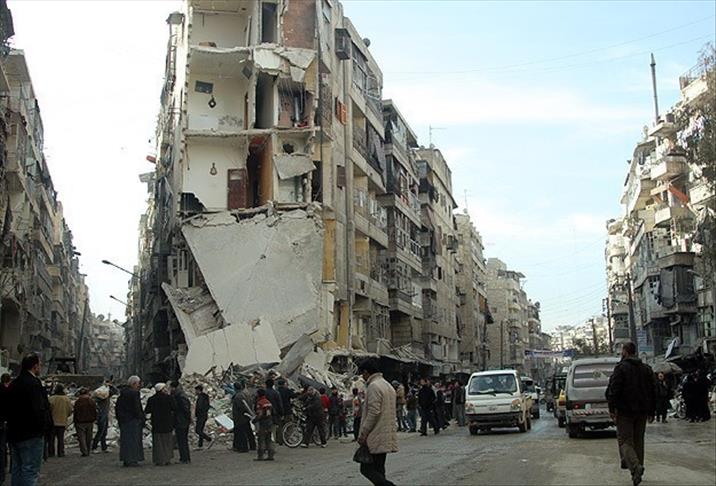
More than 100,000 people have been killed in a civil war that has uprooted millions of people and devastated many cities.
Western positions have not been as consistent as those expounded by the main supporters of the Syrian government, primarily Russia and Iran, the report says.
However, western governments have taken the lead in coordinating humanitarian efforts for up to half of Syria's population, which is now in urgent need of assistance, says the study.
The think tank says the opposition is increasingly seeing its western allies as less reliable than its Gulf backers, as many suspect the West of preparing a deal that will keep Assad in power.
Experts advise a more strategic approach to the overall western response to the crisis in Syria and its immediate neighborhood.
The report suggests that a more effective western strategy be based on moving away from the simplified predominant depiction of the conflict as primarily sectarian.
"Such a strategy needs to involve clearer objectives, including ending violence, minimizing killing, and preventing state collapse. It also needs to be targeted at the areas where the West has leverage, and move beyond the focus on uniting the opposition under the umbrella of the Syrian National Coalition, to engage with a broader swathe of Syrian opinion," the report notes.
The report also says the opposition cannot win militarily against a national army backed by powerful state and non-state allies (Iran and Russia as well as Hezbollah and Iraqi militants), adding that arming the opposition is not a solution to the conflict.
englishnews@aa.com.tr