HONG KONG
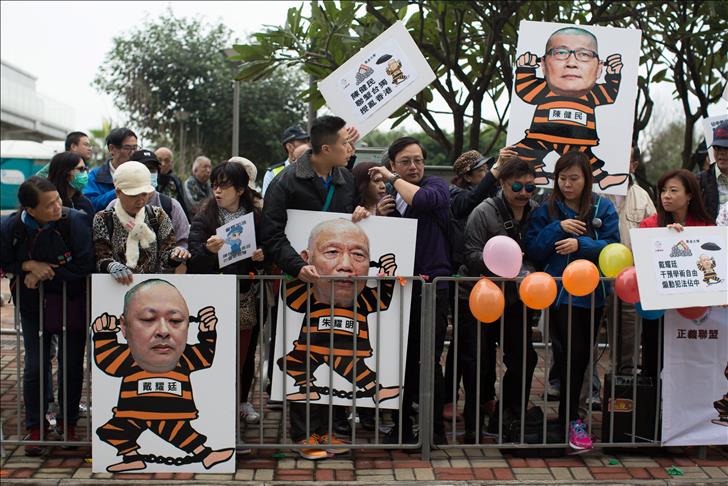
The three co-founders of Hong Kong's Occupy Central civil disobedience movement were among scores of protesters who turned themselves in to police Wednesday on charges of participating in an unauthorized assembly.
The protesters admit to have broken the law, but were not held. Police had prepared forms for them to fill in, detailing at which sites and on which days they may have broken the law.
“We were not arrested and were allowed to leave with no limits on our freedom,” Hong Kong University law professor Benny Tai, told reporters.
“I don't think this issue will be settled today. Later we may be arrested or prosecuted for more serious crimes. We have to wait and see.”
Wednesday's development is seen as part of an effort to end the blockades and switch to advocating for democracy via other forums, including the courts, following an increase in violent clashes with police at the main protest site.
The two-month-old protest movement is at a critical juncture - split over whether the occupation of roads should continue and if other methods should be initiated.
Police said that by 17.00 (11.00 Turkish time) Wednesday 62 people had handed themselves in, saying they had committed in the crime of participating in an unauthorized assembly, local media reports said.
The group included Tai, Chinese University sociologist Chan Kin-man, and Baptist minister Chu Yiu-ming – the three who originally proposed the protests but who now have little influence over the movement.
The trio gave speeches to supporters and assembled media before entering the station.
Tai is among those who say protesters should withdraw from the streets and continue their activism in other ways.
The three were released by police in less than an hour. A police spokesperson said those who gave themselves up were told the occupation of public roads was a criminal act and they must stop doing so immediately.
The move came after student leader Alex Chow told public broadcaster Radio Television Hong Kong earlier in the day that everyone agreed that the occupation of roads was not pressuring the government to make concessions.
He added that a decision had to be made about ending the occupations and that he would discuss it with protesters over coming days.
The protests started in late September after Beijing said 2017 election candidates for Hong Kong's top political office, the chief executive, must first be approved by a pro-Beijing committee.
Protesters say that amounts to “North Korean-style” fake democracy.
Demonstrators are blocking roads in two locations after their encampment in the district of Mong Kok was forcefully cleared by authorities last week.
www.aa.com.tr/en