17 February 2016•Update: 18 February 2016
ANKARA
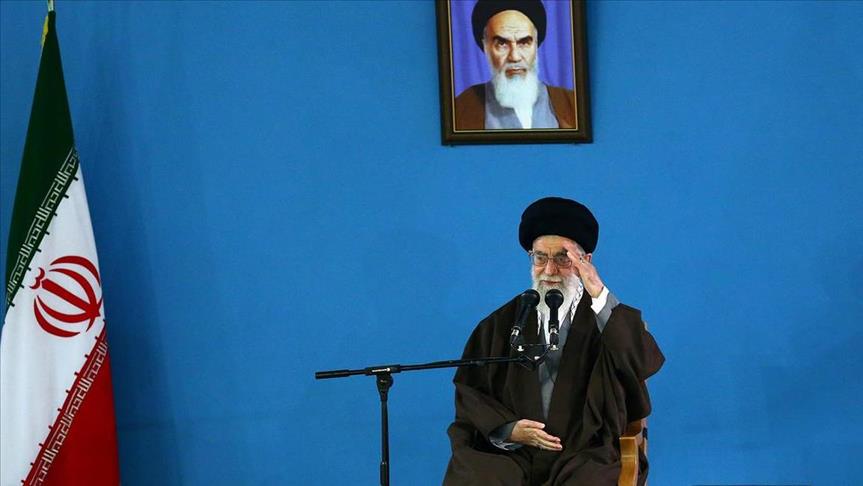
The latest statement by Iran’s Supreme Leader Ali Khamenei describing voting in the country’s upcoming general election as "obligatory" and the opposite is "haram" [forbidden] has raised debates across the country.
In his online fatwas -- Islamic legal pronouncement issued by an expert in religious law – Khamenei stated that it is an "Islamic and sacred duty" for those eligible voters to cast votes in Iran’s parliamentary election on Feb. 26.
Khamenei writes: "Voting is fard al-ayn -- an obligation that must be performed by each individual Muslim"; "Voting of a woman is not bound by the consent of her husband;" and "It is haram -- forbidden by religion -- to cast blank ballots in the case that it weakens the Iranian regime."
Many think his fatwa forbidding abstention will be serve conservatives, since the Guardian Council of the Constitution eliminated several reformist candidates, leaving power in the hands of prominent conservatives.
Elections
Although it will be the tenth general election in the Islamic Republic, Iranian people are still in doubt that the regime is really determined by a public vote, due to a failure to meet required standards to in holding democratic elections.
Political groups determine results
The Iranian regime, which lacks corporate transparency, does not provide a pluralist political system as democratic countries do.
In countries with no political competition, the political power groups that control the regime determine the election results more than the will of the people.
Khamenei, supporting the Constitution Protection Council’s (PCC) decision to eliminate many candidates, called those who do not accept the regime to come to the ballot boxes but not to parliament.
Reformists
The Election Committee Officer from the reformist Voice of Iranians Party, Seccad Salik, says that the elimination of a high number of reformist candidates by the PCC leads to unfair competition.
Salik said: “Rights of reformists have not been respected”. He added that electoral competition should be fair, if a party that respects revolutionary values comes into play and if it is accepted by the regime.
There are reports reform supporters are also considering a boycott due to the impossibility of establishing free political parties and the ruling-out of certain candidates.
Taking that in consideration, reformist leaders, such as Mohammad Reza Aref, have said that despite everything pro-change voters must cast their ballots.