By Todd Crowell
TOKYO
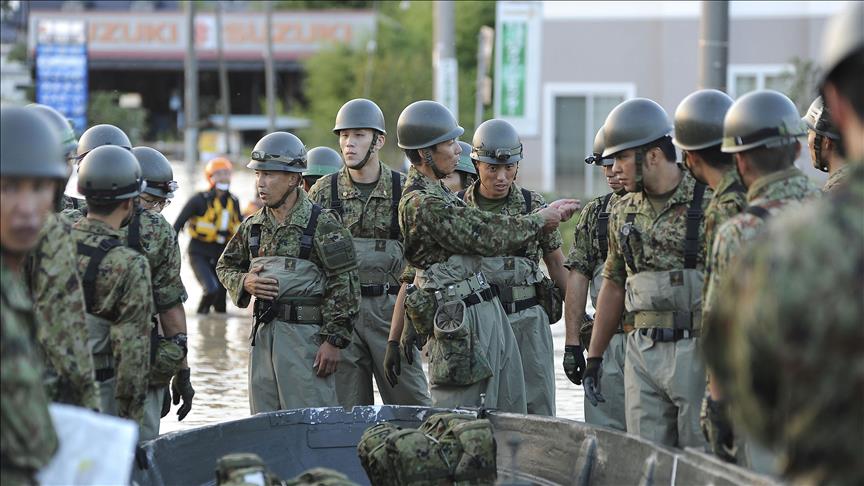
Japan’s military, one of the largest in the world, operates under numerous limitations – constitutional, legal and political – that don’t apply to other nations, or as conservatives say, to “normal nations”.
As a consequence of last week’s climactic vote in the country’s upper house of parliament, many of these self-imposed restraints will be loosened but not lifted entirely. Japan is still far from becoming a “normal nation,” and many Japanese want to keep it that way.
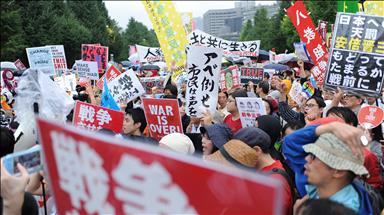
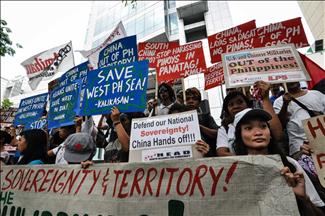
The debate reached a crescendo last week as opponents of the security legislation predicted that the laws would gut Japan’s post-World War II pacifistic constitution, destabilize the region, irritate China and drag Japan into U.S.- inspired conflicts it has no wish to be a part of.
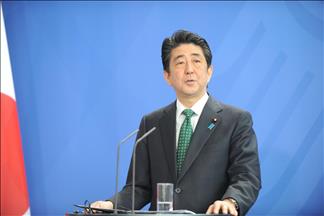
Prime Minister Shinzo Abe has argued that the legislation merely recognizes the changing security situation in northeast Asia, such as the rise of a nuclear-armed North Korea, an assertive China with a fast-growing navy and, some argue, the decline in Japan’s protector, the U.S.
The laws are complex, and not easily explained in short sound bites, but they might be better understood as affecting four potential areas of conflict:
Foreign Peacekeeping Operations
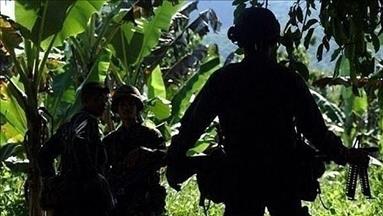
Ever since 1991 when Japan sent troops to Cambodia to help supervise the southeast Asian country’ first free elections, Japan has taken part in several global peace keeping operations under U.N. auspices.
It currently has around 350 ground self-defense force (army) troops deployed in South Sudan. The Maritime Self-Defense Force (navy) takes part in anti-piracy patrols in the Gulf of Aden along with other nations, such as China and South Korea, with a permanent base in Djibouti.
Before the recent enactment, however, Japanese soldiers were legally constrained from coming to the aid of other peacekeeping contingents if they came under attack by armed groups. That could be construed as “collective defense” and thus was unconstitutional.
This came to a head in 2013 when South Koran troops protecting refugees in Bor, the capital of South Sudan’s Jonglei province, were running short of ammunition and asked Japan to lend them rifle bullets (Japan was the only one readily available with the correct caliber.)
Abe was willing to comply with the request even though it was technically illegal under the previous interpretation of the constitution. He did it anyway, justifying his decision by saying it was an “emergency”.
The new law would relax the rules on use of weapons on UN-sanctioned missions. It also removes the need for a new, specific law for each overseas operation, by providing a generic okay so long as the operations are sanctioned by the UN.
Distant Operations in Self-Defense
Don’t expect to see Air Self-Defense Force (air force) F-15’s taking part in any bombings of Iraq and Syria, but other military operations in the Middle East could become possible under the new rules.
The one that is most likely would involve sweeping maritime mines at the entrance to the Gulf of Hormuz, should they be planted by Iran to disrupt petroleum shipments.
Under those circumstances, Tokyo would argue that blocking shipments of petroleum (80 percent of Japan’s petroleum is imported) threatened Japan’s existence, and thus was an action of self-defense under the law.
The Japanese navy actually swept mines in the northern reaches of the Persian Gulf in the aftermath of the first Gulf War. However, that was after a ceasefire was agreed. Under the new rules such activities could take place during hostilities.
With some 30 maritime warfare vessels, Japan has considerable experience and capabilities in this arena of conflict, and the U.S. -- which tends to neglect mine warfare for complex weapons such as aircraft carriers -- is eager to have Japan’s mine capabilities available.
Regional Self-Defense Operations
The new laws put into law the Abe cabinet’s 2014 decision to re-interpret the constitution to allow for “collective defense,” defined as being able to come to the assistance of formal allies, such as the U.S. and “close partners”.
In conjunction with the new guidelines for U.S.-Japan cooperation, they remove geographical restraints on military cooperation in the Western Pacific Ocean. The guidelines were adopted in the spring, anticipating final passage of the enabling legislation.
“The alliance will respond to situations that have that have an important influence on Japan’s peace and security. Such situations cannot be defined geographically,” the guidelines state.
“Close partners” could be defined as countries like the Philippines and Australia, in which negotiated defense agreements allow Tokyo to, among other things, give Manila patrol vessels or to sell submarines to Australia.
Indeed, Philippine President Begnino Aquino III heartily approved of Japan’s actions, with presidential spokesperson Edwin Lacierda saying they “welcome the passage of legislation on national security.”
Thus the new laws and guidelines could drag Japan into the South China Sea imbroglio. Washington is already pushing Japan to take part in regular patrols over tiny contested islands, and Manila has offered bases for them.
So far, Tokyo has not committed itself to taking part in any patrols.
Near-Shore Self-Defense Operations
The new laws and guidelines permit Japan to help protect the “assets” of its allies and close partners. This could include American warships under attack in nearby waters or ballistic missile threats against American targets either in the region or the U.S. homeland.
When North Korea launched long-range ballistic missiles over Japanese territory, Tokyo has made a show of deploying Patriot-3 anti-missile missiles. But they were aimed at blowing up the second stages should they appear to fall on Japanese territory.
They would not have been allowed to intercept the warhead, as that would have been construed as “collective defense.” Under the new guidelines, Japan has primary responsibility to respond to ballistic missile attacks from North Korea.
Concerning other contingencies on the Korean peninsula, Japan could provide logistic and other kinds of support.