01 March 2016•Update: 01 March 2016
By Alyssa McMurtry
MADRID
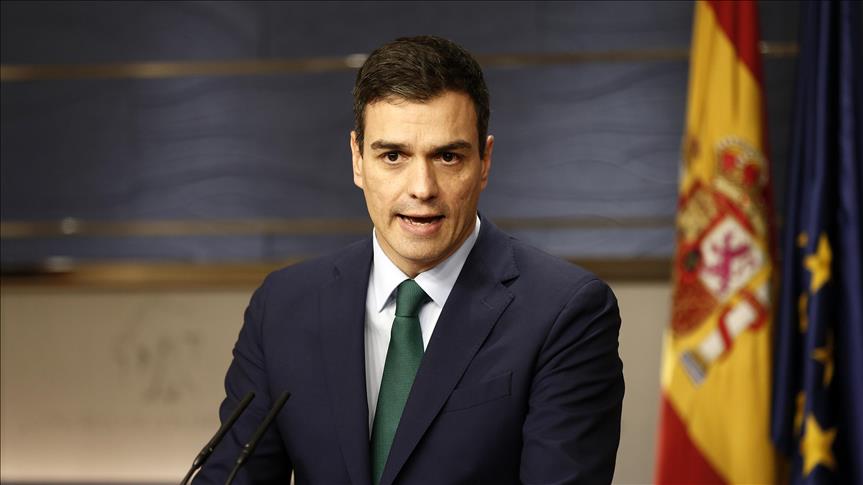
Spain’s Socialist Party leader has called on parliament to support him in his bid to form a government.
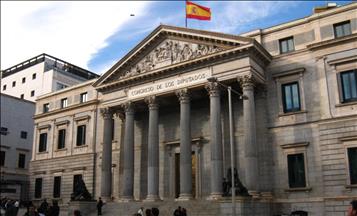
Pedro Sanchez’ Tuesday night speech initiated a week of debates and voting which will determine whether or not Spaniards will have to return to the polls in snap elections.
Sanchez presented his idea of a “progressive and reformist” government.
“I want to extend a hand to all those who share a common objective, which is to reach an agreement through dialogue about a change in this government and the change in the way we govern this country,” he declared.
This speech marks the beginning of the end of the long negotiation process in which Spain’s politicians have struggled to find common ground. The inconclusive elections took place Dec. 20, leaving Spain over two months without a government.
On Wednesday, parliament will debate Sanchez’s proposal and finish the first round of the non-confidence vote before midnight.
Currently, Sanchez does not have the professed support to form a government.
In December’s elections, current prime minister, Mariano Rajoy, and his Popular Party, won a minority government.
However, Rajoy rejected the Spanish king’s request that he try to form a government, citing a lack of support among opposition parties.
The task of forming a government was then passed on to Sanchez and his Socialists, who saw historically bad results in the December elections.
In the Spanish elections, the two traditional parties -- the Popular Party (PP) and the Socialists -- lost a large part of their seats to two relatively new parties: left-wing Podemos and the centrist Ciudadanos [Citizens].
The result was an incredibly fragmented government, with no obvious coalitions in sight.
Last week, Sanchez signed a deal with Ciudadanos but their support still does not make for a parliamentary majority. In his speech, Sanchez reached out to Podemos and smaller left-wing parties to support him in an “anti-PP” government.
“His speech was disappointing; it tastes like more of the same thing,” said Pablo Iglesias, the pony-tailed leader of Podemos, in response to Sanchez’s opening discourse.
The support or abstention of Podemos now seems to be necessary for the Socialists, especially since Sanchez’s negotiations with Rajoy have been exceedingly cold and unproductive.
In the likely situation that Sanchez fails to gain an absolute majority in parliament on Wednesday’s vote, a second round of voting will take place on Friday, in which only a simple majority (more votes in favor than against) is needed to win.
If Spain’s parliament fails to agree upon a government in Friday’s second round of voting, the countdown starts to new elections.
After the first non-confidence debate, the Spanish constitution stipulates that politicians have two months to form a government. If the deadlock continues, parliament will be dissolved and elections will be triggered.