By Todd Crowell
TOKYO
Authorities in Japan scrambled overnight to verify a new video, purporting to show that one of two Japanese hostages held by the Islamic State of Iraq and the Levant (ISIL) has been executed, while leaving the life of the other hostage in limbo.
The video was emailed to Kenji Goto’s wife Saturday. It shows an image of him holding a picture of the body of his colleague Haruna Yukawa -- who was "slaughtered in the land of the Islamic Caliphate" in what appears to be Goto’s voiceover. He also said that the captors had dropped their demand that Tokyo pay a $200 million ransom.
Instead they are demanding the release from Jordanian detention of Sagda al-Rishawi, who is being held in connection with a 2005 suicide bombing attack on three luxury hotels in Amman, the capital of Jordan, which killed 57 people.
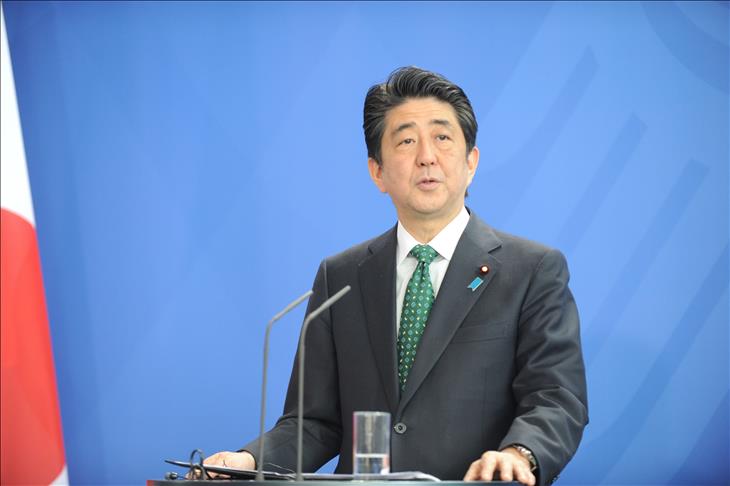
"They no longer want money. You bring them their sister from the Jordanian regime, and I will be released. Don’t let [Japanese Prime Minister Shinzo] Abe kill me," Goto reportedly said in the video.
Abe was reportedly "speechless" after seeing the images, while Yukawa's father Shoichi told reporters at his home southeast of Tokyo on Sunday that "he hopes in his heart that news of his son's death is not true."
The 74-year-old said he had received a phone call from the Foreign Ministry around midnight Saturday telling him his son appeared to have been killed -- though the death could not be confirmed.
Come midnight Sunday, however, the death was verified, the ISIL group's radio station broadcasting that Yukawa had been killed.
It was not clear how Tokyo was to effect a release of Rishawi, considering that Jordanian authorities, not Japan, are holding her. Tokyo has set up a kind of command post in Jordan headed by a foreign office vice minister. It had also pledged monetary aid to help Jordan cope with refugees from the Syrian civil war.
A government spokesman said that Japan will press ahead with the $200 million in humanitarian aid that Abe announced in Cairo -- the same sum as that demanded by ISIL in a video released Tuesday, in which it threatened to kill the two men within 72 hours unless the ransom was met.
On Saturday, Abe was reported to have spoken to King Abdullah II of Jordan. Details were not divulged.
Sunday morning awakened Japan’s army of Internet warriors who questioned the authenticity of the latest video on numerous technical grounds, claiming that it may be some kind of composite. It apparently did not show some of the hallmarks of ISIL, such as its black flag.
World leaders had accepted Yukawa’s death on face value. United States President Barack Obama said he "strongly condemns the brutal murder of Japanese citizen Haruna Yukawa," while Abe said, "I feel a strong sense of anger."
Events are moving fast. Before the government can even verify the earlier video or find somebody to negotiate with, the crisis has already moved to the next stage. Even now Tokyo says it has not been able to make "direct" contact with the militants.
It was also never clear exactly clear when the countdown for ISIL's 72-hour deadline began. Assuming it was timed to the first video Tuesday, the deadline was crossed Friday afternoon, Japan time.
So far, the authorities in Tokyo have been coy about whether Japan would ever pay any ransom, assuming that monetary ransom is still one of the militant’s demands. Japanese policy on ransom, such as it is, has been inconsistent over the years.
In 2004, former Prime Minister Junichiro Koizumi declined to meet a demand that it withdraw its troops from Iraq if he wanted to save the life of a young Japanese adventure-tourist captured by Iraqi insurgents. The young man was eventually executed, but in 1999 Japan paid $3 million to free four mining experts held hostage in Kyrgyzstan.
Washington has been pressuring Tokyo to refrain from making any ransom payment. That is the stated policy of the U.S. government.
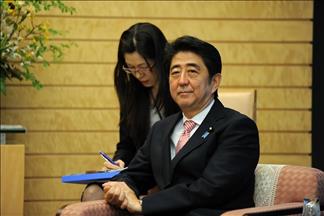
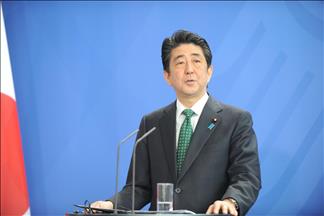
Inevitably, Abe will be judged on the handling of the hostage crisis, probably his most serious test since his government was first elected in a landslide victory in late 2012.
Few in Japan are likely to blame Abe personally for the deaths of Yukawa and Goto, should that be the ultimate outcome. Nevertheless, there has been some carping already over his handling of the affair, such as holding his first press conference in Israel after the hostages were taken, or why he described the humanitarian aid as part of the "War on Terror" -- making it sound like Japan was a combatant.
Japan is unable to send military aid to any such "war" due to its pacifistic constitution.
In time, when the issue is resolved one way or another, there will be questions raised about how the government dealt with the original capture. After all, the two victims had been known to be in ISIL captivity for months.
Japanese watch the events in the Middle East with a mixture of fascination and disdain. Historically they have been surprisingly unsympathetic to its citizens captured in conflict zones. Given the inability of Japan to get militarily involved, they believe they should not have placed themselves in such danger.
One could see this developing in the way many Japanese looked at the two recent hostages. Yukawa, a self-described "adventurer" was somehow deemed "unworthy" of Japan’s support in contrast with the more idealistic journalist Goto,
It should be remembered, however, that it was Goto who left his newborn child to return to Syria -- his mother, Ishido, telling reporters Friday that she was astonished to learn from her daughter-in-law that he had left just days after the child was born.
ISIL has captured large swathes of land in Iraq and Syria, later declaring the territories under its control an Islamic caliphate.
Three U.S. hostages -- James Foley, Peter "Abdul-Rahman" Kassig and Steven Sotloff -- have been beheaded in ISIL videos since Aug. 19, as well as British citizens David Haines and Alan Henning.
The group also holds British journalist John Cantlie and a 26-year-old American female aid worker, among others.