Michael Sercan Daventry
29 February 2016•Update: 01 March 2016
CLONDALKIN, Ireland
The smell of farming is unmistakable. Stepping off the Dublin train in the rural town of Clondalkin, it is the visitor’s nose that first notices the differences between Ireland’s capital and the hinterlands.
Like much of Ireland’s rural communities, working-class Clondalkin is surrounded by fields of green, even in the depths of winter, gently rolling hills and plenty of farmland.
However, the centuries-old town - overshadowed by a 1,200-year-old round tower that marks the site of a monastery - illustrates the sharp divisions and tensions between Ireland’s rural and urban communities as it is stretched by competing forces of tradition and modernity.
With Dublin just 10 kilometers (6 miles) to the east, the town faces being absorbed by its booming neighbor, where tens of thousands of young people reap the benefits of employment with one of the city’s many multinational companies there.
Apple, Facebook and Google are among the many technology giants who base their European operations in the Irish capital, drawn by a corporation tax rate that is far lower than in the U.K.
Although the boom is helping fuel Ireland’s economy, which is only growing again after confronting bankruptcy five years ago, rural voters complain that they only feel the effects of revival when they visit Dublin.
In Clondalkin, the effect has been felt through new houses and transport links mainly catering for Dublin commuters looking for less expensive places to live.
“Yes, it’s changing, but isn’t everywhere?” pensioner Margaret O’Reilly told Anadolu Agency in a cafe off Clondalkin’s main road. “I don’t really think this is part of the countryside any more.
“Do I like it? No. But what can I do?”
The countryside is still a dominant part of life in this nation. Ireland has Europe’s highest proportion of population - 72.7 percent - living in predominantly rural regions, according to Eurostat.
Many of them have said long before this week’s general election that they feel disconnected from Dublin’s wealth and lifestyle.
Last year's referendum on allowing same-sex marriage was a clear example of the divide. Nearly three quarters of Dublin voters (71 percent) voted to lift a constitutional clause that restricted marriage to between a man and a woman. People in Ireland's other large cities, including Cork and Limerick, backed the measure by similarly large margins.
However, the margin was far narrower in rural regions. A majority in one district - Roscommon-South Leitrim - voted “No”, while Donegal South-West said “Yes” by a margin of just 33 votes.
Paddy McKenna, a presenter with state broadcaster RTE and a native of the only region to reject same-sex marriage, told The Journal.ie news website there was a disconnect between Dublin and Roscommon, 160 kilometers (99 miles) from the capital.
“Many rural people felt talked down to and alienated,” he said. “They felt shouted at. They got left behind by the ‘Yes’ campaign, which is worth reflecting on - a good example of the kind of polarizing, elitist, ‘us and them’ attitude that divides rural and urban people.”
Semi-rural Clondalkin, administratively a part of County Dublin, was part of the enthusiastic “Yes” camp in last year's referendum. But its proximity to Dublin does not mean it shares all of the city's wealth and attitudes.
Eamonn Morris, 28, is one “victim” of the city’s boom - a shop worker in the city who can no longer afford to live there. He said the good life in Dublin is deceptive.
“Rents have gone up in town but wages have not,” he told Anadolu Agency. “I've got a university degree but my job doesn't pay great and I can't get a mortgage.”
He has had to move back in with his parents and is not sure when he will be able to leave again.
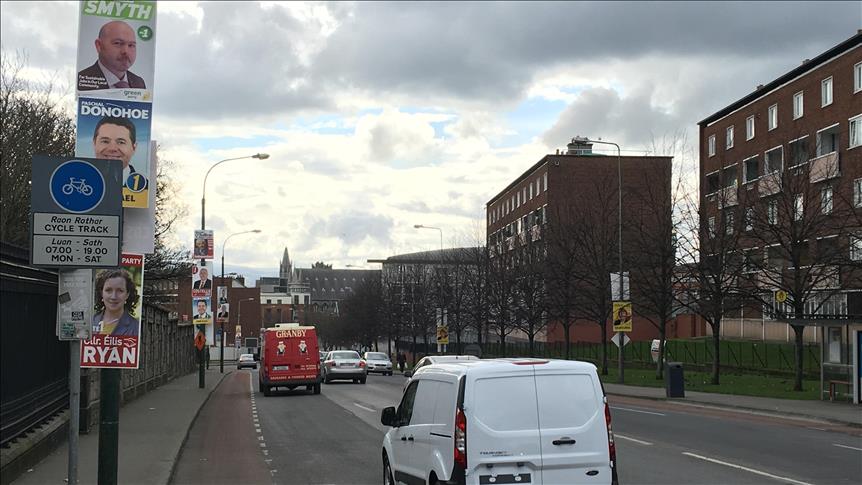
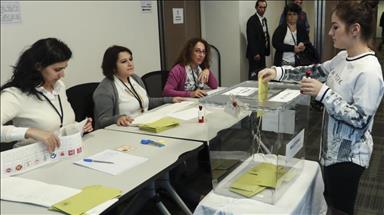
These are just some of the social divisions reflected in Friday’s election. Voters did not just inflict heavy losses upon Prime Minister Enda Kenny’s liberal Fine Gael party and his Labour Party coalition partners - they voted in vast numbers for fringe parties and independent candidates.
For the first time in Irish history, the country’s two mainstream parties - Fine Gael and the center-right Fianna Fail - received less than half of the total vote. The majority instead voted for candidates across the political spectrum - leftists, social democrats, environmentalists and nationalists.
It is not only the task of forming a new government that will be challenging. Ireland’s mainstream parties have some hard work to do reconnecting to the public.