By Rafiu Ajakaye
LAGOS
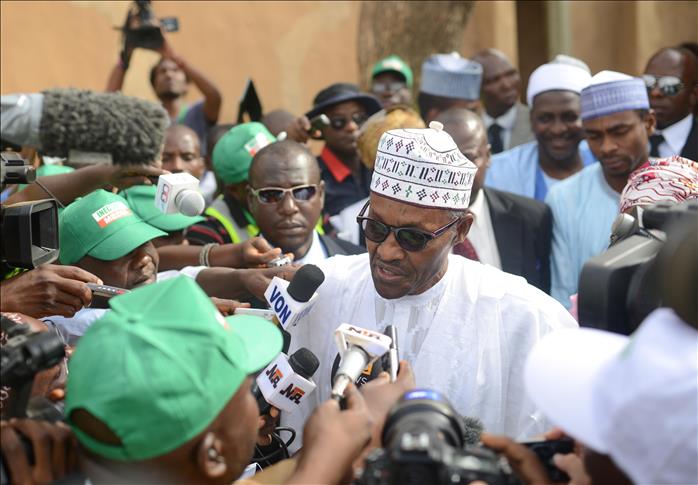
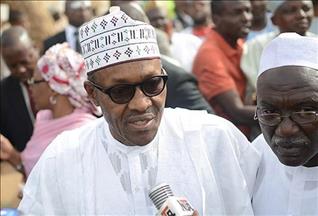
From the chants of "Sai Baba" ("All hail the respected man") and "Mai Gaskiya" (a Hausa term translated as "honest man") in the north to the back-slapping and joyous handshakes in much of the southern region, Nigerians are savoring the victory of Muhammadu Buhari in Saturday's hard-fought presidential race.
Opposition supporters and party members have been joined at the victory parties by millions of non-partisan Nigerians after Buhari won over 15.4 million votes to end the re-election hopes of incumbent President Goodluck Jonathan, who came in second with 12.8 million votes.
Millions of people lined up in the scorching sun – while others were drenched in heavy rain showers, especially in the southwest – to cast ballots for Buhari.
It is now hoped that the former military commander will follow through on his electoral promises to a public long stuck in a socio-economic, political and security quagmire.
But how long will the honeymoon last for the man whose supporters have dubbed him the "people's general"?
Experts believe that, if Buhari begins making inroads in the fight against rampant corruption and fixing the economy to make it work for average Nigerians, this would buy him more time.
"He definitely needs a team that understands the dynamics of 21st century economy and leverage of same to make life more abundant for the people so he can make a good impression in good time," Olamide Obalisa, a senior management consultant with GRM International, a management firm that consults for aid agencies worldwide, told The Anadolu Agency.
"He will need more than popularity to retain the current goodwill," she said.
Obalisa, however, warned the general against needless policy reversals in the economic sector.
"One expects the new government to build, where necessary, on the mileage already made in some areas of the economy and not act with vendetta or to serve political ends," she said.
-Anti-graft crusade-
Many Nigerians are relying on the retired army general to help fight corruption, instill fiscal discipline, and enforce a culture of transparency in government.
"As a soldier, Nigerians expect him to act like one by being pragmatic and decisive," Obalisa told AA.
"Anyone who is not able to perform the assignment given to him has no business in office," she said, apparently concerned about the danger of nepotism and official appointments based on political affiliation.
"He should treat members of his government like students sitting for exams," Obalisa asserted. "You either pass the exam or you fail. And if you fail, you have no business being there."
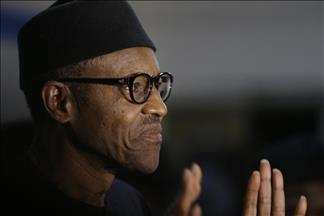
In his Wednesday acceptance speech, Buhari promised to work for those who voted for him, those who voted against him, and even for those who refrained from casting ballots.
"There shall be no bias against or favoritism for any Nigerian based on ethnicity, religion, region, gender or social status," he assured Nigerians.
The retired general has been touted as an anti-corruption crusader and praised for his astuteness, discipline and military background – qualities most Nigerians believe are necessary to save the country from socio-economic collapse and rampant insecurity.
"The president-elect has no other choice than to address the issue of corruption in this country because corruption breeds impunity," Auwal Musa Rafsanjani, executive director of the Abuja-based Civil Society Legislative Advocacy Center, told AA.
"And once you have impunity, you are just returning to the era that you were just about to escape," he warned.
The country ranks high on the list of the world's most corrupt nations, with a litany of recent corruption cases having been swept under the rug.
Last year, former central bank chief Sanusi Lamido blew the whistle on billions of petrodollars that went missing from state coffers.
Despite a national outcry, nobody has been indicted, probed or jailed over the incident.
President-elect Buhari, for his part, has vowed to stamp out corruption, which, he asserts, has brought the nation to its knees.
"We shall strongly battle another form of evil that is even worse than terrorism – the evil of corruption," he said in his acceptance speech.
"Corruption attacks and seeks to destroy our national institutions and character," Buhari warned. "By misdirecting into selfish hands funds intended for the public purpose, corruption distorts the economy and worsens income inequality."
He added: "It creates a class of unjustly-enriched people."
-Jobs-
Habeebullah Aruna, a public affairs analyst, said Buhari was faced with "the daunting challenge of fixing what has long been damaged in the Nigerian system."
"Buhari has very little time to impress a long-traumatized populace, but that is why they invest so much hope in him," Aruna told AA.
"He needs to hit the ground running in terms of reviving the economy, addressing the insurgency crisis, and, above all, cleaning the mess he's promised to clean – and this is against all odds," said the expert.
"Buhari must create jobs for the teeming majority and not allow himself to be held hostage by any cabal," he added. "Indeed, many people look forward to his body language on corruption."
With youth unemployment in Nigeria currently standing at a whopping 80 percent, according to the national statistics bureau and Nigeria's central bank, the appeal of Buhari – who has promised mass job creation – among the young is understandable.
How long that support will last, however, remains to be seen.