JOHANNESBURG
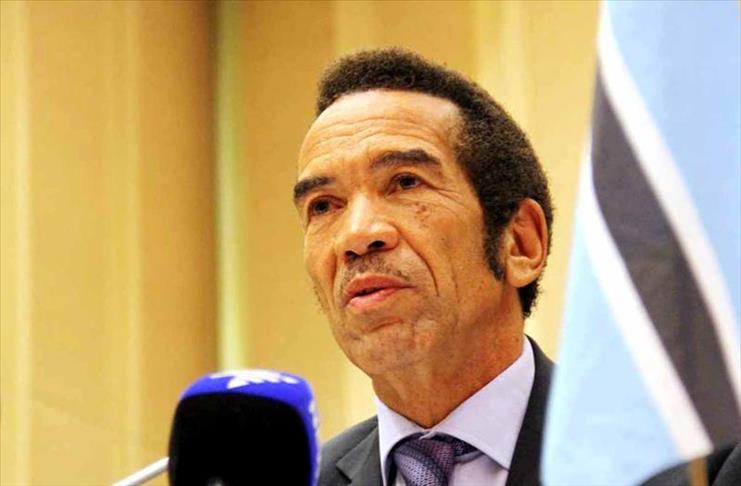
Amnesty International has called on Botswana President Ian Khama, who on Monday took the helm of the Southern African Development Community (SADC), to make human rights a priority in the region during his tenure.
“The most pressing issues President Khama should address include the ongoing suppression of dissent in Angola and the killing and torture of police and soldiers accused of leading a mutiny in Lesotho,” the U.K.-based rights watchdog said in Monday statement.
Deprose Muchena, Amnesty International’s director for Southern Africa, is quoted as saying that the human rights situation in many countries of the region was getting worse.
“As leader of SADC, President Ian Khama must work with his fellow regional leaders to try to find durable solutions to the human rights crisis,” said Muchena.
On Monday, Khama replaced Zimbabwe’s Robert Mugabe as SADC chairman at the 15-country regional bloc’s annual Heads of State and Government Summit held in Botswana.
In its statement, Amnesty pointed out that rights advocates in a number of SADC member states faced persecution.
“In Angola, police are increasingly clamping down on those who speak out against restrictions on freedom of assembly, association and expression,” the group asserted.
Last month, the watchdog noted, 15 activists were arrested in Angolan capital Luanda, where they had been attending a meeting to discuss human rights violations and concerns about governance.
Amnesty also said that peaceful protesters in Zimbabwe had recently been beaten by police, while the whereabouts of journalist Itai Dzamara – a known Mugabe critic – remained unknown.
“President Khama must use his new role as SADC chair to put pressure on the leaders of countries where human rights violations and abuses are prevalent,” the rights group stated.
It went on to note that authorities in Swaziland were actively using a 2008 Suppression of Terrorism Act and a 1938 Sedition and Subversive Activities Act to intimidate political activists.
“Fourteen people [in Swaziland] are currently charged under these laws in five separate trials,” Amnesty said in its Monday statement.