4 killed, 16 injured at Shiite mosque in Pakistan
Targets of attack were around 200 people attending a religious congregation at a house next to mosque.
By Aamir Latif
KARACHI, Pakistan
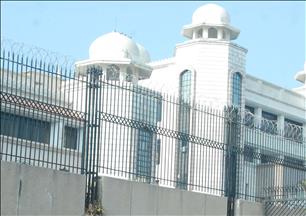
A suicide bomber blew himself up outside a Shiite mosque in Pakistan’s garrison city of Rawalpindi on Friday evening killing eight people and injuring 16 others, officials and eyewitnesses have said.
The targets of the attack were around 200 people, including women and children, attending a religious congregation at a house next to the mosque, eyewitnesses said.
Arif Shahid, an eyewitness, told The Anadolu Agency that the bomber could not enter the house as police and Shiite volunteers outside the mosque spotted and attempted to intercept him before he blew himself up.
Commissioner Rawalpindi Sajid Zafar confirmed that most of the deaths and injuries occurred outside the mosque and the house; however he said he could not expand on the nature of the blast at that moment in time.
Shahid said he saw a young man wrapping a warm shawl around his shoulders rushing to the entrance of the residence where he was intercepted by police and Shiite volunteers who were on security duty.
Two police officers are among those injured. One of the bodies of the deceased was torn into pieces and meaning that it could be that of the suicide bomber, Shahid said.
Another eyewitness, Irshad Qureshi, said the suicide bomber arrived on a motorbike.
“He parked his motorbike on the corner of the street and ran towards the house next to the mosque," Qureshi said.
“He blew himself up when he was intercepted by one of the volunteers. Both died on the spot,” he added.
Ambulances stopped meters away from the blast area, as the mosque is located in the narrow street of a densely-populated area. Rescue workers and local residents carried the injured on wooden carts to the ambulances.
Rescue workers were having difficulties in their operation as the electricity cut out after the blast.
The explosion smashed the windows and doors of the mosque and nearby buildings as pieces of broken glasses, shoes, caps and other belongings were strewn across the street.
Doctors at the hospital appealed for blood donations as some of the injured were in critical condition.
Majlis Wahdat-e-Muslimeen, an umbrella organization of different Shiite groups in Pakistan, announced three days of mourning in response to the attack.
No group has claimed responsibility for the deadly attack so far. Security forces suspect the hardline Sunni group Lashkar-e-Jhangvi of being behind the attack.
Pakistan, a Sunni-majority country, has a long history of sectarian violence as thousands of Sunnis and Shiites have been killed in suicide bombings, blasts and targeted killings over the past three decades. Shiites make up 10 percent of Pakistan's population of 180 million.