- US engagement and UN momentum create new context for possible settlement
TUNIS, Tunisia
A revival of regional coordination among Libya’s key neighbors, combined with expanding US and UN engagement, may be reshaping the landscape for a potential political breakthrough in the divided country, a Libya affairs specialist said.
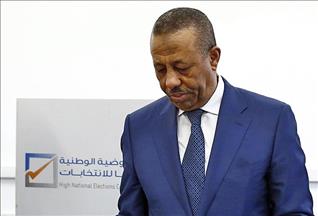
Beshir Al-Jouini, a researcher in international relations, told Anadolu that the renewed activity of the trilateral consultation mechanism between Egypt, Algeria and Tunisia signals more than routine diplomacy. It reflects a narrowing gap in regional positions that had long complicated efforts to stabilize Libya.
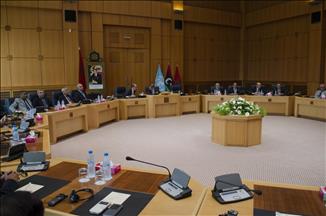
The mechanism, reactivated in 2025 after years of dormancy, convened in Tunis in late January, where foreign ministers reaffirmed that Libya’s solution must remain internally driven and insulated from broader regional rivalries.
According to Al-Jouini, the most consequential shift lies in the evolving understanding between Cairo and Algiers.
“In previous years, we saw clearly drawn red lines,” he said, recalling Egypt’s warning over Sirte and Jufra in 2020 and Algeria’s firm stance on developments in Tripoli the following year. “Today, those red lines no longer define the space of movement. That alone reduces the risk of escalation.”
Libya remains split between two rival administrations: the internationally recognized Government of National Unity (GNU) in Tripoli, led by Abdul-Hamid Dbeibah, and an eastern-based government appointed by the House of Representatives and headed by Osama Hammad in Benghazi.
For years, UN efforts have aimed to bridge this divide and pave the way for long-delayed elections intended to reunify the country’s fractured institutions.
Widening diplomatic arena
Beyond regional convergence, Al-Jouini pointed to growing international involvement that is reshaping political calculations inside Libya.
He cited intensified economic activity since late 2025, including energy summits, major cross-border agreements and expanded US diplomatic engagement. Visits by US presidential adviser Massad Boulos and subsequent meetings involving figures from both eastern and western camps reflect what he described as a coordinated external push.
One such meeting in Paris reportedly brought together Saddam Haftar, chief of staff of the Ground Forces in eastern Libya, and Ibrahim Dbeibah, Libya’s national security adviser, adding to previous contacts in Rome and Germany. These engagements, he said, suggest increasing encouragement for pragmatic cooperation between Libya’s rival camps.
He also referred to plans for a large-scale joint military exercise in Sirte expected in March, bringing together eastern and western forces under US sponsorship. If realized, it would symbolically merge political, economic and security tracks into a single stabilization effort.
While the trilateral mechanism emphasizes geographic proximity, Al-Jouini noted that Libya operates within broader circles of affiliation, including regional and global powers whose military, economic and geopolitical weight often exceeds that of neighboring states.
The critical question, he argued, is not whether momentum exists but what shape the emerging settlement might take.
“Will it be a sustainable settlement that ends transitional phases, establishes a constitution and produces synchronized elections and national reconciliation?” he asked.
“Or will it become another formula for managing division and distributing power among rival elites?”
Shifting calculations
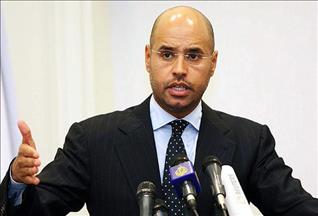
The recent killing of Saif al-Islam Gaddafi, the son of former Libyan ruler Muammar Gaddafi, has further complicated the picture.
Al-Jouini described the assassination as political in nature and questioned who benefits most from his absence, particularly at a moment when reconciliation initiatives were gaining traction.
Speculation has circulated regarding possible responsibility, including allegations involving forces linked to eastern commander Khalifa Haftar, whose camp is believed by some to have viewed Saif al-Islam as a political rival. Others have dismissed claims implicating the Tripoli-based authorities as unrealistic.
Saif al-Islam was killed earlier this month by armed men who stormed his residence in Zintan.
For Al-Jouini, the broader issue remains unchanged: any external alignment or diplomatic momentum must ultimately translate into a unified Libyan political process.
“The convergence between Egypt and Algeria is positive for both countries and for Libya,” he said. “But no mechanism can replace a genuine Libyan-Libyan dialogue.”
*Writing by Tarek Chouiref in Istanbul