UN envoy warns Libya judiciary division a ‘red line’ threatening state unity
'The situation in Libya is deteriorating on many fronts,' says Hanna Tetteh
HAMILTON, Canada
The United Nations’ top envoy for Libya warned on Wednesday that deepening divisions within the country’s judiciary and worsening economic conditions are threatening national unity and could destabilize the broader region.
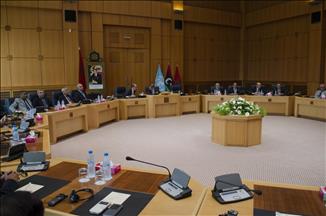
“The situation in Libya is deteriorating on many fronts,” Hanna Tetteh told the UN Security Council.
Tetteh said Libya’s judicial system, which has historically remained largely unified despite prolonged political challenges, including the Supreme Court in Tripoli and its Constitutional Chamber serving as the highest constitutional judicial body, is now increasingly divided, with serious implications for the country’s unity.
She cautioned that parallel and contradictory judicial decisions would weaken governance and obstruct ongoing UN efforts to facilitate a political process.
“If actions are not taken to preserve the unity, coherence and independence of the judiciary, the conflicting legal systems that emerge will impact the economy, elections, governance, security and human rights. It is a red line that, if crossed, can undermine the unity of the state,” she said.
Tetteh urged Libyan leaders to refrain from escalatory measures and to cooperate with an independent Libyan mediation committee composed of judicial and legal experts seeking to maintain a unified judiciary.
"I call on this Council to hold individuals who continue to take actions towards dividing the judiciary and administration of justice, to be held accountable for taking actions that seek to undermine the unity of the country," she added.
Beyond institutional divisions, Tetteh highlighted Libya’s worsening economic outlook, citing currency devaluation, rising prices, fuel shortages and growing public frustration.
“These developments underscore that the current economic ‘model’ is not sustainable,” she said, noting that the absence of a unified national budget, uncoordinated public spending by parallel institutions and declining oil revenues have contributed to persistent foreign currency imbalances.
Tetteh further warned that deteriorating economic conditions combined with a fragile security landscape could trigger unforeseen political and security crises.
“This combination of factors I have referenced today creates a situation that is undermining the territorial integrity and unity of the state. This will have implications for the country and the region,” she said.
Emphasizing the need for a unified government and coordinated reforms, she said: “The only way forward is a political solution that brings Libyans together.”
Underscoring the importance of international coordination, Tetteh said support from the Security Council remains essential as the UN works with Libyan stakeholders to advance a political roadmap aimed at ending divisions and restoring stability.
Libya remains split between two rival administrations: the internationally recognized Government of National Unity, led by Abdul Hamid Dbeibah and based in Tripoli, which governs western Libya, and an eastern-based government appointed by the House of Representatives in early 2022 and headed by Osama Hammad, operating from Benghazi and administering the east and much of the south.
The UN has for years sought to bridge divisions between the rival institutions and pave the way for long-delayed parliamentary and presidential elections aimed at reunifying the oil-rich country.