TUNIS, Tunisia
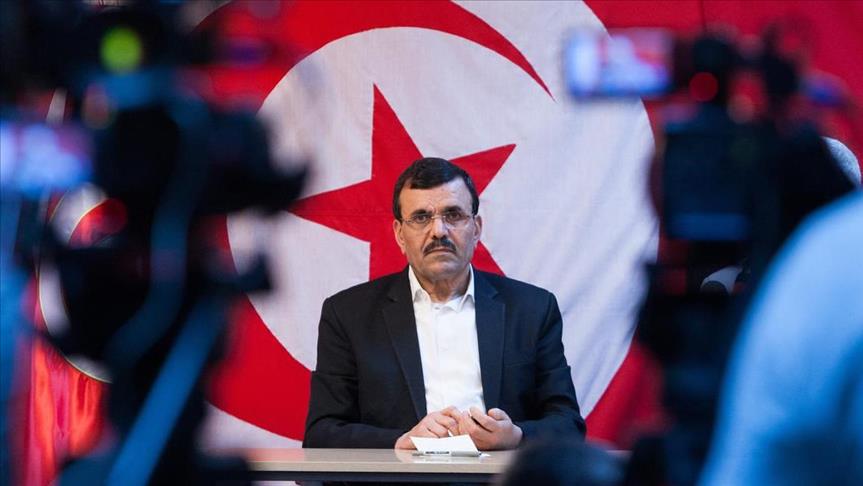
In an exclusive interview with Anadolu Agency, Ali Laarayedh, secretary-general of Tunisia’s Ennahda Movement and a former prime minister, spoke about the challenges currently facing Tunisia, both on the external and internal fronts.
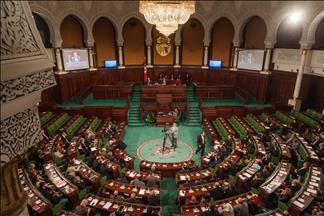
Speaking at the movement’s headquarters in the capital’s Montplaisir district, Laarayedh began by urging Tunisians to support the country’s current unity government, which is led by the secular Nidaa Tounes party but which also includes Ennahda members.
Security
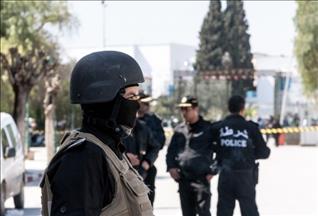
On the domestic front, Laarayedh, who served as prime minister from March 2013 to January 2014, said: “We are dealing with major security challenges that remain a priority for this government, which is currently working to establish security by confronting terrorism and organized crime”.
“We have made progress in the fight against terrorism,” he said. “The security agencies have been able to dismantle most of the [terrorist] groups and identify the perpetrators [of recent attacks], some of whom have been referred to the judicial authorities, while others have been killed in clashes [with security forces].”
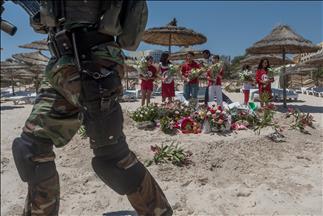
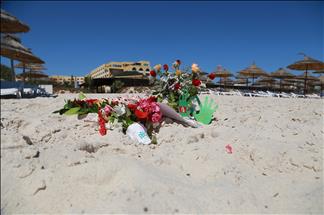
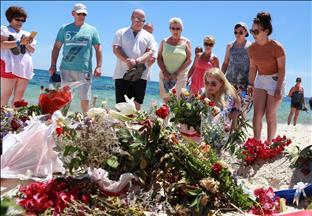
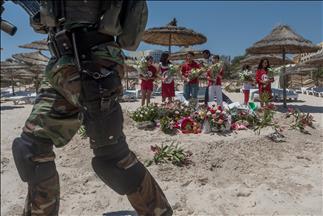
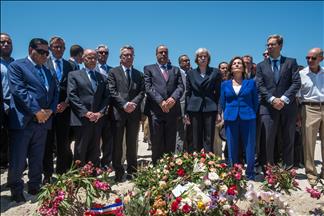
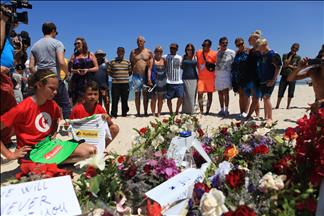
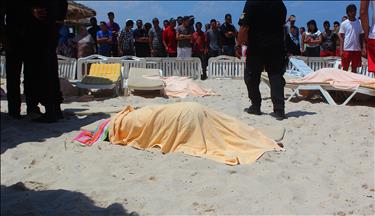
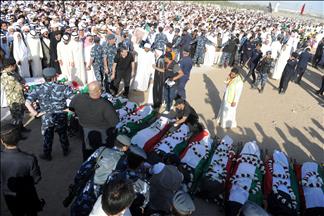
In June, a major terrorist attack near the port city of Sousse left 38 people, mostly British tourists, dead. Three months earlier, an attack at a Tunis museum left 22 people dead, including a number of foreigners.
Following the June attack, the authorities imposed a state of emergency that remained in place until it was lifted earlier this month.
Unity government
With respect to the current Nidaa Tounes-led coalition government of Prime Minister Habib Essid, Laarayedh said: “Since its formation, it has faced challenges across the country, which has distracted it from making progress in the field of reform.”
“The Ennahda movement supports this government and we don’t want to see it changed,” he added. “But we also believe it should be encouraged to speed up the reform process.”
“Political stability is necessary to solving our problems,” Laarayedh went on to assert. “We can’t find solutions if we change the government every six months, as this tends to spook domestic and foreign investment, along with national and international actors.”
“Reconstruction and reform require security, political and social harmony,” he went on. “We want to maintain this political stability within the context of electoral processes.”
Laarayedh added: “At this stage, the government should be supported -- and criticized when necessary -- so as to give it enough time to accomplish its objectives.”
Corruption
With regard to the “pervasive corruption” mentioned by former Parliamentary Affairs Minister Lazhar al-Akrami -- who stepped down earlier this month -- Laarayedh said: “We [Ennahda] were once in power; we know corruption is widespread and that it depends on certain networks and officials.”
“Confronting corruption is not a political decision to be taken,” he added. “It requires the dismantling of networks, the replacement of officials and the promulgation of new laws."
The former PM went on to note that, during his tenure, more than 1,200 corruption cases had been referred to the courts, at least 550 companies had been closed after having been found to have engaged in corrupt practices, and large amounts of property and land -- plundered earlier from the public purse -- had been returned to the state.
“Much of this was not disclosed by the media, however, while the judicial authorities are known to drag their feet,” he said.
When asked about a controversial bill aimed at “reconciling” former state officials accused of corruption with the state, he replied: “Ennahda supports the bill, which, we believe, will promote transitional justice and accelerate the recovery of stolen state funds.”
He added, however, that Ennahda did not accept the proposed legislation in its current form and was asking for changes to be made to its content.
Foreign affairs
In terms of foreign affairs, he expressed Ennahda’s satisfaction with the outcome of recent talks between Libya’s rival factions, which were held in the Moroccan city of Skhirat and which two weeks ago resulted in an agreement for the formation of a national unity government.
He urged both parties to the agreement to take “dialogue, and mutual concessions as a basis for the resolution of their differences”.
And in terms of Ennahda’s relationship with the United Arab Emirates, which has faced accusations of using its influence to undermine the Islamist movement, Laarayedh said relations with the UAE “are not hostile, at least on our part”.
He added: “We respect the UAE and don’t interfere in its affairs; just as we don’t want any outside actors to interfere in Tunisia’s affairs.”
With regard to an anticipated visit to Tunisia by Egyptian President Abdel Fattah al-Sisi, Laarayedh said: “Our relationship with the Egyptian people is a historic one, even if tensions occurred during the eras of [late Tunisian President] Habib Bourguiba and [late Egyptian presidents] Gamal Abdel Nasser and Anwar Sadat.”
“We hope the Egyptians find a way that provides them with freedom and democracy and ends the tragic situation they are currently going through,” he said.
“All the leaders of Egypt’s Muslim Brotherhood are now in prison, in exile, or facing the death penalty,” he added. “The Egyptians are the ablest to find their way; we have always supported them in their quest for democracy and human rights.”
On Oct. 4, Tunisia’s al-Sibsi met Egypt’s al-Sisi in Cairo in the first visit since the former’s electoral victory late last year.
With regard to an anticipated visit to Tunisia by al-Sisi, this has not been formally announced by either country, although there has been speculation in the media that it could take place at the end of this month or in early November.