Mohammad Sio and Mohammed Ertima
28 July 2026•Update: 28 July 2026
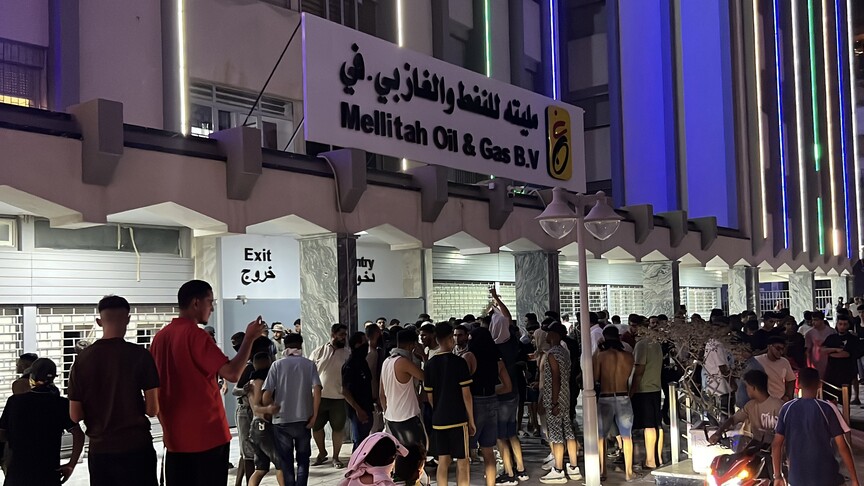
Libya's Government of National Unity said Tuesday that the army has regained control of the Mellitah Oil and Gas Complex, west of Tripoli, and resumed gas supplies to electricity generation stations after protesters shut down the strategic facility earlier in the day.
In a statement, the Tripoli-based government said army forces secured the complex, located about 115 kilometers west of the capital, ensuring the safety of workers at the site.
It said gas pumping to electricity generation stations has resumed, paving the way for a gradual restoration of power and stabilization of the national electricity grid.
The government stressed that it “will not allow any attacks on vital facilities or any harm to the resources of the Libyan people.”
Earlier Tuesday, Prime Minister Abdul Hamid Dbeibeh instructed the army to regain control of the Mellitah complex, secure the facility and reopen gas pipelines, according to a previous government statement.
In a statement, the National Oil Corporation (NOC) said that it had authorized the resumption of gas production and the return of normal gas pumping after the government fully secured the Mellitah complex and provided safe conditions for workers to restart operations.
It said operations have resumed at the El Feel and Wafa fields as well as the Sabratha platform, reassuring citizens that production was returning to levels seen before the shutdown.
“All centers, companies and stations affiliated with the corporation were operating normally,” it added.
Libya’s General Electricity Company also said work has resumed at the Mellitah complex and natural gas supplies have begun returning to power plants, allowing the electricity grid to gradually return to normal operating conditions.
Early Tuesday, the NOC said that protesters had stormed and shut down the Mellitah complex, forcing the suspension of operations and disrupting natural gas production and supplies.
The NOC said the closure halted production at the El Feel oil field and partially suspended operations at the Wafa field, causing a sharp shortage of gas and fuel needed to operate power plants and forcing several electricity generation units out of service.
The NOC warned that if the situation persists, it could further destabilize the national electricity grid, forcing additional generating units offline and increasing the likelihood of widespread power outages or even a nationwide blackout.
It came after protesters shut down the Mellitah complex as well as the headquarters of the Oil and Gas Ministry and Zueitina Oil Company in Tripoli to protest deteriorating living conditions and poor public services.
Libyan protesters declared a campaign of civil disobedience on Monday to demand improvements in electricity services, accountability for officials overseeing the power sector and urgent solutions to recurring water shortages, fuel scarcity and cash liquidity problems.
The protests coincide with an intense heat wave that has swept Libya in recent days, triggering widespread electricity outages across much of the country and extending power rationing to more than 14 hours in some areas.
Daily blackouts have affected both western and eastern Libya since the beginning of July.
The Tripoli-based government has been working since 2021 to address the electricity crisis, and the sector has witnessed a remarkable improvement from 2023 to 2025.
Libya remains split between two rival governments: the internationally recognized Government of National Unity, headed by Dbeibeh and based in Tripoli, which administers western Libya; and a government appointed by the House of Representatives in early 2022, currently headed by Osama Hammad and based in Benghazi, which administers the east and most of the south.
For years, the UN Support Mission in the oil-rich country has sought to broker a political settlement leading to elections, which many Libyans hope will end the country's political divisions and armed conflict that have persisted since the 2011 ouster of Muammar Gaddafi.