JERUSALEM
The Israeli army, which had previously pushed Prime Minister Benjamin Netanyahu to authorize a broader offensive in Lebanon before the war on Iran, has now become “less enthusiastic” about such a move, an Israeli military analyst said Wednesday.
Amos Harel, a military analyst at Haaretz newspaper, said renewed talk of imposing Israeli control over southern Lebanon revives memories of past interventions in the 1980s and 1990s, with their long-term complications and consequences.
He noted that Israeli public opinion on the Lebanon war has remained volatile, with the 1982 war remembered as a “war of deception.”
“Despite achieving something of a victory over the Palestine Liberation Organization, it also opened the long and bloody reckoning with Hezbollah and the Shi'ite community,” he added.
Harel said that the conflict lasted for years and ended with Israel’s full withdrawal from southern Lebanon in 2000, a move widely supported at the time due to what were seen as “pointless” ongoing casualties averaging 15 to 20 deaths annually in the 1990s.
He added that the 2006 war, triggered by the abduction of Israeli reservists, reignited debate over the withdrawal but ended in another “sour stalemate,” with Israeli forces returning to the international border.
According to Harel, the situation “went awry” after the events of Oct. 7, 2023, followed by a two-year war in Gaza, and later developments in Lebanon, where Israel achieved partial military gains but did not fully withdraw, maintaining five positions north of the border while continuing strikes.
He said Hezbollah later expanded its role in the confrontation, particularly after Israel’s assassination of Iran’s former supreme leader, Ali Khamenei, exposing “holes in the narrative that the government and the IDF (army) sold the public.”
Surprising performance
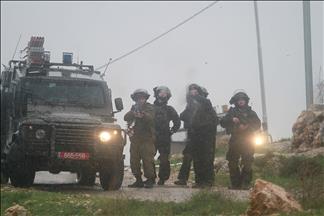
Despite sustained Israeli bombardment, Hezbollah has reorganized and rebuilt parts of its capabilities, shifting toward guerrilla-style warfare and continuing to inflict losses on Israeli forces between the border and the Litani River, Harel said.
He added that the group “is firing almost 200 rockets and drones a day at the communities along Israel's northern border and the forces that entered southern Lebanon to defend them.”
“This is apparently a lot more than the average citizen imagined would be the case when the war was launched against a terrorist organization which, it was claimed, had been defeated -- all the more so since the government decided not to evacuate the residents from the communities on the confrontation line this time around,” the Israeli analyst said.
Harel noted that the current force deployed in the north includes most of the regular Israeli army brigades, except those remaining in the Gaza Strip. The number of reserve brigades that participated in the ground maneuver in Lebanon is small this time.
“The majority of the 120,000 reserve soldiers who were called up for service are replacing the regular forces in the West Bank, in Gaza and on the other borders. In addition, Home Front Command reserve battalions were called up, along with soldiers assigned to command posts,” he added.
He claimed that the Israeli army has taken control of the second line of villages in Lebanon, located 8-10 kilometers (5-6.2 miles) north of the border.
However, he said, Hezbollah has deployed rockets in the area and launched steep-trajectory rockets from north of the Litani River.
The Israeli army has identified particularly “active enclaves” there and is focusing its fire on them in an attempt to stop the launches.
Partial advance
Harel also pointed out that the advance toward the Litani “is only partial, both because there are areas there where the river is more distant from the border, and also to avoid a topographically inferior position.”
“Clashes still occur with remaining pockets of Hezbollah squads in the villages, and considerable combat infrastructure remains command posts, bunkers and possibly tunnels,” he added.
He indicated that the Israeli army, which pressured Netanyahu before the attack on Iran to allow launching another attack in Lebanon, “is less enthusiastic these days.”
He said that the General Staff continues to see the Lebanese front “as secondary to Iran.” However, the intolerable situation of the residents in Israel's north, paired with the possibility that the US “will blow the whistle to end the efforts in Iran and Lebanon, is putting the army under pressure to execute a ground maneuver.”
No air support
Here, Harel said, a new difficulty emerges: “Because most of the offensive resources are being directed at Iran, the IDF (army) finds itself without air support on the Lebanon front.”
“The degree of attentiveness and materiel for Lebanon is lower than it was in the previous campaign against Hezbollah there,” he added.
Israel has carried out airstrikes and a ground offensive in southern Lebanon since a cross-border attack by Hezbollah on March 2, despite a ceasefire that took effect in November 2024.
Hezbollah has fired barrages of rockets into Israel since early March, saying the attacks are in response to continued Israeli strikes on Lebanon and the killing of Iran’s then-Supreme Leader Ali Khamenei, in a joint US-Israeli airstrike on Feb. 28.
Lebanese authorities say at least 1,318 people have since been killed and 3,935 have been injured in Israeli attacks.
The attacks came amid heightened regional tensions, as the US and Israel have been carrying out airstrikes on Iran since Feb. 28, killing more than 1,340 people so far, according to Iranian authorities.
Tehran has retaliated with drone and missile strikes targeting Israel, as well as Jordan, Iraq, and Gulf countries hosting US military assets.
*Writing by Mohammad Sio in Istanbul