JUBA
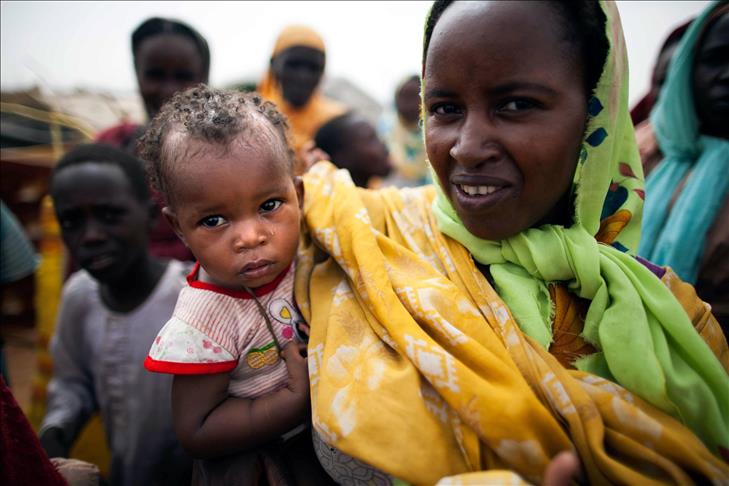
For the first time, refugees in South Sudan will be provided with identification cards to allow the government to recognize their status.
Interior Minister Aleu Ayieny Aleu, who announced the decision at a Friday ceremony in Juba commemorating World Refugee Day, said the move would allow refugees to move around the country freely.
"I call on the [South Sudan Refugee] Commission and [U.N. refugee agency] UNHCR to speed up the process of issuing IDs for refugees for proper identification [i.e., so they can be differentiated] from other people who are in the country," Aleu told the audience.
"When refugees have these IDs, they will be able to leave their camps and move freely in the country. Nobody will stop them," the minister added.
He went on to say that conventional travel permits would soon be issued to allow refugees to travel outside the country and back.
"Soon, conventional travel documents will also be available to refugees seeking to travel outside the country for a good reason," Aleu said.
During Friday's ceremony, South Sudan's refugee commission revealed that some 269,000 refugees – mostly from neighboring Sudan – were currently registered in the country.
"The refugee population… is projected to reach over 300,000 by the year 2015," commission head Bol John Akot said, confirming that IDs would be issued to all refugees in the country.
"The commission will for the first time be issuing refugees with identity cards," he stated. "The ID cards serve as one of the protection tools to recognize refugee status and provide a means of identification."
He went on to say the commission was currently working on the issue of status determination.
"The commission is now in the process of establishing an eligibility committee to work on the legal process for status determination of refugees, including an appeal board," he said.
He added, however, that South Sudan lacked adequate resources to cater to its swelling refugee population.
"I would like to extend my appeal for support from the donor community as part of our international burden-sharing responsibility towards refugee protection and assistance, especially at this challenging time," Akot asserted.
UNHCR Representative in South Sudan Cosomas Chanda, for his part, said the new IDs would help "differentiate refugees from criminals."
"This will help protect them [refugees] from dangers," Chanda said.
www.aa.com.tr/en