Pakistan's internally displaced ready to return home
Residents of Tirah near Pakistan's Afghan border hope to return to militant-free hometown.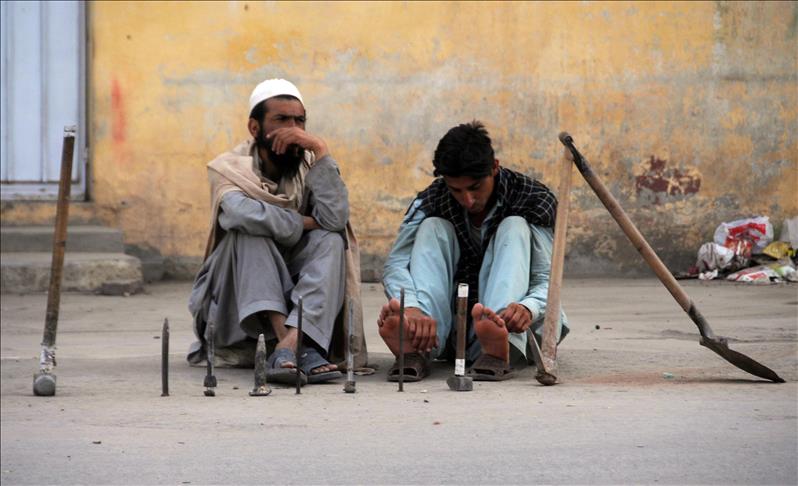
On Wednesday, 45-year old Iqbal Afridi will be allowed to go home. His hometown Tirah, a far-flung mountainous valley sitting near Pakistan's border with Afghanistan, has been declared free from militants and Pakistan's government is allowing those displaced by the conflict to return.
Tirah was once a stronghold for the previously Taliban-affiliated Lashkar-e-Islam and between 2008 and 2013 was a hotspot for battles between militants and security forces. The town is located on the borders of Khurram, Khyber and Orakzai agencies – three semi-autonomous tribal regions – and its 150,000 Pashtun tribesmen.
The most recent mass migration from Tirah was in March 2013, when security forces backed by gunships launched a military onslaught to force militants out of the valley, which ended with the army declaring the region "free from terrorists" on Sunday.
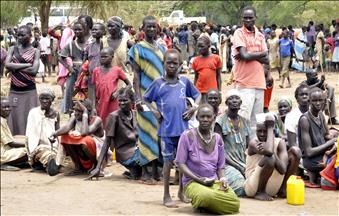
Some 14,000 displaced families were accommodated in camps established by a disaster management authority for Pakistan's tribal areas but more families have been staying in different parts of the country and mainly in northwestern Khyber Pakhtunkhawa (KP) province, which borders neighboring Afghanistan.
“It’s over a year, we have been homeless. This is the moment we have been waiting for desperately," an emotional Afridi, who runs a small shop in the main Tirah bazaar, told the Anadolu Agency.
Dressed in traditional loose light-blue trousers and shirt, and wearing a white turban, Iqbal's family are one of 7700 who are supposed to repatriate “voluntarily” on May 7.
The volunteer repatriation according to Arshad Khan, who is head of the disaster management authority, will be completed by June 2014.
The government has announced some incentives for the repatriating families that include enough rations for six months.
“This (repatriation) is not only for those who are settled in the shelter camps but for all those who are settled with their relatives or on their own,” Khan told a news conference.
Though many are excited about the prospect of returning others, haunted by the fear of militants reestablishing their presence , have chosen not to take up the offer of repatriation.
“No doubt, there is no alternative to your own home, and people. But, your life is more important than that,” said Ishfaq Orakzai who left Tirah valley with his family in 2009.
Lodged in the dusty Jerma shelter camp in the suburbs of Kohat, Ishfaq has decided to delay the return to his hometown.
“I am following the wait-and-see policy. You cannot simply trust in announcements,” he said. “What if they (insurgents) return tomorrow?” He recalled how he had to flee his home at night, following clashes and bombardments in the area.
“By the grace of Allah, I and my family remained unhurt at that time. But there is no guarantee for next time.”
Ishfaq claimed militants were still positioned in some parts of Tirah valley and were simply waiting for the army to leave.
Lashkar-e-Islam forced hundreds of Afghan refugees to leave Khyber Agency for Afghanistan last week after they refused to provide "one volunteer from each family” to fight alongside the insurgent group.
Afridi partially agrees with Ishfaq’s apprehensions. “Yes, there is a possibility of militants’ return. But there is a possibility too that they will not return."
“How long you will stay away from your home?"
By Aamir Latif