By Kingsley Kobo
ABIDJAN
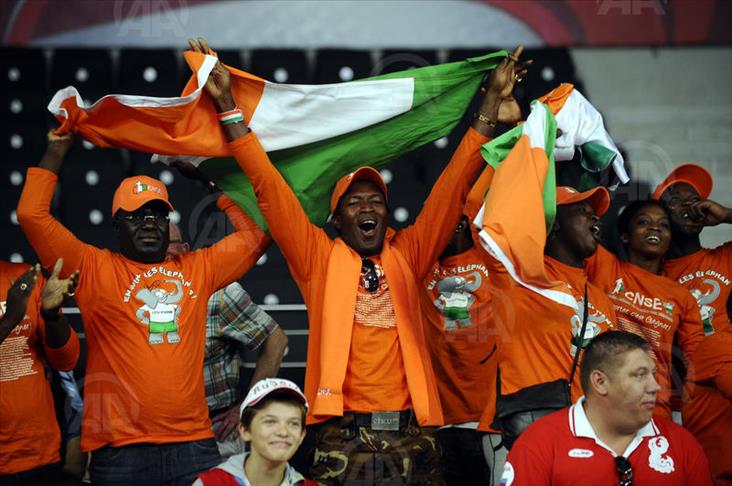
Ivory Coast's participation in the ongoing World Cup in Brazil has helped boost commercial activity in the West African country since the tournament began on June 12, attracting new clients and improving sales.
"I began selling football t-shirts, caps and other World Cup-related items the very day the competition kicked off," Serge Angouan, a 36-year-old street hawker in Abidjan, told Anadolu Agency.
"Sales have been very satisfactory," he said. "I'm confident that I'll be able to raise my daughters' school fees before the final match."
Many street vendors – who usually sell food, fruit and ice water – have switched to sporting materials bearing the colors of the teams playing in Brazil.
Ivory Coast's orange, white and green jerseys are currently the biggest sellers, according to vendors interviewed by AA in capital Yamoussoukro, second city Abidjan, and Bouake.
Jerseys of other African World Cup participants – Nigeria, Ghana, Cameroon and Algeria – are also selling well, thanks to the large expatriate communities from these countries in Ivory Coast.
"I'm Moroccan but I support Algeria at the World Cup because they are the only North African country among the five African teams," said Mustapha Ajiba, 42, who runs a chain of bakeries in Ivory Coast.
"All the North Africans in Ivory Coast and the Lebanese here are supporting Algeria. We have bought Fennec Foxes jerseys for ourselves, our kids and wives," he told AA, in reference to Algeria's national team.
The 20th World Cup will run from June 12 to July 13, with the participation of 32 teams from five continents.
The world's most widely viewed sporting event will feature a total of 64 matches to be hosted by 12 cities across Brazil.
The Elephants, as the Ivorian team is fondly called, won their first World Cup match against Japan 2-1 on Saturday.
Fans now hope the good times will continue with their team's upcoming game against Colombia on Thursday.
Hot sale
Traders with a little start-up capital mostly invest in cheap World Cup-related goods, like pamphlets bearing the fixtures of the World Cup and some historic information. Those generally sell for about 100 West African CFA francs (roughly $.2) per copy.
Sellers of colorful gadgets – like plastic bangles and bracelets, balloons and fancy goggles – are all over the streets of Ivory Coast's major cities, hawking their wares to passersby during the day, and at night on match days.
"I started this business with 15,000 francs [$30] and have made more than 37,500 francs [$75] in just the first week of the tournament," Mariam Kone, a 22-year-old high school dropout, told AA. "This looks very promising."
Traditional roadside stores that sell cosmetics, clothing and shoes are adding World Cup-related items to their shelves in hopes of boosting sales.
"I used to sell soap, hair cream and makeup kits, but found out that stores around me were transforming their stands to World Cup colors, and customers were buying," Celestine Koffi, 34, told AA in Yamoussoukro.
"So I decided to do the same, and my sales have phenomenally increased – especially with the sale of flags of African teams, and even France, Spain and Brazil," she said.
"Some white expatriates – and even some Ivorians – buy foreign flags," Koffi added, laughing.
Sellers of TV sets, for their part, said sales could peak during the period, given the positive signs already seen in the tournament's first week.
Families have been ordering new screens of different sizes to watch the matches, according to sellers.
Although many buyers already own TVs, they want to upgrade to bigger screens – with higher resolutions – to enjoy the games, one Abidjan TV dealer told AA.
Besides the state television channels that broadcast the games for free, many Ivorians have satellite television subscriptions in order to access better World Cup commentary and analysis.
"I have registered at least 20 subscriptions per day since the World Cup began, as opposed to five or six in the past," said Jacques Mensah, an agent for French satellite television network Canal+.
"Business is growing. I think even after the elimination of the African teams, people will continue to subscribe to watch quality football," he added.
Nearly all the country's major restaurant and bar chains have installed giant TV screens in hopes of drawing customers.
Although they could watch the games in the comfort of their own homes, many prefer staying outdoors in the company of friends to relish the frenzy of excitement that the quadrennial football tournament generates.
"They love to… watch the games in a crowded atmosphere, jumping and shouting to every good action on the screen," said 47-year-old restaurant owner Yeo Pascal. "This boosts our sales."
www.aa.com.tr/en