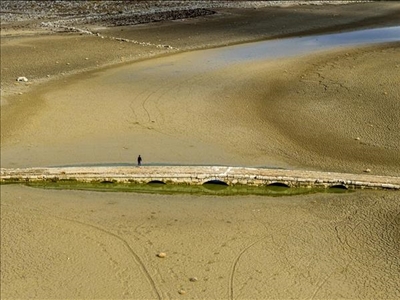
Türkiye needs sustained rainfall to ease two-year water deficit


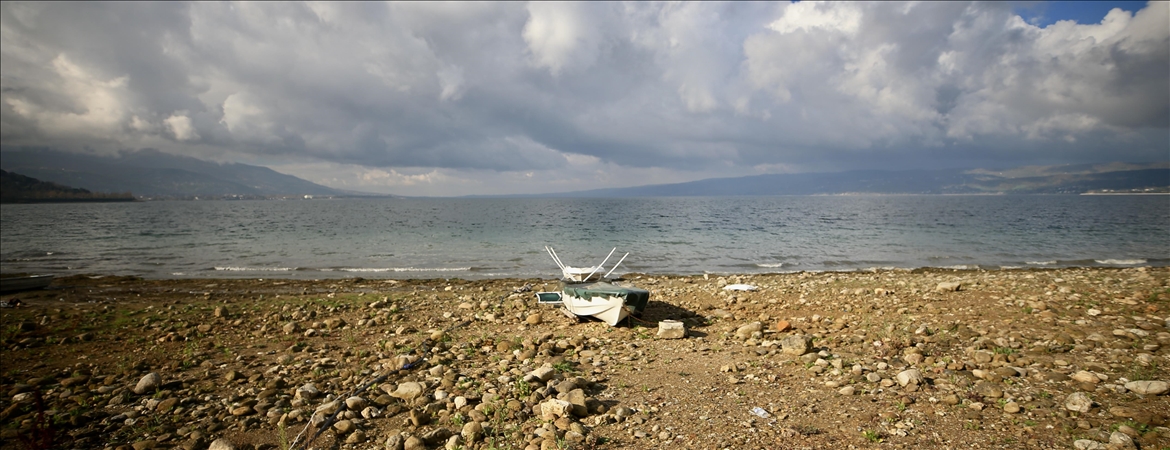
One of the Marmara Region’s key water resources, Lake Sapanca is mainly fed by streams descending from the mountains to its south, including Karacay, Kurucay, Kurtkoy, Mahmudiye, Istanbuldere, Karadere and Kaymakci.
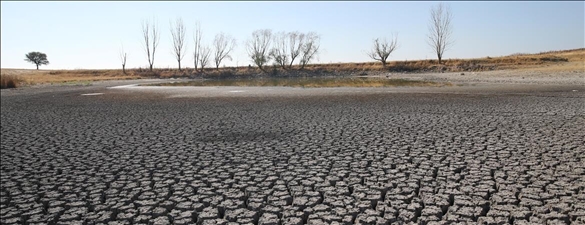
Under normal conditions, the lake’s water level rises during winter and spring and recedestoward autumn. However, shoreline retreat of up to 15–20 meters has been observed since 2023. The water loss over the past two years is equivalent to Sakarya’s total annual water consumption.
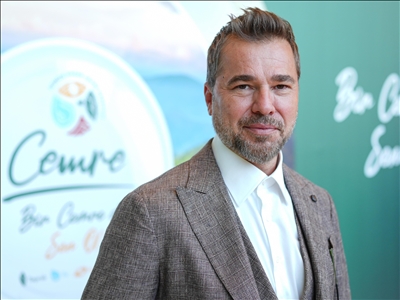
Asude Ates, professor of environmental engineering at Sakarya University, told Anadolu that Lake Sapanca is under severe pressure due to declining rainfall, rising temperatures, increased evaporation, and use for drinking water, industry and agriculture.
Recalling that Lake Sapanca is a vital drinking water source for both Sakarya and Kocaeliprovinces, Ates said: “We have a lake that needs to be very well protected on a global scale. There is a water budget of approximately 185 hectometers here. Approximately 67.5 hectometers of it are used by Sakarya and 30 hectometers by Kocaeli. In other words, roughly 100 hectometers of this budget are used as drinking water. When there is no rainfall and other sources are not used properly, very urgent measures are required to adequately protect the ecosystem here.”
Ates also stressed the need to consider pollution risks linked to transportation, noting that the D-100 highway runs along the northern shore of the lake, while the TEM motorway and a railway line pass along the southern.
“This lake is fed from the ground, so groundwater is crucial”
Ates pointed to significant water retreat in the lake despite the winter season.
“According to current data, the critical point is at 28.54 meters. For us, the critical threshold is 29.4 meters, and we expect this level to remain above 30 meters at all times. Unfortunately, we have experienced the driest season of the past 65 years. Reduced rainfall and increased evaporation have brought the lake to this level,” she said.
Ates said that when water levels reach such critical thresholds, drinking water supply must be prioritized, while other uses such as industry and tourism should be scaled back. She added that in agriculture, farmers should be encouraged to adopt efficient methods such as drip irrigation instead of flood irrigation.
Noting that expected snowfall did not occur last year, Ates said: “Snowfall plays a key role in the water regime, as snowmelt feeds water sources over a longer period. You see a water body of around 47 square kilometers at Lake Sapanca, while the basin covers about 300 square kilometers. When we talk about a basin, we need a holistic approach. There are essentially eight streams feeding this area, and this lake is fed from the ground, so groundwater is crucial.”
Ates added that water consumption has increased in recent years due to the rise in tourism facilities, noting that even if these facilities state they use groundwater, this does not mean it does not affect Lake Sapanca.
“The first priority could be a more accurate and effective allocation of the water budget”
Emphasizing that the water budget also covers the volume needed to sustain the lake’s living ecosystem, Ates said: “For this ecosystem to survive, maximum usage should be around 110–120 hectometers. If 100 hectometers are allocated to drinking water, questions arise regarding the capacity of withdrawal from other sources. One of the first issues that should be considered in the short term could be a more accurate and effective allocation of the water budget here.”
Ates said that more radical decisions and stricter enforcement in areas other than drinking water use could be beneficial for protecting the lake. She recommended first clarifying the lake’s water budget across the provinces it borders and preparing a strategic plan until the lake recovers.
Pointing out that the greatest pressure on the lake is related to drinking water supply, Atessaid this pressure could be reduced by turning to alternative water sources.
“Sakarya Metropolitan Municipality has a project related to the Ballikaya Dam. I believe this project is currently at the pipeline tender stage. We have found a very good alternative water source, but it will take at least two years for it to reach the lake or reduce the pressure here. That means we must protect this precious resource extremely carefully for two years. There is no turning back. We are currently at a critical threshold. If that threshold is crossed, lake ecosystems are unfortunately not easily restored,” she said.
Ates concluded by stressing that water management is crucial not only at the institutional level but also in terms of individual consumption, adding that water will be a highly strategic resource for decades and that it must be managed well.