Reviving lake in central Türkiye sees birds return amid drying wetlands


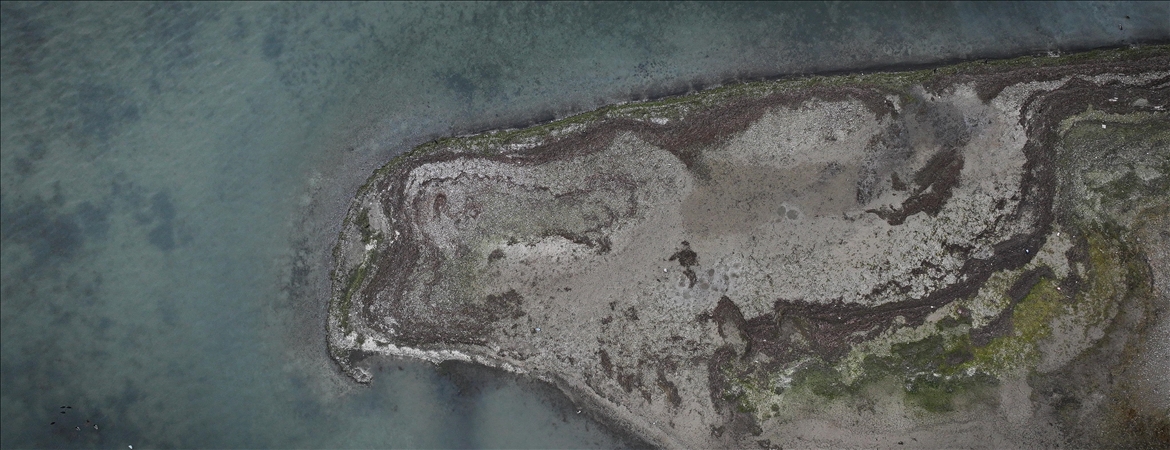
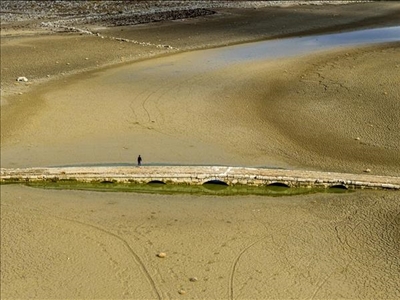
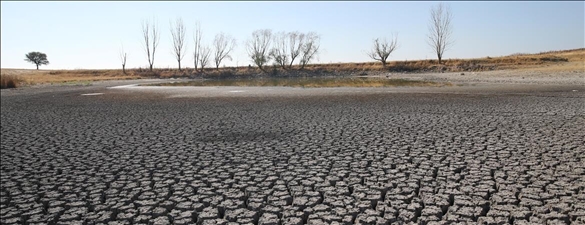
Precipitation irregularities, prolonged dry periods, and increasing evaporation rates, which have become evident in the Lake Sapanca Basin in recent years, lower the water level and create pressure on agricultural production in the region.
Tufan Turp, a researcher and board member at Bogazici University’s Center for Climate Change and Policy Research, told Anadolu that the basin generally has a humid and temperate climate characteristic of the Marmara–West Black Sea regions.
Stressing the growing impact of prolonged dry periods and irregular precipitation in and surroundings of the lake, Turp said data from the Turkish State Meteorological Service show that during the 2025 water year, covering Oct. 1 2024 to Sept. 30 2025, rainfall declined most sharply in Southeast Anatolia, Central Anatolia and the Marmara region.
Turp said that although Sakarya and Kocaeli, provinces surrounding the lake, received relatively higher rainfall within Marmara, both still recorded precipitation well below normal levels. “Sakarya and Kocaeli, which normally receive around 800 millimeters of rainfall, saw total precipitation drop below 600 millimeters in the 2025 water year. This represents a decline of nearly 30% for both provinces. Considering different reference and assessment periods, the basin has been experiencing severe drought in recent years. According to Sakarya Water and Sewerage Administration (SASKI) data, the lake’s water level was measured at 28.56 meters as of Dec. 10,” he said.
Turp stated that while seasonal precipitation in the region had been relatively regular for many years, it has recently declined and become increasingly irregular. He said winter and spring precipitation has largely been replaced by short but intense downpours, while summers are characterized by longer dry periods than in the past.
He added that short- and medium-term projections indicate this trend is likely to continue, with rising temperatures and evaporation expected to reduce water inputs and cause periodic declines in lake levels.
Warning that seasonal fluctuations and irregular rainfall could disrupt the hydrological balance of the basin, Turp said the region may face longer dry periods relative to its historical norms.
Turp emphasized that these changes affect not only total amount of precipitation but also how it reaches the lake.
“It also changes and transforms the way precipitation reaches the lake. Since precipitation, which was previously regular and more easily absorbed by the soil, now occurs as sudden and intense downpours, increasing surface runoff, reducing the water holding capacity of the soil, and this weakens the feeding of the lake. An irregular precipitation regime causes seasonal fluctuations in the lake’s water level, disrupting the natural functioning of the lake ecosystem. This also creates intense competition over resource allocation for agricultural irrigation, drinking water supply and ecological balance,” he said.
Traditional crop patterns become incompatible with climate conditions
Nazan An, board member at Bogazici University’s Center for Climate Change and Policy Research, said the agricultural sector is among the most vulnerable areas around the lake, adding that traditional crop patterns are becoming increasingly incompatible with changing climate conditions, as irrigation costs are rising, and agricultural productivity is declining.
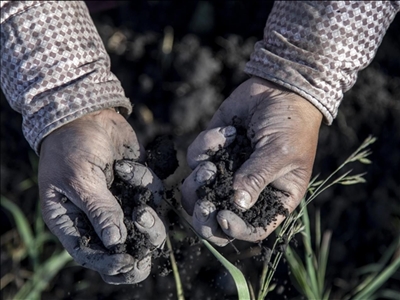
An stressed that irregular precipitation is critical for water security and the sustainability of agricultural production in the region, noting that disrupted rainfall patterns disrupt hydrological balance, reduce soil moisture and increase agricultural production risks.
She added that prolonged dry periods during summer also affect groundwater levels around the lake, increasing pressure on the ecosystem and water management systems.
An said increasing uncertainty in planting and harvesting periods is forcing farmers to adapt beyond their usual production routines, with these periods shifting by two to three weeks depending on location.
“In Sapanca and its surroundings, crop patterns must shift from water-intensive plants to drought-resistant legumes, aromatic plants and deep-rooted fruit trees. While transitioning to less water-intensive and more drought-tolerant crops, water efficiency practices must be applied decisively to existing crops. Prolonged dry periods pose a serious risk, especially for farmers dependent on water-intensive plant production. Declining soil moisture, falling groundwater levels and rising irrigation costs jeopardize crop productivity and continuity of production. In the long term, these conditions could make agricultural activities economically unsustainable,” she said.
“A multidimensional climate risk”
An noted that uncertainty in production and income losses in rural areas may lead to migration to cities, stressing that migration stems not only from drought or agricultural risks but also from a combination of socioeconomic conditions, limited employment opportunities, access to education and health services, urbanization pressures, the impact of industrial activities on water resources, and traditional social ties.
She emphasized that a holistic water management approach that accounts for climatic trends is essential for the long-term protection of the lake.
“Permanent recovery is not possible without establishing a system in the basin where water is properly managed in the basin, coastal areas and wetlands are protected, pollution is reduced, and mountain–forest ecosystems are strengthened. Preventing migration also depends on eliminating the conditions that displace people. Without safeguarding water security, agricultural productivity and income, sustaining rural life becomes increasingly difficult. In short, when the lake ecosystem is protected and agricultural livelihoods become sustainable, both the ecosystem and the social structure will be able to recover together,” she said.