Reviving lake in central Türkiye sees birds return amid drying wetlands


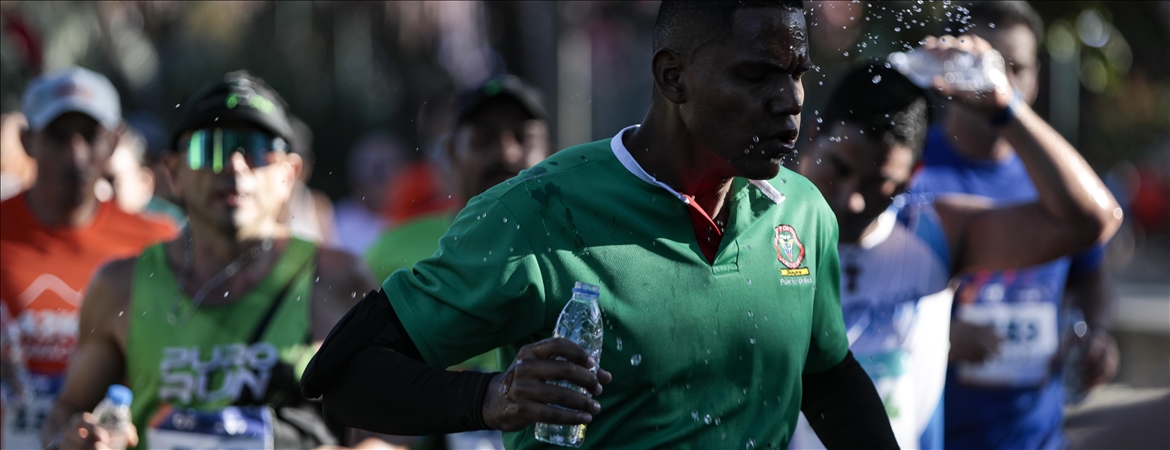
According to the “Running Out of Cool Days” analysis published by climate research organization Climate Central, rising air temperatures are negatively affecting runners’ performance.
The study examined temperature conditions on the days of 221 marathons worldwide in 2025.
Researchers found that elite male runners perform best in cooler conditions, around 4°C on average, while elite female runners perform better in warmer conditions at around 10°C. Among recreational runners, men showed their best performance at 6°C and women at 7°C.
Using the Climate Shift Index (CSI) system, researchers calculated the likelihood of runners experiencing ideal temperatures on each race day based on skill level and gender across the “Marathon Majors,” including Tokyo, Boston, London, Berlin, Chicago, Sydney and New York marathons.
Tokyo Marathon had the closest conditions to ideal for recreational male and female runners with an average probability of 80 percent, and for elite male runners at 69 percent. The probability for elite female runners reached 78 percent in Tokyo and peaked at 87 percent in London.
At the Sydney Marathon, with an average temperature of 13.8°C, only elite female runners with a higher heat tolerance reached ideal conditions at 31 percent.
Climate change drove the unusual heat
The study found that the 2025 Tokyo and Berlin marathons were held in unusually warm conditions due to climate change.
Tokyo, although usually the marathon with the highest potential for ideal conditions, recorded temperatures 8.2°C above expectations, with runners competing at an average of 15.2°C.
At the Berlin Marathon, temperatures rose 6.7°C above normal to an average of 20.7°C, with a CSI level of 2.
Risk of carbon pollution
Researchers also examined how race conditions may change for 2025, 2035 and 2045 under a high-emissions scenario. According to the analysis, ideal marathon conditions will become less likely for either recreational or elite runners in 190 of the 221 global races by 2045.
Among the Marathon Majors, Tokyo Marathon is expected to experience the largest decline in ideal conditions between 2025 and 2045, with a drop from 69 percent to 57 percent for elite men.
For elite women, the largest drop is expected to be experienced at the Berlin Marathon, from 40 percent to 29 percent. However, ideal conditions for elite women are expected to improve at the Boston Marathon (79 percent to 82 percent) and Tokyo Marathon (78 percent to 85 percent) over the same period.
Racing in cooler hours of the day may benefit athletes
Ideal race conditions coincide with lower temperatures, which typically occur near sunrise.
Racing during the coolest hours offers the greatest benefit to elite men, increasing the likelihood of peak conditions in 2045 by 44 percent in London, 31 percent in Tokyo and 27 percent in Boston.
For elite women, who perform better in warmer weather, earlier start times may reduce the chance of reaching ideal conditions by 41 percent in Tokyo and 18 percent in Boston by 2045.
Climate change threatens athletes’ health
Hakan Gur, Professor of Sports Medicine at Bursa Uludag University Faculty of Medicine told Anadolu that changing environmental factors such as temperatures, humidity and pressure place additional burdens on human physiology, metabolism and functioning of bodily systems.
Gur noted that climate-related changes can negatively affect athletes’ performance and lead to severe health problems, including those that may result in death, adding that increased physical and physiological stress leads to poor performance and early fatigue.
“Sometimes competitors are even forced to abandon the race. In various competitions, among the reasons behind the rising number of athletes abandoning races compared to previous years, the impact of climate change stands out,” he said, stressing that athletes often fail to reach target distances and times under harsh conditions.
Gur highlighted that the lack of wind, parallel to the increasing temperatures, humidity, and pressure, causes additional stress on the body systems, especially the heart, circulation, and respiratory systems, and stated that the increase in body temperature triggers serious health problems.
“Excessive sweating caused by increased internal body temperature leads to fluid and mineral loss, resulting in muscle cramps, headache, fatigue, increased heart rate, shivering and tremor. When internal body temperature reaches 40°C or higher, it can cause serious health problems, from loss of consciousness and seizures to coma and even death. These negative effects make it difficult for athletes to sustain previous performance levels,” he added.
Climate change affects women more severely
Gur said athletes will struggle more to reach desired performance levels as climate impacts intensify.
“For athletes, training sessions will become harder to complete, and they will need longer recovery periods. Training may need to be shifted to cooler hours of the day. Before competitions, athletes should train for at least 4–8 days in conditions similar to the race environment. They can wear thin, moisture-wicking clothes.”