Beyza Binnur Donmez
10 March 2026•Update: 10 March 2026
GENEVA
Afghan children returning from Iran are facing growing humanitarian risks as families arrive exhausted and uncertain about their future, UNICEF warned Tuesday.
Tajudeen Oyewale, UNICEF's representative in Afghanistan, told reporters in Geneva that families are crossing into the country through border points such as Islam Qala—which connects Iran's northeastern Mashhad province with Afghanistan's western Herat province—as tensions rise in the region.
"The impact of escalating conflict in the Middle East is creating immediate risks for children across borders," he said.
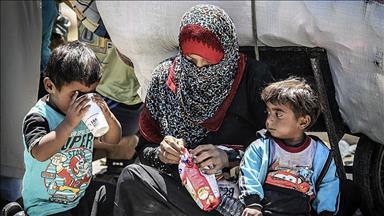
According to UNICEF, many families arriving at reception centers appear distressed after difficult journeys and require urgent assistance.
"We are already seeing too many mothers arriving at reception centers with their children, looking exhausted, overwhelmed, and in need of immediate support," Oyewale said.
The situation comes amid already large return movements. In 2025, nearly 3 million Afghans returned from neighboring countries, mainly Iran and Pakistan, with around 60% of them families with children.
UNICEF warned that unaccompanied children face heightened protection risks.
"Children require particular attention, especially those who are unaccompanied," Oyewale said, warning they could face dangers including abduction and violence.
Afghanistan is already facing severe humanitarian challenges, with around 11 million children in need of assistance. The country’s humanitarian response plan remains significantly underfunded, UNICEF added.
"Children must be protected and supported at every stage when they need us the most," he said, expressing UNICEF's readiness to support children and families and to scale up the response if needed.
- UNHCR warns of rising returns to Afghanistan
Separately, the UN refugee agency warned that regional conflicts could drive increased returns of Afghans from neighboring countries under difficult conditions.
Arafat Jamal, UNHCR representative in Afghanistan, told reporters in Geneva that around 110,000 Afghans have already returned from Iran this year, with roughly 1,700 crossing the border each day since the escalation of conflict in the Middle East.
"We remain concerned that developments in the region could trigger larger movements in the coming weeks," he said.
Returns have already been exceptionally high in recent years. More than 5 million Afghans have returned from neighboring countries over the past two years, including almost 1.9 million from Iran in 2025 alone, the representative noted.
Jamal said many families are experiencing repeated displacement—first fleeing Afghanistan, later displaced inside Iran due to conflict, and now returning once again. Upon returning to Afghanistan, "the triply displaced enter a spiral of precarity and uncertainty," he said.
"While attention today is focused on the Iran border, the situation at the Pakistan border also remains critical," Jamal said, noting that more than 160,000 Afghans have returned from Pakistan this year.
He warned that humanitarian agencies are ready to respond if arrivals increase but require greater international support.