- Analysts say government interventions can only soften the impact, warning that the current disruptions ‘could possibly be the biggest energy shock in modern history’
ISTANBUL
Europe is once again confronting the threat of an energy shock, this time driven by conflict in the Middle East rather than the loss of Russian gas.
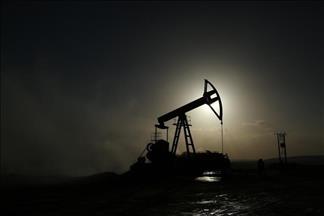
As the US-Israel war with Iran disrupts key shipping routes and energy infrastructure, prices for oil, gas and fuel are rising sharply, raising fears of shortages, inflation and a renewed cost-of-living crisis across the continent.
Experts say the situation could worsen if the conflict drags on.
“If the war escalates and takes longer to resolve, energy demand destruction would be imminent and high prices will increasingly affect consumers,” said Ana Maria Jaller-Makarewicz, lead energy analyst for Europe at the Institute for Energy Economics and Financial Analysis (IEEFA).
Energy demand destruction refers to a lasting decline in consumption caused by sustained high prices or limited supply, often with long-term economic consequences.
The timing is particularly difficult for Europe, which is still recovering from the energy crisis triggered by the loss of Russian gas following the Ukraine war.
“The EU was only just emerging from the 2022-2023 energy crisis when the US and Israel began their airstrikes, so the timing could not be worse,” Seb Kennedy, founder of the energy analytics platform Energy Flux, told Anadolu.
‘Biggest energy shock in modern history’
The conflict was sparked by US and Israeli strikes on Iran on Feb. 28, triggering retaliatory attacks and disrupting shipping through the Strait of Hormuz, a vital corridor for about 20% of global oil trade.
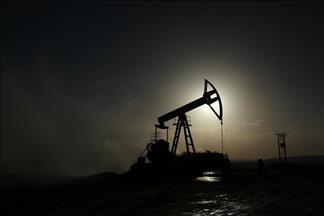
Markets have plunged into chaos, with oil prices surging above $100 per barrel and European fuel prices climbing sharply.
Lisa Basquel, of the Atlantic Council’s Global Energy Center, said the disruption to tanker traffic has created significant volatility.
“Brent prices have risen sharply since the escalation, briefly trading above $100 per barrel, and petrol and diesel prices at European petrol stations have spiked significantly.”
The pressure is even more pronounced in liquefied natural gas (LNG) markets.
Before the conflict, Qatar supplied around 20% of global LNG, all of which passes through the Strait of Hormuz.
“Although Europe imports only a limited share of Qatari LNG directly, the loss of that supply is sending ripples across the global market, placing immense pressure on available cargoes and forcing European buyers into direct competition with major Asian importers,” Basquel said.
With countries such as China, Japan and South Korea accounting for most LNG demand in Asia, Europe may have to pay significantly higher prices to secure supplies.
Kennedy warned that the scale of the LNG disruption could exceed previous shocks.
“Combined with constraints on Middle East oil, condensate and other commodity exports, this could possibly be the biggest energy shock in modern history.”
Governments scramble to respond
European governments have begun introducing emergency measures to limit the impact on households and businesses.
Slovenia was the first EU member to impose fuel rationing, limiting individuals to 50 liters per day and businesses to 200 liters.
Spain has unveiled a €5 billion ($5.7 billion) support package, including tax cuts and subsidies of up to €0.30 ($0.35) per liter of fuel.
Germany, where petrol prices have risen by nearly 14% in three weeks, is considering price caps and windfall taxes on energy companies.
Italy is seeking additional gas supplies from Algeria and has reduced fuel levies by €0.25 ($0.29) per liter, while Portugal has cut diesel taxes.
Hungary has introduced price caps, and France is exploring ways to increase output from its five oil refineries.
Despite these interventions, analysts say governments can only soften the impact.
“These policies might mitigate some of the worst impacts, but they cannot bridge the supply-demand gap created by what is likely a prolonged supply crunch along the Strait of Hormuz,” Kennedy said.
Fragile position ahead of winter
The crisis is unfolding at a critical moment for Europe’s energy system.
Basquel warned that Europe is in a vulnerable position as it prepares to refill storage ahead of next winter.
“The continent is starting from a weak position, with storage levels below 30%, a five-year low following a colder winter and increased exports to Ukraine.”
With LNG markets tightening, securing enough supply could become increasingly difficult.
European benchmark gas prices have already risen above €50 per megawatt-hour, with spikes over €65 – the highest levels in three years.
EU Energy Commissioner Dan Jorgensen has urged member states to begin refilling storage early and consider lowering their targets to reflect the challenging conditions.
Echoes of the 2022 crisis
Many of the conditions that triggered Europe’s 2022 energy crisis are now re-emerging: reliance on external suppliers, competition for LNG, and tight supply during a critical storage period.
Basquel said Europe has reduced its dependence on Russian gas, but this has effectively been replaced by reliance on LNG, much of it from the US.
“However, natural gas prices have not yet reached 2022 levels, and Europe is less dependent on Middle East gas than it was on Russian flows. Still, the economic outlook is weaker, and whether a 2022-style crisis unfolds will largely depend on how much longer the conflict endures.”
Kennedy warned that the long-term consequences could be even more severe this time.
“Post-Ukraine, the EU swapped Russian pipeline gas for LNG. Now, there is no readily available replacement for LNG, so the only lever left to pull is demand destruction.”
He said prolonged high prices could force factories to close or relocate, permanently reducing industrial demand.
“Once demand is destroyed through factory closures, mothballing, and offshoring, it is very hard for it to be revived or brought back to previous levels.”
Limited influence over the conflict
European leaders have called for a diplomatic solution, but analysts say their influence over the course of the conflict remains limited.
Basquel said US policy is likely to be driven primarily by domestic and strategic priorities rather than European concerns.
“Under the current administration, Washington’s approach is likely to remain focused on its own strategic and domestic priorities, with a particular emphasis on lowering energy prices ahead of the November midterms,” she said.
“It is clear that any movement toward de-escalation is going to be driven (more) by the broader strategic calculus in Washington than by any direct European leverage.”