Mucahithan Avcioglu
15 June 2026•Update: 15 June 2026
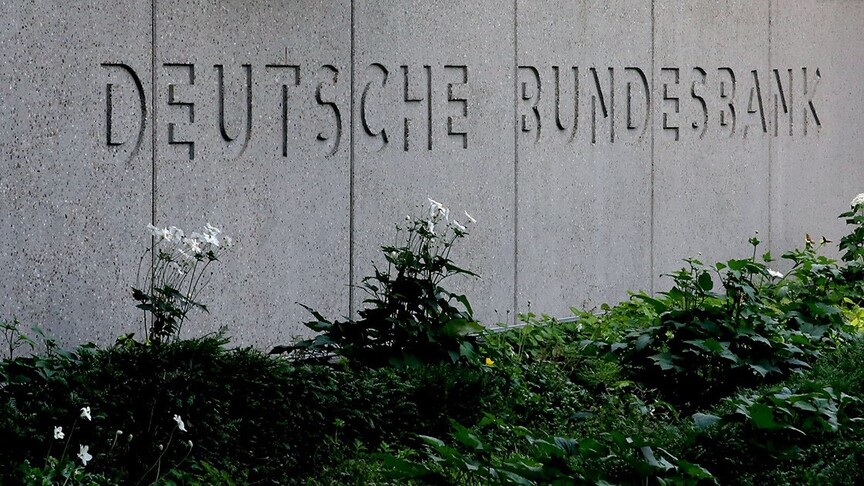
Bundesbank President Joachim Nagel said Monday that the European Central Bank (ECB) should remain cautious on inflation despite signs of easing tensions in the Middle East, warning that the effects of the region's energy shock could persist for months.
Speaking at the opening of the Frankfurt Euro Finance Summit, Nagel said the economic fallout from the Middle East conflict had been severe, particularly after the blockade of the Strait of Hormuz disrupted one of the world's most important energy trade routes.
"The blockade of the Strait of Hormuz has for months largely cut off a vital artery for global energy trade and has had consequences for the entire world economy," Nagel said.
Energy prices, particularly crude oil, surged following the disruption and contributed significantly to higher inflation, he added.
Nagel welcomed recent developments, including a peace agreement between the United States and Iran and efforts to reopen the Strait of Hormuz to shipping, but cautioned that supply conditions would not normalize immediately.
"Even if the Strait of Hormuz becomes fully navigable again soon, it will take months for oil supply to return to normal," he said.
According to Nagel, inflationary pressures may persist because some production facilities in the region have been damaged or taken offline, while energy reserves have been depleted.
He also warned that the expiration of government support measures aimed at reducing energy costs could place additional upward pressure on consumer prices.
"There is no relief in sight for the foreseeable future," Nagel said, stressing that monetary policy must remain focused on ensuring inflation returns sustainably to the ECB's 2% medium-term target.
Nagel said all options remain open for the ECB Governing Council's July policy meeting, including holding interest rates steady or raising them further depending on incoming economic data.
The ECB raised its deposit facility rate by 25 basis points to 2.25% on June 11 in response to renewed inflationary pressures driven largely by higher energy costs.
Eurozone inflation rose above 3% in May, while core inflation also remained well above the ECB's 2% target, reinforcing concerns that the energy shock could broaden into more persistent price pressures.
The Bundesbank said last week that the Middle East conflict was weighing on the German economy and slowing the recovery that began during the winter months. It projected Germany's harmonized inflation rate at 2.9% this year and 2.7% in 2027, before easing to 1.9% in 2028.
Nagel said the outlook remains highly uncertain due to geopolitical developments and warned that any renewed increase in energy prices could further fuel inflation while weighing on economic growth.