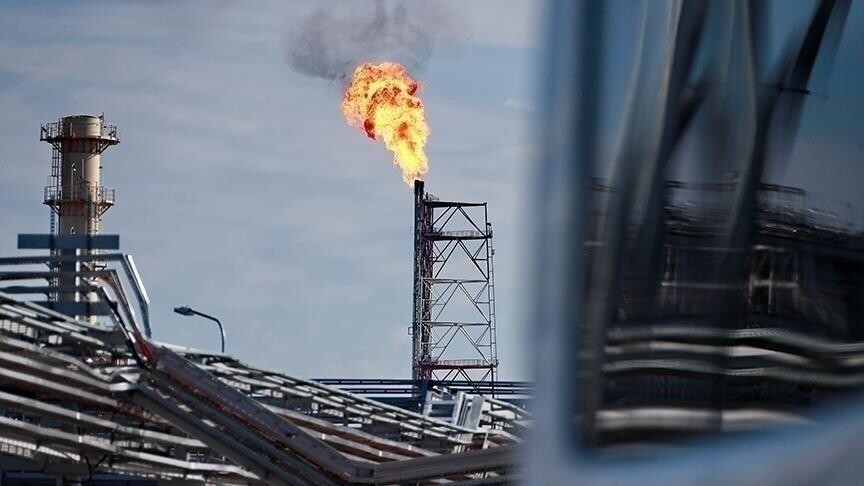
Geopolitical tensions, including in the Strait of Hormuz, have exposed global energy vulnerabilities and reinforced calls to accelerate the shift to renewables ahead of the COP31 climate change conference this November in Türkiye, said the UN resident coordinator in Türkiye, adding that reliance on imported fossil fuels has "sharpened minds" on the need for a faster transition.
Babatunde Ahonsi told Anadolu that international climate negotiations remain a key mechanism for addressing the global climate crisis and assessed the potential contribution of the COP31 UN climate summit, which Türkiye is set to preside over this year in the southern city of Antalya, to advancing global climate action.
While COP progress is often seen as slow, Ahonsi said it has delivered key milestones, including the 2015 Paris Agreement and the COP26 consensus on pursuing efforts to limit warming to 1.5C above pre-industrial temperatures, adding that despite a temporary overshoot, efforts continue to keep it limited in scale and duration.
He said COP28 in 2023 marked the start of a global consensus on energy transition, while COP29 in Azerbaijan the following year advanced climate finance talks, highlighting the key role of funding in turning commitments into action.
Ahonsi said COP31 should mark a shift from negotiations to "verification,” with countries' progress on climate commitments increasingly measured, tracked and reported.
"This is the COP, in my view, at which we will have to transition from negotiations to verification, where we'll be talking about real measurement, tracking, verifying and reporting on progress on national commitments," he said.
He added that under the current climate framework, countries first agree on global targets before translating them into national pledges, and that COP31 could strengthen accountability mechanisms to assess whether those commitments are being met.
Referring to Turkish Environment, Urbanization and Climate Change Minister Murat Kurum, who also serves as COP31 president, Ahonsi said there was a shared emphasis on accelerating implementation.
"We are no longer talking about the science,” he said. “Now is the time to accelerate implementation to deliver proven solutions at the speed and scale commensurate with the severity and magnitude of the climate crisis."
COP31 in Antalya as a strategic choice
Ahonsi said COP31 in Antalya would have a distinct character shaped by its host, drawing global attention to the Mediterranean "hotspot" warming at about 20% above the global average and facing challenges including heat stress, drought, wildfires and water security, while Türkiye's role as a bridge between regions could help facilitate broader dialogue despite differing national interests.
He said Türkiye has the potential to bring parties together at COP31, citing its role as a geographic and geopolitical bridge between East and West, North and South, as well as between Europe, the Middle East and Africa.
"I think the starting point is that Türkiye itself is a bridge by the very fact of its geographical location and geopolitical location. It bridges the East and the West, as I said earlier, the North and the South. It connects Europe with the Middle East and Africa" he said.
He added that Türkiye's recent experience in facilitating dialogue and mediation on complex international issues could support COP31 negotiations and help strengthen trust between parties.
"And Türkiye itself has recent experience of real success in fostering dialogue and mediation on very complex international issues. That experience as the COP31 president will be transferred to the COP31 negotiations and processes between the parties," he said.
Ahonsi said this could help build international trust, which he described as essential for multilateral climate action.
"Because without trust, you cannot really have progress in terms of multilateral action, multilateral climate action," he said.
He said Türkiye could help facilitate "win-win" outcomes balancing the needs of developed economies with the priorities of the Global South, adding: "Who could be best placed to do that except Türkiye?"
Ahonsi said climate justice, including energy transition and access to technology, will be a key issue at COP31, adding that recent geopolitical tensions have exposed vulnerabilities in the global energy system and that Türkiye’s experience could help raise stronger awareness.
"I think overall, given recent developments, especially the situation in the Strait of Hormuz as a result of the US-Israel-Iran war, that’s an episodic, we say period-specific manifestation of how vulnerable the global energy system is," he said.
"An energy system that is dependent on fossil fuel, and especially imported fossil fuel, has really sharpened minds and redoubled the commitment to really accelerate movement towards renewable energies,” he added.
Ahonsi said the timing of COP31 is significant for accelerating the shift away from fossil fuels, adding that renewable energy offers greater security against market volatility and geopolitical risks, with cooperation between the International Energy Agency (IEA) and COP31 expected to boost interest in the sector.
He said energy transition is not only an environmental issue but also has economic and security dimensions, adding that a key question for the Global South is how the shift can be made fair and accessible.
"So we have this commitment to the phasing out of fossil fuel because of the many issues that are with it. But it has to be done in a differentiated way depending on the circumstances of each country," he said.
He said there is no single energy transition roadmap for all countries, but the direction is clear toward moving away from fossil fuels to renewable energy sources.
Africa is an important partner in tackling climate change
On the Africa focus at the COP agenda meeting, Ahonsi said the continent is among the least responsible for global emissions but among the most affected by climate change, adding that COP31 priorities include climate finance and technology transfer, with an urgent need to turn past commitments into action and ensure fast, sustainable access to technology for African countries.
He said Africa has important advantages in addressing climate change, particularly its young population, noting that more than 75% of people are under 30 and are more open to change and innovation. He added that this demographic structure, along with Africa’s growing experience in responding to climate impacts, offers significant potential for driving behavioral change and transforming production and consumption patterns.
"So this is how we want to see it,” he said. “Africa should not be viewed as some vulnerable region that requires handouts. It has to be about partnership, because ultimately, we would never be able to achieve our global climate goals when we ignore a significant portion of the globe."