By Nihan Cabbaroglu
ANKARA
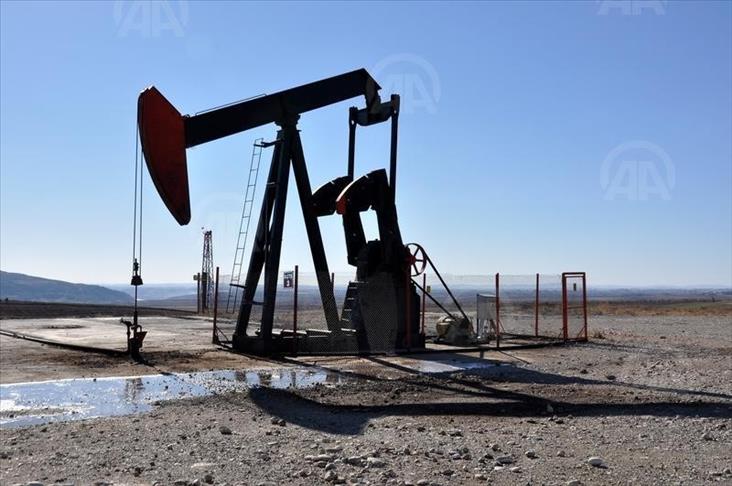
Iraq is focusing on boosting oil production despite falling oil prices, ahead of OPEC's meeting on Thursday where the cartel will seek to resolve the cost and supply dilemma, Iraq’s state company for oil projects Director General said.
Nihad Moosa, director general of Iraq’s state oil company, told The Anadolu Agency that the oil price fall will dramatically affect Iraq’s economy as oil reserves represent 90 percent of the economy's income.
According to Moosa, the country has a lot of energy whose extraction can be further increased along with a lot of licensing service contracts with International oil companies in place since 2010.
“Our main focus is to increase production, it doesn’t matter whether the oil price will increase or decrease,” said Moosa, and added that "we are working on increasing production in the giant fields.”
The dramatic fall in oil prices since June has hit oil-dependent economies. Russia, Iran and Venezuela already declared that they will defend their right to decrease oil production to raise the oil prices again. However, Saudi Arabia and the Gulf states resist cutting supplies.
According to Moosa, Iraq's target is to increase oil production to eight million barrels a day by 2020. She said that the low oil prices will not affect their planned progress. Iraq’s crude oil production is currently at three million barrels per day, according to U.S. Energy Information Administration.
“We will try to find another way, a solution without decreasing oil production” she said, and added that she anticipates that OPEC will have a certain strategy to stop the decrease of oil prices.
Crude oil prices fell more than 30 percent since June to a four-year low in November dropping below an $80 per barrel mark.
Dispute on Kurdish oil
The Erbil and Baghdad governments had a dispute on energy resources in the Kurdish Regional Government. While the KRG insisted on defending its right to sell oil independently of the central government in Baghdad, the central government claimed that it is against the constitution for KRG to do so.
Moosa said the plan of the new Iraqi government is to reach an agreement with the KRG to avoid conflict because it affects Iraq as a whole.
“The priority of my government now is to reach an agreement and obtain results through passing the oil and gas law as soon as possible to settle matters,” she said.
On Nov. 14, the Iraqi Oil Minister, Adil Abdul-Mahdi announced that the two sides reached an agreement. In accordance with the said agreement, the Iraqi government will pay the KRG $500 million as a start and the KRG will export 150,000 barrels per day of oil through Iraq.
Gas exports not in near future
Moosa said Iraq is not likely to export natural gas in the near future, as domestic needs must be fulfilled firstly.
Iraq's proven natural gas reserves as of 2013 are the twelfth largest in the world at 3.2 trillion cubic meters, according to U.S. Energy Information Administration.
“I don’t think in the very near future we will start exports because we need a lot of gas for power generation and still the gas process is not completed,” Moosa said.
“We still have a lot of exploration fields, so in the near future we can’t export gas. We have to fulfill our requirements for power generation and petrochemicals so gas exportation will be delayed,” she added.
www.aa.com.tr/en