ANKARA
“Greece has to go cold turkey,” Greek Finance Minister Yanis Varoufakis said on Sunday.
“For the last five years, Greece has been living for the next loan tranche. We have resembled drug addicts craving the next dose," Finance Minister Varoufakis told reporters, referring to the country's €240 billion ($270 billion) bailout.
But the refusal of further bailout funds puts the country’s banks at risk. Greek banks depend on bailout funds and on emergency funding from the European Central Bank. Without an agreement with its creditors, the so-called Troika -- the International Monetary Fund, the European Union and the central bank -- Greek banks could fail.
“Greece has about enough money to make it through February,” warned Alexandre Delaigue, an economics professor at the French military academy Saint-Cy in an interview with AFP on Sunday.
Analysts warned that a Greek bank failure could have systemic consequences.
“If Syriza doesn’t agree a new program with Greece’s creditors, then the ECB could cut off funding to Greek banks,” said Roger Francis, an analyst at Mizuho International Plc in London. “The situation would get pretty ugly, pretty quickly.”
Greece must repay €2-3 billion by March
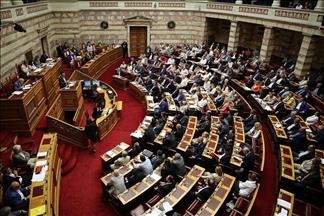
The radical left government of Prime Minister Alexis Tsipras that took over after the Jan. 25 general election must face urgent demands from the Troika for debt payment.
Close to €3 billion ($3.39 billion) are due by March and about €6 billion ($6.79 billion) a few months later. After that, another €6.7 billion ($7.58 billion) in bonds held by the European Central Bank must be paid in July and August.
But, for now, the new government is refusing to negotiate with the Troika.
Athens is hoping to restructure the debt payments, ideally with creditors taking a haircut as well.
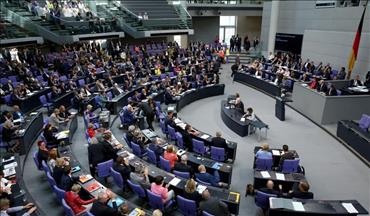
For now, Germany, Greece’s largest creditor, has refused to consider any restructuring of Greek loans. German chancellor Angela Merkel made this clear in an interview with the German daily Hamburger Abendblatt.
"There has already been voluntary debt forgiveness by private creditors, banks have already slashed billions from Greece's debt," Merkel told the paper, adding: "I do not envisage fresh debt cancellation."
Both sides are digging in for a long and difficult negotiation. Greece has hired the international investment bank Lazard to help make its case.