ANKARA
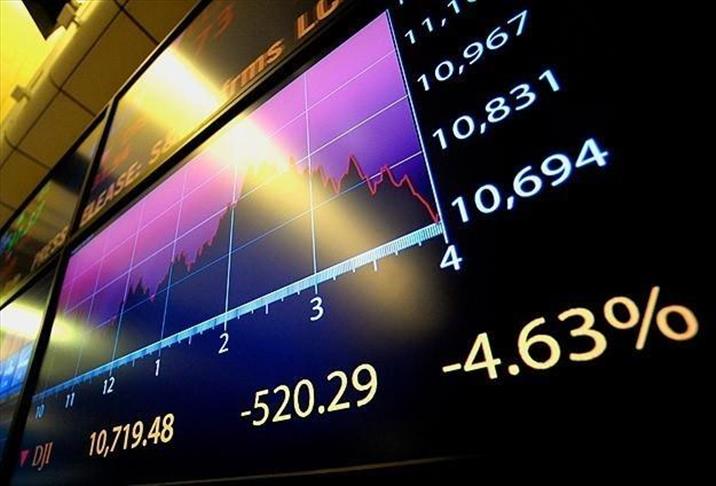
Global markets closed mixed on Wednesday, and Asian shares were largely down on Thursday, as traders got jittery about the Greek bailout debacle and the rout in Chinese shares.
The euro, however, held its value in a narrow trading band from about 1.10 to 1.11 to the dollar on Wednesday and Thursday.
On Wednesday, MSCI's all-country equities world index lost 1.2, while the Dow Jones industrial average fell 1.47 percent. The S&P 500 lost 1.67 percent, and the Nasdaq Composite decreased 1.75 percent. A technical glitch that halted trading on the New York Stock Exchange helped sour investor sentiment.
The rout in Chinese shares continued on Thursday; Chinese stocks have lost more than 30 percent in value since a major correction began on those markets in June. This added to traders’ worries, combined with a pessimistic report from the Federal Reserve on the slow pace of the U.S. economic recovery.
On Thursday, Shanghai plunged 5.9 percent despite Chinese leaders announcing a ban on sales by major stockholders.
Hong Kong's Hang Seng index was down 5.84 percent, Tokyo sank 3.14 percent, Seoul decreased 1.18 percent and Sydney retreated 2.01 percent.
European stocks ended slightly higher on Wednesday, after Greece formally requested a three-year bailout from the European Stability Mechanism. However, futures show European exchanges are headed lower on Thursday.
The eurogroup will meet on Thursday to discuss new Greek proposals. These are estimated by the International Monetary Fund to cost a total of €70 billion ($78 billion) in bailout aid from the 19 member states of the eurozone.
These include:
-- Three months of bridge financing - the amount is not yet disclosed;
-- Immediate implementation of tax reforms and pension system overhaul;
-- Consideration of overall debt relief.
The last item is likely to raise hackles among finance ministers of the eurogroup. Leaders from Germany, Greece's largest creditor, have already balked at the suggestion of limited repayment.
'Austerity laboratory'
Speaking to the European Parliament on Wednesday, Greek Prime Minister Alexis Tsipras reproached the creditors for having made Greece into an "austerity laboratory".
He pointed out that the bailout funds received so far have not reached the Greek people, but rather have been absorbed by banks and bondholders. He demanded European solidarity for a new deal.
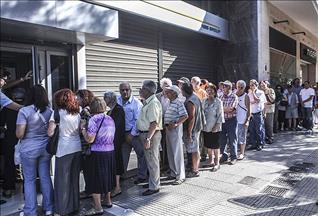
Greece is nearly out of cash to run its banks and public services. Banks will remain closed this week, with ATM withdrawals limited to €60 per day. If no deal is reached with creditors, Greece will be forced to run its banks on IOUs in an alternate currency to the euro.
Sunday evening, when European leaders from all 28 member states meet in Brussels, is the last chance for a deal.