Women and children suffer most by violence in Myanmar
Anadolu Agency continues witnessing desperate Rohingya refugees near Myanmar border
By Safvan Allahverdi
COX'S BAZAR, Bangladesh
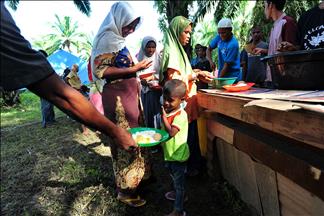
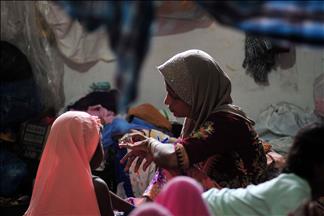
As the most forgotten and persecuted minority who used to live in Rakhine State for centuries, the women and children are the most suffering Rohingyas by the Myanmar military's violent purge.
Moreover, the death risk for the Rakhine natives continues due to malnutrition and unsanitary environment even after they flee to Bangladesh.
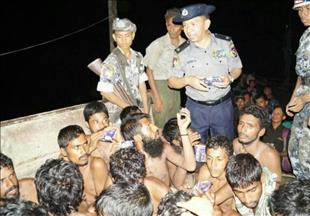
When Anadolu Agency visited an area along Bangladesh’s border with Myanmar, some 75 (46 miles) southeast of Cox's Bazar city, dozens of Rohingya Muslims could be seen walkings the Bangladesh side in the pitch-black night.
Sura Katu, a 55-year-old sick woman, who was placed and carried on a wooden seat by her two sons over their shoulders, as they tried to reach area.
When they arrived from the riverside, which remained as the last obstacle to overcome before the border, the sons started begging the boat owners for assistance, were repeatedly rejected for not having enough money.
Amid the desperation and the perilous plight, they jumped for joy as they were told that they would be taken to where ever they would want to go by a boat filled with Turkish journalists and volunteers.
"I do not know what to say," Rasul ebulliently said as he was trying to protect his mother from the heavy monsoon rain on a boat. "She is very sick and we have been walking for 10 days."
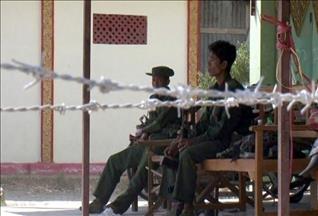
He said that they had to sleep in the fields, forests and waysides to hide from the Myanmar military and security forces as well as radical Buddhist monks' brutal attacks.
"I have been sick for a long time and whenever it became unbearable for me, I was going to Bangladesh to be treated, because they do not allow us to go hospitals in " the mother told Anadolu Agency. "But I could not even go to Bangladesh after they started attacking the villages."
"It was always hard to go to other side but at least we could come back to our own land," Sura added, saying that they left their village permanently this time.
When asked if they knew anyone in Bangladesh who could assist and host them, she simply said "No" with a shaky voice.
Reaching the Bangladesh border after about half an hour of boat voyage, the Katu family had gone out of sight on foot in the dark.
Families apart
Last October, following attacks on border posts in Rakhine's Maungdaw district, security forces launched a five-month crackdown in which, according to Rohingya groups, around 400 people were killed.
The UN documented mass gang rapes, killings -- including of infants and young children -- brutal beatings, and disappearances committed by security personnel. Investigators said such violations may have constituted crimes against humanity.
Alom, 9, is another child victim of Myanmar military and the only survivor of a family of four. Her father, mother and little brother were killed by mortar fire during a military raid in their village in Moungdaw province.
has been saved and smuggled to Bangladesh side by a Rohingya family who also fled Myanmar due to violence.
"She was just standing and watching around, while everybody else making attempt to escape the town," Rukhiya Ajizul, a mother of three children told Anadolu Agency.
"We decided to bring her with us the moment we noticed that her entire family was slaughtered."
, who wraps a towel that she found because she does not have any clothing, remained silent when asked about her family's name and what she needs the most at the moment. she reciting a Surah from the Qur'an, which is the central religious text of Islam.
Unicef says 60 percent of the fleeing Rohingya are children. Around 1200 children have come without their father, mother or any family member.
Unicef urges the world that those children need 7.3 million US dollar in next 3 month for their natural growth and flourishment.
The Ajizul family and Shofika now live in a , one-room house together and are not even able to meet their basic needs such as cooking pots, mats, food, hygiene materials.