Ekip
30 March 2016•Update: 08 April 2016
By Aamir Latif
KARACHI, Pakistan
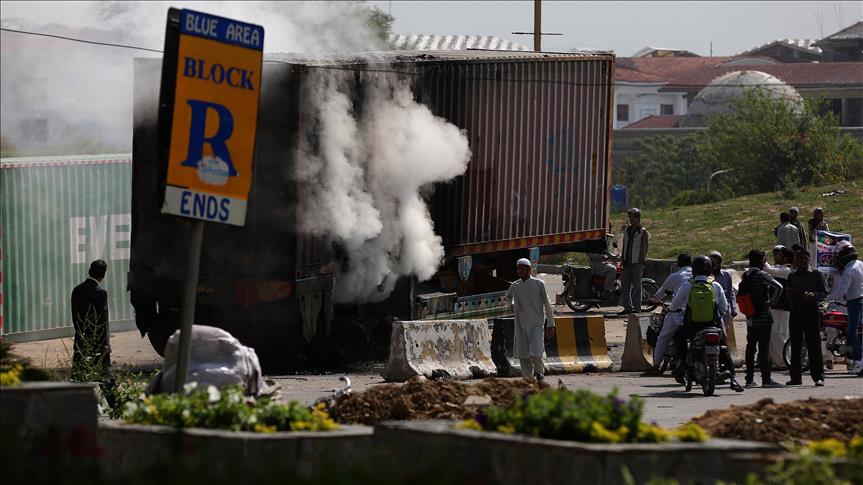
Thousands of protesters who staged a four-day sit-in outside Pakistan’s parliament in Islamabad this week finally dispersed on Wednesday after the government promised to meet their main demands, including assurances that the country’s law against blasphemy would not be changed.
Talks between protesters and the government achieved a breakthrough on Monday when a government committee headed by Finance Minister Ishaq Dar assured protesters that the government was ready to accept seven demands, which included the release of hundreds of detained activists.
The protesters marched on the capital from the nearby garrison city of Rawalpindi on Sunday after attending a memorial for a former police commando, Mumtaz Qadri, who was hanged last month for killing a former governor of Punjab province for criticizing the blasphemy law in 2011.
The government also agreed that no legal concessions would be made for anyone found guilty of committing blasphemy.
Protesters, however, dropped their demand for the official recognition of Qadri as a "martyr".
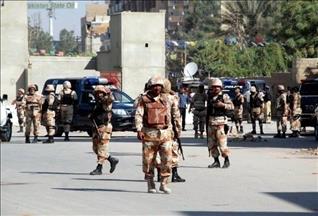
The government had called up the army to contain the situation earlier this week after some 20,000 protesters overran police barricades and managed to reach the parliament.
On Wednesday, local television channels aired footage showing security forces and protesters leaving the site following the successful outcome of talks.
Protesters, for their part, shouted slogans such as "Allah-o-Akbar" ("God is great") and "Death to blasphemers" before leaving the area.
Similar sit-ins in Lahore, Karachi and other cities in Pakistan were likewise called off following the successful conclusion of talks.
Blasphemy is a highly sensitive issue in Pakistan, where in recent years many people accused of the offense have been killed by angry mobs -- both Muslim and non-Muslim -- without recourse to a court of law.
Rights groups, for their part, say the blasphemy law is often exploited to settle personal scores against religious minorities and therefore should be annulled or amended.
Supporters of the law, however, believe that the absence of such legislation would lead people to take the law into their own hands when confronted with cases of alleged blasphemy.
Currently, nearly 600 cases of alleged blasphemy are pending in Pakistani courts, over 400 of which involve Muslims.