Saadet Gokce
21 July 2026•Update: 21 July 2026
Japanese Prime Minister Sanae Takaichi's Cabinet on Tuesday approved its first economic and fiscal policy guidelines, focusing on aggressive fiscal spending in strategic sectors.
Under the policy, the government will designate the next fiscal year, beginning in April, as "the first year of responsible and proactive" spending and target a combined 370 trillion yen ($2.3 trillion) in public and private sector investment by 2040, Kyodo News reported.
The longer-term policy guidance is aimed at providing businesses with greater predictability.
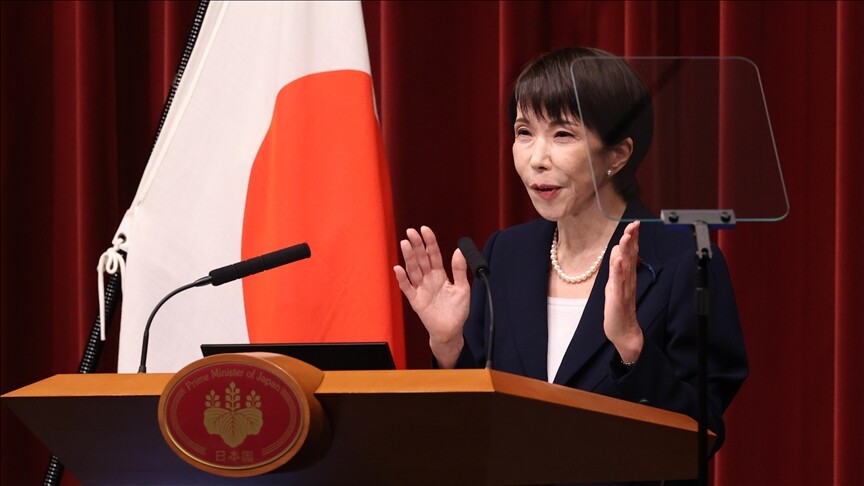
Takaichi, who took office last fall, told a joint meeting of government panels on economic and fiscal policy and on growth strategy that her administration will work "to build a strong economy and ensure fiscal sustainability," while striving to gain the trust of market participants through more consistent and clear communication.
Under the new plan, the government will boost investment in 17 fields related to economic security, crisis preparedness and strategic industries, with a particular focus on semiconductors.
To secure the necessary funding, the state budget will include a newly created investment allocation from fiscal 2027 onward aimed at creating a "strong and prosperous Japan." Under the scheme, ministries will be able to make budget requests without upper limits.
The requests will then be assessed during the budget-making process based on factors including whether they are expected to contribute to economic growth by generating investment returns.
The government will "fundamentally change the way the budget is made," the document said.
"Among advanced countries, there is a big trend of the government and private sectors working together on large-scale, long-term industrial spending," the blueprint said.
The guidelines did not include a call to strive for "fiscal consolidation," unlike the previous basic economic policy compiled last year under Takaichi's predecessor, Shigeru Ishiba.
The government aims to "stably" reduce its debt-to-GDP ratio over multiple years, instead of the traditional goal of pursuing a single-year surplus in the primary budget balance.
In the guidelines, the government set the target of securing sustained real growth of more than 1% and nominal growth of over 3% "as early as possible," though they are seen as ambitious.