Dilara Hamit
13 August 2026•Update: 13 August 2026
- Former congressional candidate rose from Trump’s first administration to become national press secretary for his 2024 presidential campaign
- Her White House tenure was defined by combative exchanges with traditional media and shifting access toward select influencers, podcasters and conservative outlets
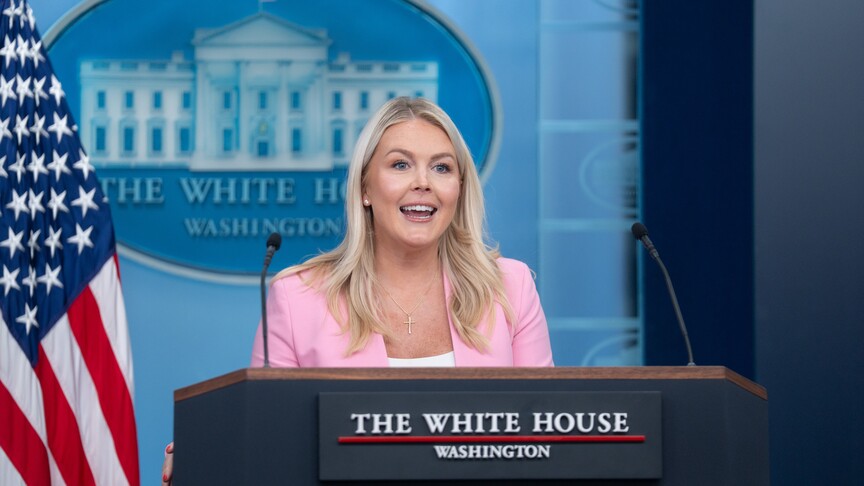
Karoline Leavitt’s departure as White House press secretary will end a record-setting tenure that made the 28-year-old one of the most recognizable figures in President Donald Trump’s second administration.
Trump announced Wednesday that Leavitt would step down at the end of August to spend more time with her family, shortly after she returned from maternity leave following the birth of her second child.
Leavitt said balancing motherhood with “one of the most demanding jobs in the world” had been both rewarding and challenging and described leaving the White House as a “bittersweet decision.”
Her departure, however, is not expected to mark an exit from politics. Trump said she would remain one of his top outside advisers and an “influential voice” within the Republican Party as it campaigns ahead of the midterm elections.
The announcement adds another chapter to a rapid political rise that took Leavitt from a White House internship to the briefing-room podium in less than seven years.
- From New Hampshire to Washington
Born on Aug. 24, 1997, Leavitt grew up in New Hampshire and graduated from Saint Anselm College in 2019 after studying politics and communication.
While at college, she secured an internship in the first Trump White House. She later joined the administration full time, initially working in the Office of Presidential Correspondence before becoming an assistant press secretary under Kayleigh McEnany.
After Trump left office in January 2021, Leavitt moved to Capitol Hill to serve as communications director for New York Republican Rep. Elise Stefanik.
She returned to New Hampshire to run for the US House of Representatives in 2022, presenting herself as a conservative voice for Generation Z and a firm supporter of Trump.
At 25, she won the Republican nomination for New Hampshire’s 1st Congressional District but was defeated in the general election by Democratic incumbent Chris Pappas.
The defeat did not halt her ascent within Trump’s political movement. Leavitt went on to work for the Trump-aligned MAGA Inc. political action committee before becoming national press secretary for his 2024 presidential campaign.
She emerged as one of the campaign’s most visible representatives, regularly appearing on television and defending Trump against his political opponents, criminal cases and criticism of his policy proposals.
After Trump’s election victory, he selected Leavitt as White House press secretary. She took office in January 2025 at the age of 27, becoming the youngest person in US history to hold the position.
- Combative approach to traditional media
Leavitt approached the role as both a spokesperson and a forceful defender of Trump’s political agenda.
At her first White House briefing, she warned journalists that the administration would publicly challenge reporting it considered inaccurate.
“We know for a fact there have been lies that have been pushed by many legacy media outlets,” she said, adding that the White House would call out what it viewed as misinformation. The comments drew criticism from media and advocacy groups.
Her briefings frequently featured sharp exchanges with reporters, reflecting Trump’s own confrontational relationship with major newspapers and television networks.
Leavitt repeatedly accused traditional outlets of political bias and treated the briefing room as a platform to promote the administration’s record and policies.
- Opening White House to ‘new media’
One of the defining features of Leavitt’s tenure was her effort to reshape who received access to the White House.
At her first briefing, she announced the creation of a “new media” seat for journalists and commentators whose organizations were not represented in the briefing room.
Independent journalists, bloggers, podcasters, social media influencers and content creators were invited to apply for credentials. Leavitt argued that the changes reflected how younger Americans increasingly consumed news through digital platforms rather than newspapers and traditional television networks.
The administration later took control of selecting the small group of journalists permitted to cover the president at events where space is limited, a responsibility previously coordinated by the White House Correspondents’ Association.
Leavitt described the move as an effort to give more outlets an opportunity to cover the president. The association criticized the change, warning that allowing the government to select the journalists covering it threatened the independence of the press.
Trump has not announced who will succeed Leavitt at the White House podium.