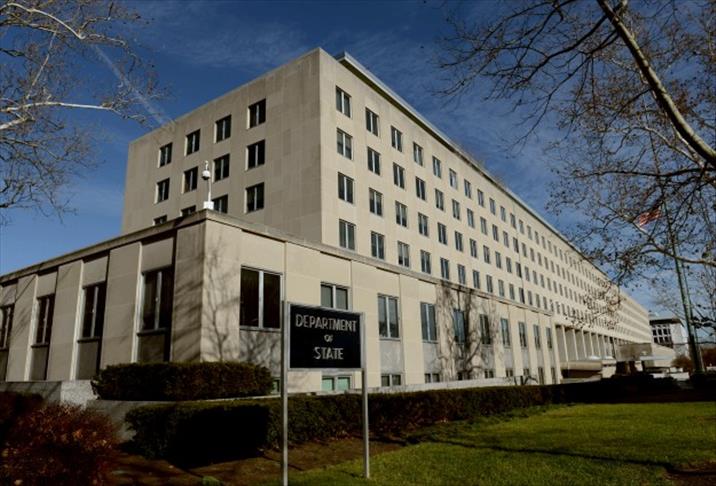
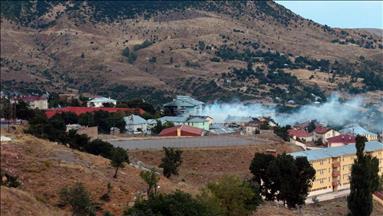
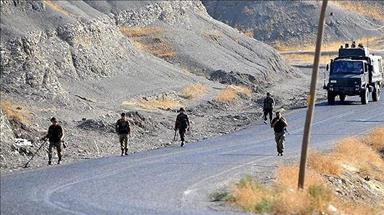
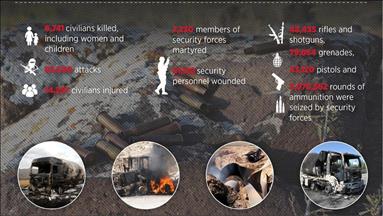
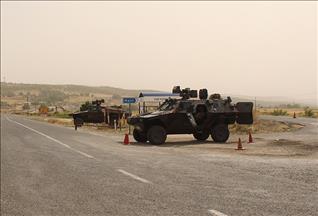
US State Department, in its country report on terrorism, said that the years 2011 and 2012 were one of the most deadliest periods in Turkey's counter-terrorism continuing against PKK terrorist organization.
The report defined PKK as the "most prominent among terrorist groups in Turkey".
"Turkey is a long-standing counterterrorism partner of the United States. It co-chairs the Global Counterterrorism Forum (GCTF) with the United States, and received US assistance to address the terrorist threat posed by PKK in 2012," said the report, adding, "PKK operates from areas in southeastern Turkey and northern Iraq and targets mainly Turkish security forces. Other prominent terrorist groups in Turkey include DHKP-C, a Marxist-Leninist group and Hezbollah. Public sources also highlighted detentions of Islamic Jihad Union members as well as supporters of AQ and other groups. The Turkish Workers’ and Peasants’ Liberation Army, though largely inactive, was also considered a potential threat by the Turkish government."
The report noted, "According to the NATO Centre of Excellence-Defence Against Terrorism in Ankara, there were 226 terrorist incidents reported through November. As a result of ongoing military operations targeting PKK, 494 terrorists were killed, 21 injured, and 44 arrested, while 155 surrendered themselves to the authorities during the first 10 months of the year. "
"Efforts to counter international terrorism are hampered by legislation that defines terrorism narrowly as a crime targeting the Turkish state or Turkish citizens. This definition of terrorism posed concerns for operational and legal cooperation," said the report, adding, "In the aftermath of the 2011, police arrest of 16 people involved in an AQ cell who were likely targeting the U.S. Embassy in Ankara among other locations, U.S. Embassy officials have been denied any additional information regarding the conduct of the case."
The report noted, "the government of Turkey has two significant programs in place to counter radicalization and violent extremism. The first, administered by the police, is a broad-based outreach program to affected communities, similar to anti-gang activities in the United States. The second program, administered by the Turkish government’s Religious Affairs Office, works to undercut violent extremist messaging."