GENEVA
The UN has urged the government of Myanmar to stick to its promises for the country’s democratic transition and long-term reconciliation, warning that it "seems headed in the wrong direction" and urgently needs to "get back on track."
The comments by UN High Commissioner for Human Rights Zeid Ra’ad Al Hussein in a statement Wednesday four years after Myanmar’s reformist government took over from the military junta, promising democratic transition and a peace deal with 17 ethnic rebel groups that have been fighting for greater autonomy.
Zeid said: "The international community has seen the transition in Myanmar as a story of promise and hope.
"But recent developments relating to the human rights of minorities, the freedom of expression and the right to peaceful protest are calling into question the direction of that reform, and even threatening to set it back."
- 'Democratic freedoms'
Referring to recent cases in the country, Zeid said that 14 members of the Michaungkan community were jailed for peacefully protesting against the alleged confiscation of their land by the military last week and 10 journalists were jailed last year under outdated defamation, trespassing and national security laws.
"Myanmar had promised to end the era of political prisoners, but now seems intent on creating a new generation by jailing people who seek to enjoy the democratic freedoms they have been promised," he added.
The government of Myanmar has previously announced that temporary "white cards" held mainly by ethnic minorities who do not have citizenship would expire by the end of March.
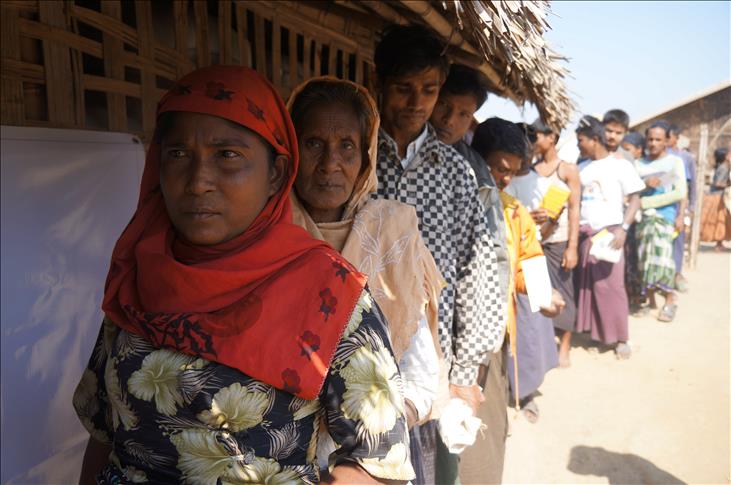
The announcement effectively nullifies a recent decision in parliament to allow the cardholders -- the majority believed to be members of Myanmar’s stateless Rohingya Muslim minority -- to vote in a constitutional referendum later this year.
- Violent attacks
The move came shortly after hundreds of protesters led by Buddhist monks marched through Yangon, the commercial capital, to protest against the parliament's decision.
The Rohingya, who number about one million and live in Myanmar's western Rakhine state, are also denied equal access to citizenship, and many have been victims of violent attacks and pogroms, Zeid said.
He said: "During an election year, it will be tempting for some politicians to fan the flames of prejudice for electoral gain, but at a time when religious extremism is creating havoc in many parts of the world, the terrible consequences of appealing to or appeasing such sentiments should be all too clear.
"A new democratic Myanmar should be built on the strength of its diversity."
The UN has called on Myanmar to grant the Rohingya full citizenship, but there is fierce opposition from nationalists who consider them interlopers from Bangladesh.
Rohingya advocates say that many have ancestral roots in Myanmar going back centuries.
- Thousands displaced
Zeid also expressed concern over the ongoing clashes between the army and ethnic rebels in the Kokang self-administered zone in northeastern Shan State bordering with China for more than two weeks which have forced tens of thousands of people to flee.
More than 130 troops from both sides have been killed in the fighting since Feb. 9, which erupted despite the region experiencing relative stability for years.
President Thein Sein placed Kokang under martial law last week, declaring a state of emergency for 90 days.
Zeid said: "It will be tragic for Myanmar’s peace process if this violence is allowed to spiral.
"All parties must step back from the brink and ensure full respect for human rights and protection of the civilian population."