Seyit Kurt
13 February 2026•Update: 13 February 2026
ISTANBUL
The UN General Assembly on Friday approved the establishment of a 40-member global scientific panel tasked with assessing the impacts and risks of artificial intelligence, passing the resolution overwhelmingly by a vote of 117-2, with two abstentions.
The US and Paraguay were the lone dissenters, while Tunisia and Ukraine abstained.
Scope, mandate of panel
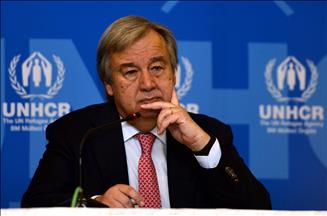
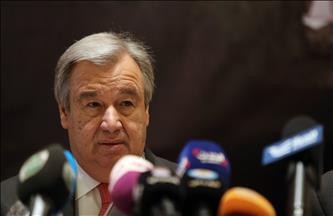
UN Secretary-General Antonio Guterres hailed the decision, describing it as “a foundational step toward global scientific understanding of AI.” He said the panel would deliver rigorous and independent scientific analysis to help all member states navigate the rapid development of AI technologies.
The 40 experts will serve three-year terms and are expected to produce impartial assessments covering AI’s technological progress as well as its economic, ethical, and social implications.
According to UN officials, members were selected from more than 2,600 candidates through an independent review process led by the International Telecommunication Union, the UN Office for Digital and Emerging Technologies, and UNESCO.
The panel includes specialists in AI, data science, high-performance computing, and linguistics, as well as figures from journalism. Among them is Nobel Peace Prize laureate Maria Ressa, and another is Melahat Bilge Demirkoz from Türkiye, a professor of high energy physics at Middle East Technical University (METU). Two US-based academics and two representatives from China are also part of the body.
US opposition
Despite the broad international composition, the US’ Trump administration strongly opposed the initiative. Lauren Lovelace, a counselor at the US mission to the UN, called the panel “a significant overreach of the UN’s mandate and competence.” She said AI governance is not an issue for the UN to dictate and raised concerns about transparency in the panel’s selection process.
“We will not cede authority over AI to international bodies that may be influenced by authoritarian regimes,” Lovelace said, adding that the US would continue to advance AI innovation and cooperate with like-minded nations.
Ukraine said it abstained because of the inclusion of Russian expert Andrei Neznamov, who specializes in AI regulation and ethics, citing its ongoing conflict with Russia.
Initiative rooted in ‘Pact for the Future’
The panel was first announced earlier this month by Guterres as an Independent International Scientific Panel on AI, which he described as a global effort “to serve all of humanity” amid rapid technological change.
Guterres said the initiative responds to a mandate from member states in the Pact for the Future to strengthen multilateral approaches to emerging technologies. He called it the first fully independent global scientific body dedicated to helping close the AI knowledge gap and assess its real-world impacts across economies and societies.
“AI is moving at the speed of light. No country can see the full picture alone,” Guterres said, stressing the need for shared understanding to build effective guardrails, unlock innovation for the common good, and foster cooperation.
The panel is expected to deliver its first report in time for the Global Dialogue on AI Governance this July, he said.