THE HAGUE, Netherlands
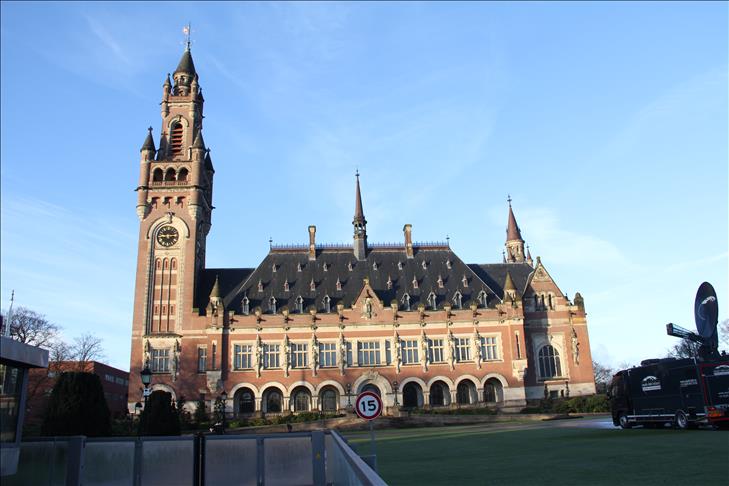
The International Court of Justice on Tuesday ruled that both Serbia and Croatia did not commit genocide during the 1990s Balkan wars.
The court's President Peter Tomka said that neither Croatia nor Serbia had the intention to "destroy a population in whole or in part."
Tomba also said, "Croatia has failed to substantiate its claim that genocide was committed" by Serbia.
The decision came after 16 years of litigation in the landmark case at The Hague-based court.
"Croatia has not established that the only reasonable inference was the intent to destroy in whole or in part the group," he said.
"What is generally called ethnic cleansing does not constitute genocide. Acts of ethnic cleansing may be part of a genocidal plan, but only if there is an intention to physically destroy the target group," he added.
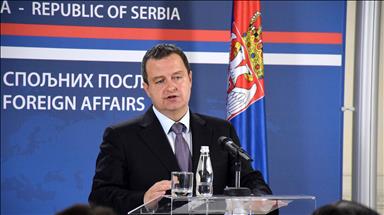
Serbian Justice Minister Nikola Selakovic told reporters that he was "happy with the final decision" and it "meets his expectations."
Amnesty urges Serbia, Croatia to probe war crimes
Human rights body Amnesty International has urged Serbia and Croatia to investigate all those suspected of war crimes and provide justice for victims after the International Court of Justice (ICJ) ruled that neither country committed genocide during the 1990s Balkan wars.
The reaction came on Tuesday shortly after the ICJ based in The Hague, the Netherlands, announced its decision, saying neither Croatia nor Serbia possessed an intention to "destroy a population in whole or in part."
The court's President Peter Tomka said in a statement that "Croatia has failed to substantiate its claim that genocide was committed" by Serbia, and vice versa, in a decision which came after 16 years of litigation in the landmark case at the ICJ.
But Amnesty International’s Director of Europe and Central Asia, John Dalhuisen, said: "Both Serbia and Croatia must urgently act to provide justice for those who have been ignored for so long.
"The fact that the court was unable to find the necessary intent on either side to commit genocide does not change the fact, as the Court itself acknowledged, that crimes against humanity and war crimes were committed by individuals on both sides."
'Not satisfied'
Dalhuisen added: "Victims of sexual violence have particularly struggled to secure justice and reparation. This must be a priority.
"Twenty years on, it is a scandal that the issue of missing persons remains unresolved."
Serbian Justice Minister Nikola Selakovic told reporters that he was "happy with the final decision" and it "meets his expectations."
But, Croatia’s Prime Minister Zoran Milanovic said his government was “not satisfied.”
In early 1990s, over 20,000 people were killed in the bloody war that led to the breakup of Yugoslavia.
The case began in 1999, when Croatia accused Serbia of ethnic cleansing on its territory. Serbia responded with a suit of its own against Croatia in 2010, claiming that over 200,000 ethnic Serbs fled when Croatia started military operations in the region to regain its territory.
The International Court of Justice is the principal judicial organ of the United Nations established in June 1945, according to the court's official website.