Thousands of foreign fighters join Syrian war: report
More than 12,000 foreign nationals have joined the Syrian war and most fight with extreme groups, claims US think-tank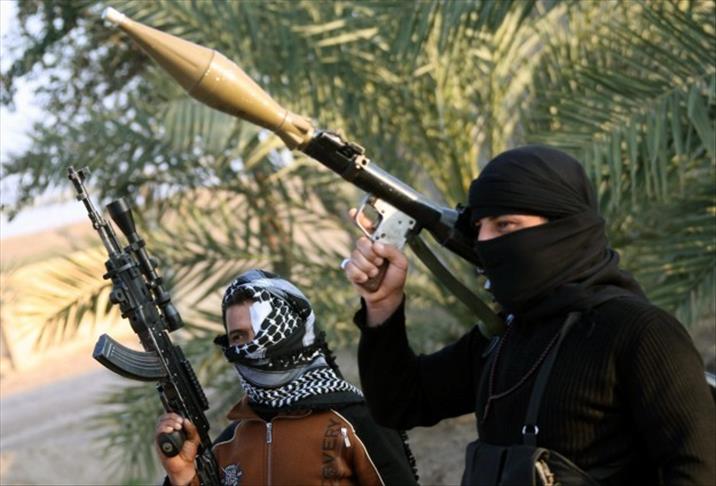
NEW YORK
More than 12,000 foreign fighters - about 2,500 of them from Western countries - have joined the three-year-old war in Syria, claims a New York based think-tank.
The Soufan Group said in a report entitled Foreign Fighters in Syria that the fighters came from most member states of the European Union and also the United States, Canada, Australia and New Zealand.
Authored by Richard Barrett - a former British diplomat and intelligence officer who headed the United Nations Monitoring Team covering al-Qaeda and the Taliban from March 2004 to January 2013 - the report claims that more than 12,000 foreign fighters from at least 81 countries are in Syria.
It states 700 fighters are from France, 400 from the United Kingdom, 100 from Denmark and 2,500 from Saudi Arabia.
The report said most fighters joined extremist groups, including the self-styled Islamic State of Iraq and the Levant (ISIL) faction as they fight harder and are better resourced and motivated.
It added the overall flow of foreigners to the war had remained fairly constant since late 2011.
“There are also several hundred from Russia, but the great majority is from the Arab World,” the report said.
Many of the fighters are young and a fair percentage arriving from non-Muslim countries are converts to Islam, according to the report.
High percentages of the fighters are male, although a certain number of women have joined, the report stated.
“These and others who share their faith commonly express their motivation as a religious obligation to protect fellow Muslims from attack. This sense of duty is captured by their loose use of the word ‘jihad’,” the report stated.
Barrett said that the most effective way for the international community to deal with the number of foreign fighters growing further is to stop the Syrian war, adding that this option remains unpopular given increasing global tension.
He continued that the international community was concerned at what the fighters would do after they left Syria.
The author stated that some countries tried to prevent people joining the war, while others tried to re-integrate those who returned.
“But as the number of returnees increases, it will be important to examine more closely why an individual went, what happened to him while there, and why he came back,” the report stated.