DAKAR - By Sadibou Marone
Floods caused by heavy rainfall have posed a serious social concern in Senegal since 2005, when a new spell of rain hit the West African nation after a long period of drought, with many people in low-lying suburbs of the capital Dakar living in constant fear.
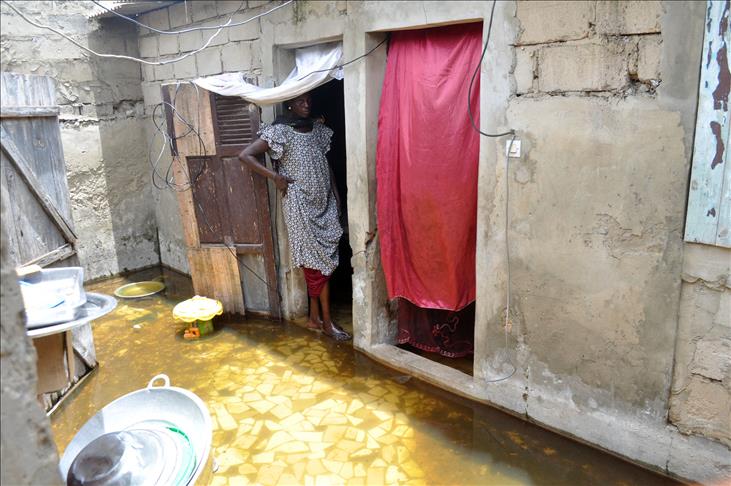
"If the sky is cloudy, we start getting anxious because if it rains our rooms are seized by waters," Sada Sy, an old man who lives in the Thiaroye suburb, some 25km northwest of downtown Dakar, told Anadolu Agency.
"We have been living like this for seven years now," he added.
Senegal faces a rainy season from July to September, with peak flow in August.
Even though the National Agency for Weather and Civil Aviation releases daily weather reports, many inhabitants of the suburbs cannot prepare themselves for the flooding.
Heavy rainfall often leaves homes in the low-lying suburbs of Dakar in ruins.
"These areas cannot avoid floods if it rains very heavily," said Khoudia Ndiaye, who let AA into her three-room house, which was engulfed by water.
Ndiaye, her husband and their four children were forced to leave their home and rent two rooms in another area.
"We have to pay 100 euros per month for these two rented rooms," she lamented.
"We lose all our belongings and valuables every year during the rainy season," said the 48-year-old wife and mother.
"We cannot even work because we focus on how to fight the floods," she added.
Authorities in Senegal say they have allocated more than 100 million euros (roughly 66 billion West African francs) since September as part of a program aimed at combatting flooding.
The amount will be used to build 2,000 homes in which to resettle floods victims.
Authorities said the emergency phase of the program, between 2012 and 2013, included the building of 900 new homes.
After heavy rainfall hit the West African country in 2005 following a long period of drought, the government had launched an emergency social housing program to provide homes to around 20,000 affected people.
Around 4,000 new homes were planned in a distant – but less vulnerable – area.
That program has since been completed, with those affected already resettled in the new homes.