PATTANI, Thailand
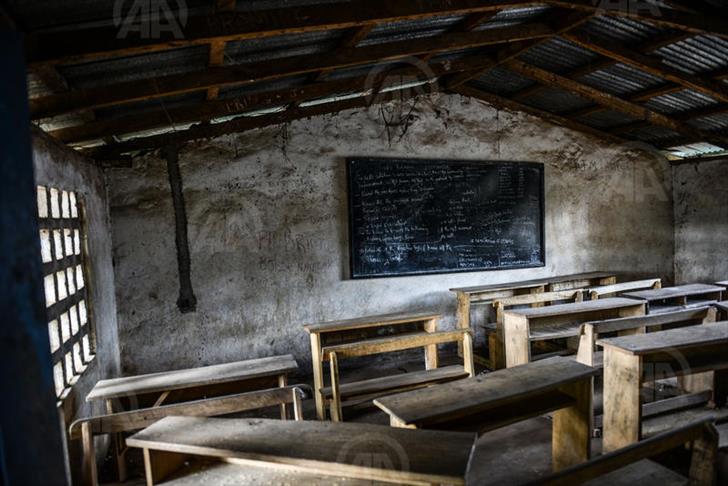
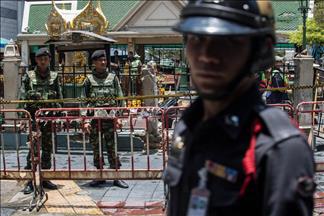
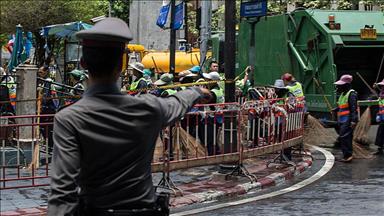
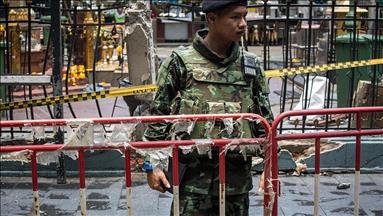
Six government schools were torched in Muslim-dominated southern Thailand early Sunday with insurgents continuing to wage a violent campaign against the Thai state while the military government attempts to restart a peace dialogue.
District Police Chief Colonel Kovit Ratanachoti told The Anadolu Agency that five of the educational facilities were set alight around 2.30 (22.30 Turkish time) in the Tung Yang Daeng district of Pattani, while another was attacked around the same time in neighboring Mayo district.
There were no injuries reported in either incident. Investigators have said they suspect Muslim separatists to be behind at least two of the attacks.
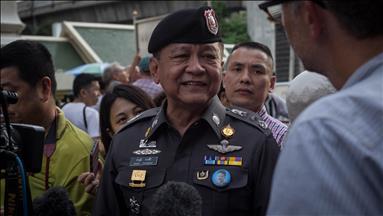
The upsurge in violence occurred as the junta mulls the appointment of a new chief negotiator for a new round of talks with rebels. According to press reports, junta chief General Prayuth Chan-ocha, has not yet decided if he would appoint a military officer or a civilian bureaucrat to lead the ten-man team for the government side.
The date of the talks is yet to be set. New army chief General Udomdej Sitabutr has told local media that "all groups" will participate from the rebels’ side. Malaysia, which is acting as facilitator, has also asked for the participation of civil society organizations.
The bitter conflict, rooted in historical distrust between Malay Muslims and Thai Buddhists, has killed over 6,000 people and injured around 10,800 since 2004. Although insurgents have never made their political goals clear, analysts says some of them want separation from the Thai state, while others are asking for political autonomy.
The dialogue was initially started in March 2013 by then Prime Minister Yingluck Shinawatra’s civilian government, but was suspended last December as massive anti-government protests paralyzed the capital.
Although southern Thailand's armed-insurgent groups are still to formally respond to the invitation to the talks, analysts have told the AA that they doubt any new dialogue will bear fruit under present conditions.
"I am not optimistic. It is, of course encouraging, that the military talk about the perspective of peace through a dialogue, but it is not apparent yet what kind of concessions they are ready to make," Matthew Wheeler, an International Crisis Group expert on the southern conflict, told the AA.
The deep south -- the provinces of Pattani, Yala and Narathiwat as well as a part of Songkhla province -- was an independent sultanate until the 19th century and was only formally annexed by Buddhist-majority Siam (Thailand's previous name) under the terms of a 1909 Anglo-Siamese agreement. Around 80 percent of the population, however, remain Muslim, maintaining Malay as their first language.
The insurgents argued during the previous nine-month dialogue that with such a strong historical claim and the area’s continuing Muslim identity, political autonomy should be a key element of any potential settlement. But the junta has clearly indicated that any such movement would be considered an unacceptable violation of the "territorial integrity" of the country.
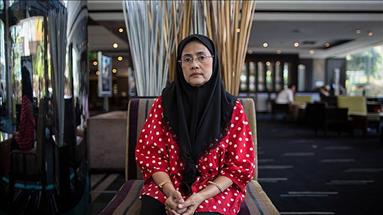
Rungrawee Chalermsripinyorat, an independent analyst who has been studying the southern issue for over ten years, underlined the importance of autonomy to the insurgents.
"Political autonomy is the main issue. Otherwise, there is nothing to talk about," she told the AA.
"[But] the military and the establishment still maintain their focus on 'Thainess,' saying that unity must prevail. They are even reluctant to accept Malay as a working language in the south, let alone an official language."
To complicate matters, the insurgents are not a homogeneous movement, but a collection of different groups, sometimes subdivided into different factions.
The lead representative during the 2013 peace dialogue was a leader of the National Revolution Front -- which appears to exert a certain degree of control on armed operatives on the ground -- however "some hardliners are not willing to join the talks," said Chalermsripinyorat.
The National Revolution Front is one of several groups that emerged in the 1960s in reaction to attempts by the military dictatorship of the time to control Islamic schools. Another group from the period is the Pattani United Liberation Organization, which was also involved in last year's peace talks. A third active group is the Barisan Islam Pembebasan Patani, but it did not participate in the talks.
www.aa.com.tr/en