Ekip
15 March 2016•Update: 16 March 2016
LONDON
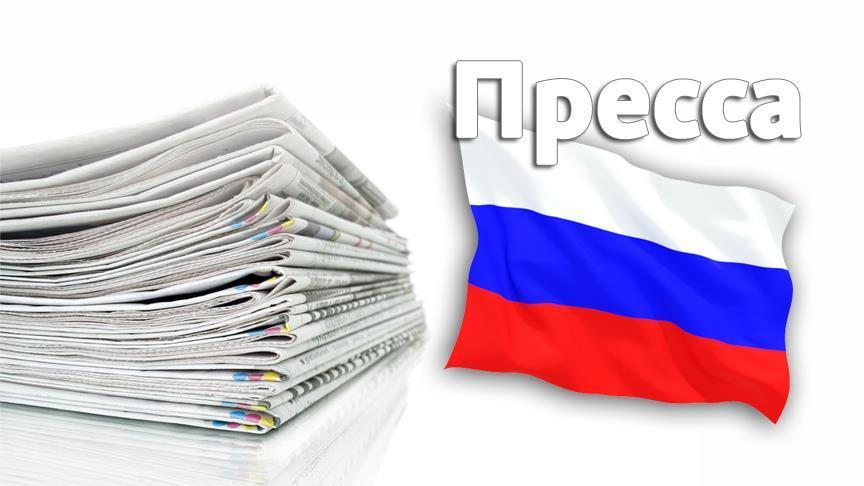
Reacting to Russian President Vladimir Putin’s decision to gradually withdraw his military from Syria, Moscow’s Rossiyskaya Gazeta newspaper claimed Tuesday that Russian forces’ mission, as a whole, had been accomplished.
The announcement was made late on Monday as reporters were summoned to the Kremlin to cover an "international affairs event", with no details given in advance, wrote the paper.
It was after the above meeting that Putin called Syrian President Bashar al-Assad and informed him of his decision, Russian Business Channel (RBK) reported Tuesday.
Citing a statement issued by the Kremlin, RBK said that Putin claimed Russian forces had radically changed the situation in “the fight against terrorism, to disrupt the fighters’ infrastructure, inflicting it significant damage".
Putin’s decision was prompted by the fact that in a short time, the Russian contingent in Syria managed to assert itself as a small-yet-effective military force with diverse capabilities and means, noted Kommersant.
Kommersant cited President Putin saying that the “effective work of the Russian military has created conditions for the beginning of the peace process".
Although withdrawal of the main forces will begin Tuesday, Putin pointed out that the logistics base of the Russian navy in Tartus, and the Hmeymim airbase near Latakia "will remain operative as usual and will be protected from land, sea and air".
Later, Putin’s spokesman Dmitry Peskov said that those two facilities will monitor the implementation of the ceasefire, RBK said.
According to Alexei Malashenko, an expert at the Moscow Carnegie Centre quoted by Kommersant on Tuesday, it is quite likely that the actions of Russia and the U.S. were coordinated in advance.
Kommersant added: "The decision on the withdrawal of troops, which at first glance looks very unexpected, could not have been made without Moscow's consultations with the United States, and may have been agreed after some give and take.
“If the deal does not work, nothing would prevent Moscow from sending its troops to Syria again when necessary.”
Sources at the Russian Defence Ministry claim that the operation, which went on for almost half a year, has resulted in "significant turning point" in the fight against Daesh. Now the onus will be on the diplomats who will aim to protect Syria from splitting into smaller parts, reported Kommersant.
Initially, Moscow aimed at pursuing two plans of action, believes Ruslan Pukhov who heads a Centre for Strategic Analysis.
Optimum Plan aims to break Russia out of its isolation and to move it closer to the West, for leading a joint struggle against Daesh, just as in efforts after Sep. 11, 2001.
This plan was upset by the November terrorist attacks in Paris but it became clear that, even with these events, there would be convergence. There was also a minimal plan: seeking stabilization of the Syrian regime and the launch of a peace process.
Since there has been significant progress towards meeting those two objectives, the Russian government has every reason to announce the withdrawal of armed forces from Syria, summarizes Pukhov.
Fyodor Lukyanov, chairman of the Presidium of the Council on Foreign and Defense Policy, told Kommersant that during in his annual assessment last December, President Putin declared he saw “no need for a permanent presence of troops in Syria”.
Lukyanov also told Kommersant that starting a pull-out “does not mean withdrawing all troops completely. In general, it is meant as a signal to Damascus: we are not going to do the job for you”.