By Lauren Crothers
PHNOM PENH, Cambodia
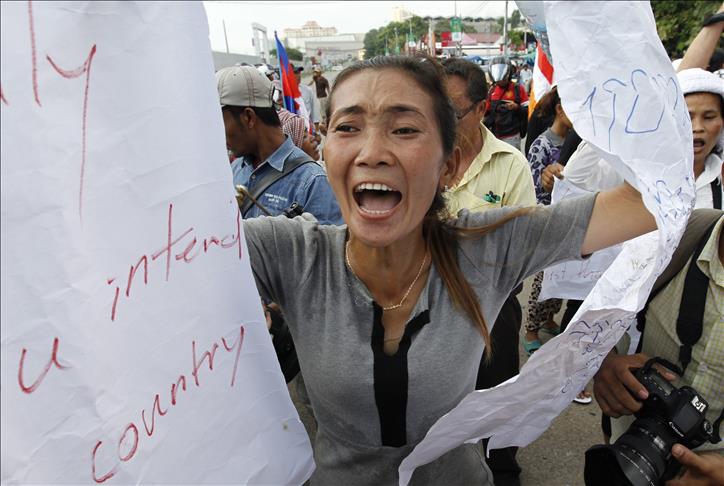
The Cambodian government has been urged to immediately release 12 of the country’s most outspoken land activists --11 of whom are women -- as a gesture of goodwill ahead of International Women’s Day this Sunday.
In a statement released Friday, a consortium of 30 rights groups and land activist communities threw their support behind the 12, most of whom were swiftly imprisoned for a year amid a weeklong crackdown on dissenting voices last November.
Seven women from the restive Boeng Kak lake community had been protesting flooding in their neighborhood when they were arrested. Outside their hastily held trial the next day, a Buddhist monk and three other female land activists were also arrested – only to be sentenced the next day.
The remaining female land activist was taken into custody following her involvement in a dispute with a powerful businessman this January, and is being held in pre-trial detention.
The swiftness with which the 12 were put behind bars caused an outcry among rights groups, who reiterated in their statement Friday that the activists had been “jailed for exercising their rights to freedom of expression and freedom of assembly.”
“Eleven of the 12 defenders are women. As the recently adopted United Nations General Assembly resolution on women human rights defenders testifies, women who work to defend human rights face risks and challenges that require specific attention and protection,” the statement said.
It added that the government’s refusal to protect human rights defenders “represents a breach of the state’s obligations that cannot be tolerated anymore.”
Phay Siphan, the spokesman for the government’s Council of Ministers, told The Anadolu Agency by telephone Friday that if that’s the case, the NGOs can “get out of the country.”
“They are NGOs like a private sector — they have no power or mandate to order the government to interfere with what the court decides and they should understand and respect that,” he said.
He described the denouncement of Cambodia’s obligations as “very abusive to the government,” adding that the courts operate independently and at their own discretion.
“The government always treats them [NGOs] as a partner even though they don’t have an NGO law yet, and we still respect them no matter if they get money from other sources. NGOs are not a judge or court.”
A proposed draft law on NGOs has been widely condemned, with rights groups saying it will curb their freedoms and make it harder for new organizations to be registered.