ZAMBOANGA CITY
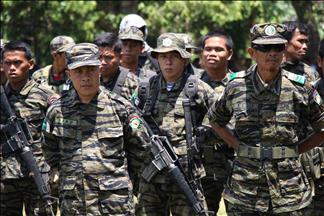
Philippine security forces have discovered three camps abandoned by members of an al-Qaeda-linked militant group amid operations in pursuit of the Abu Sayyaf, who recently released two German hostages.
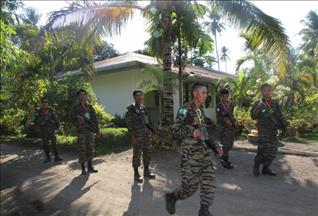
Army spokesman Lieutenant Colonel Harold Cabunoc said in a press statement that troops seized an Abu Sayyaf satellite camp at around 08.00 local time (03.00 Turkish time) Monday in Kabuntakas village of Patikul town.
Explaining the security outpost had likely been manned by around ten bandits, he added, "There was no firefight. They [Abu Sayyaf] have left, but the camp was newly abandoned."
The statement quoted Col. Alan Arrojado, commander of Sulu province’s Joint Task Group, as saying, "We are continuously tracking them as they flee towards the forested parts of the town."
The day before, security forces had seized two other camps in the jungles of Patikul.
Cabunoc said a camp was discovered in Buhanginan village, and a larger one in Kabuntakas.
From the first camp, troops recovered combat boots, rain boots, bandoleers, dilapidated combat packs and magazine pouches, while the second camp is believed to have the capacity to accommodate 100 people.
According to Cabunoc, the German hostages were released near the camp in Buhanginan.
Stefan Viktor Okonek, 74, and his wife Henrike Dielen, 55, were set free Friday night after being seized on their yacht off the coast of the Philippines’ southern Palawan Island in April. They arrived at the German Embassy in Manila early Saturday.
A representative from the Abu Sayyaf group -- who identified himself as Abu Rami -- had told a local Philippines radio station that the group would behead Okonek at 15.00 local time Friday in an undisclosed jungle area of Sulu if Germany did not pay a Php250 million ($5.5 million) ransom and cease support for the United States-led campaign against the Islamic State of Iraq and the Levant (ISIL) in Iraq and Syria.
While Abu Rami took to the radio again to say the ransom had been paid, the Philippine military has dismissed such claims serve as propaganda.
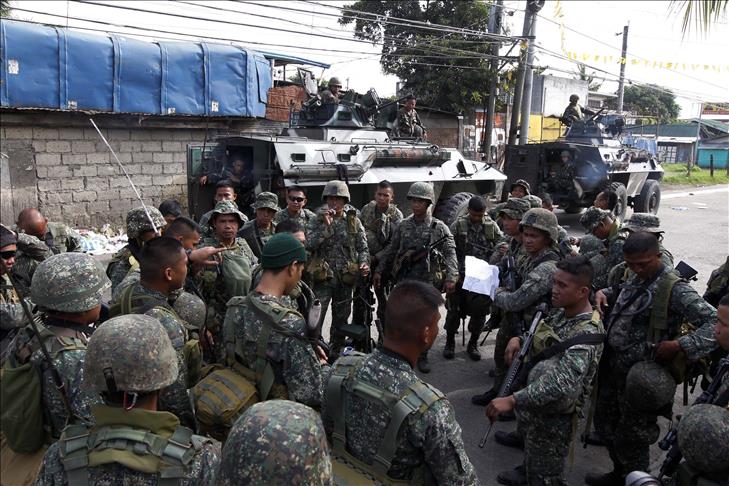
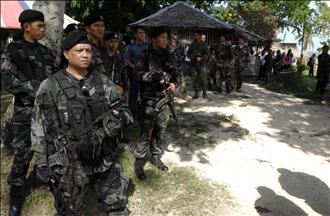
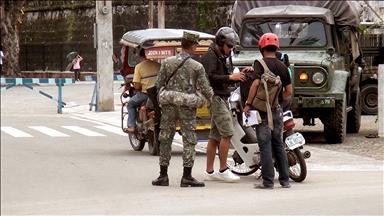
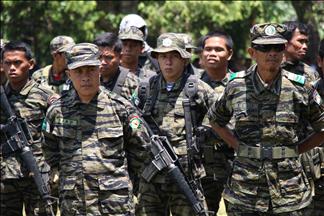
The army spokesman said two brigades of more than 3,000 soldiers had been deployed -- mainly to Patikul –- with the primary objective of rescuing ten hostages who reportedly remain in captivity.
"We are also trying to coordinate with the locals to prevent the rebels from mixing with the residents," Cabun added.
Since 1991, the Abu Sayyaf -- armed with mostly improvised explosive devices, mortars and automatic rifles -- has carried out bombings, kidnappings, assassinations and extortions in a self-determined fight for an independent Islamic province in the Philippines.
It is notorious for beheading victims after ransoms have failed to be paid for their release.
ISIL has captured large swathes of land in Iraq and Syria, later declaring the territories under its control an Islamic "caliphate."
The U.S. and its Arab allies began bombing ISIL targets inside Syria in late September, after conducting airstrikes in Iraq since August.
www.aa.com.tr/en