Nigerian parents urged to verify Boko Haram video
According to the spokesman, the alleged video will be shown to families of abducted and freed schoolgirls to make sure that the girls in the clip were among those abducted by the Boko Haram militants.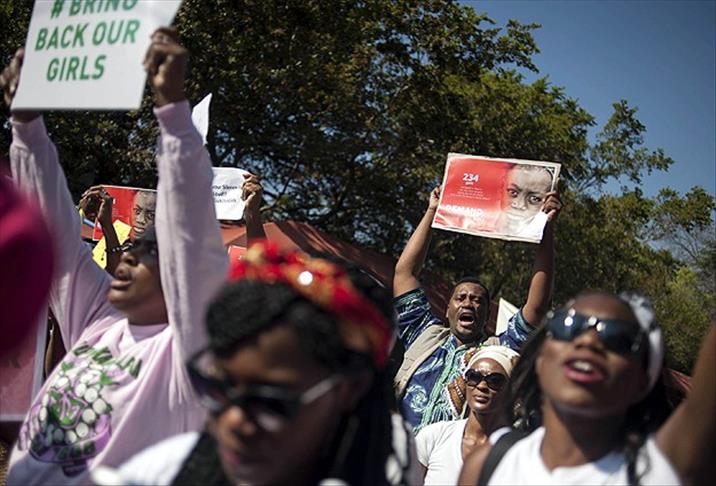
LAGOS
Local authorities in Nigeria's north-eastern Borno state on Monday called on parents of abducted schoolgirls to verify whether the girls who appeared in a Boko Haram video were their daughters.
"Borno state governor Kashim Shettima has watched with very keen interest a video clip ...said to have been released by members of the Boko Haram sect," spokesman Isa Gusau said in a statement.
According to the spokesman, the alleged video will be shown to families of abducted and freed schoolgirls to make sure that the girls in the clip were among those abducted by the Boko Haram militants.
"Some concerned individuals in Maiduguri and Abuja are on the request of the Governor making efforts to contact parents and relations of some of the abducted girls, who might be within reach to get feedback regarding the video," he said.
He went on to say that the Borno state governor "views the development as encouraging especially given the fact that some of the girls said they were not harmed. The Governor hopes that the girls did not speak under duress."
On Monday, the Boko Haram militants released a video showing scores of schoolgirls, who were abducted last month in the town of Chibok.
In a 17-minute video obtained by the local Daily Trust newspaper, Boko Haram chief Abubakar Shekau said he would free the girls in exchange for arrested group members.
The video – apparently shot in a forest with Shekau clad in his traditional military fatigues and the girls wearing full-length Muslim head coverings – showed the abductees reciting from the Quran.
The militant leader bragged that some of the girls – many of whom are said to be Christian – had converted to Islam.
The Borno governor called on the Nigerian public to continue to pray for the safe return of the schoolgirls, and thanked Nigerians and the international community "whose pressures have been of tremendous help so far."
Boko Haram, which means "Western education is forbidden" in the Hausa language, first emerged in the early 2000s preaching against government misrule and corruption.
The group later became violent, however, after the death of its leader in 2009 while in police custody.
In the five years since, the shadowy sect has been blamed for numerous attacks – on places of worship and government institutions – and thousands of deaths.
By Rafiu Ajakaye
englishnews@aa.com.tr