By Abdel-Raouf Arnaout
JERUSALEM
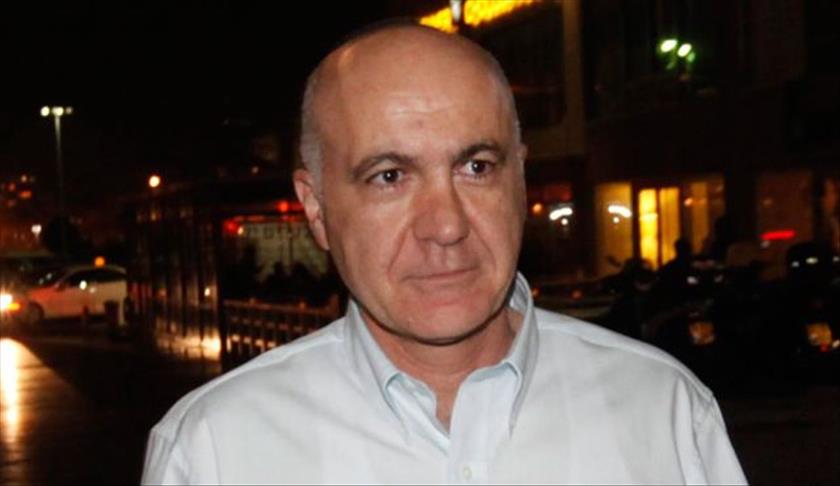
Yoram Cohen, head of Shabak, Israel's domestic security service, has challenged statements by Prime Minister Benjamin Netanyahu and Foreign Minister Avigdor Lieberman in which the two men accused Palestinian Authority (PA) Mahmoud Abbas of inciting violence against Israeli Jews.
"Abbas has no role, whether implicit or explicit, in supporting terrorism," Cohen told members of the Knesset's foreign affairs and defense committee, Israeli public radio reported Tuesday.
However, he added: "There are some Palestinians who could see Abbas' statements as legitimizing violence [against Israelis]."
Earlier Tuesday, Netanyahu and Lieberman both held Abbas responsible for a "terrorist" attack by two Palestinians on a West Jerusalem synagogue and religious center that left four Israelis dead and several injured.
Abbas' office swiftly condemned the attack, but also called for an end to increasingly frequent intrusions by Jewish settlers and Israeli cabinet ministers into East Jerusalem's flashpoint Al-Aqsa Mosque compound.
Cohen, whose organization monitors Palestinian activity in the occupied territories, said the two Palestinian assailants – both of whom were killed by Israeli forces at the scene of the attack – had no records with Shabak and that they had not received any military training prior to the attack.
Cohen went on to urge Knesset members not to make any more controversial visits to the Al-Aqsa Mosque compound – or to propose any legislation aimed at partitioning the holy site between Muslims and Jews – in order to avert "a religious war" between Palestinians and Israelis.
No group has thus far claimed responsibility for Tuesday's attack, which was the seventh Palestinian attack on Israelis to have occurred in Israel and the occupied territories within the last month.
Since late October, six Israelis – including two security personnel – have been killed and several others injured in a spate of attacks by Palestinians.
Tensions mounted on October 30 when Israeli authorities briefly closed the Al-Asqa Mosque complex following the injury of an extremist rabbi who was shot by a Palestinian man in West Jerusalem.
For Muslims, Al-Aqsa represents the world's third holiest site. Jews, for their part, refer to the area as the "Temple Mount," claiming it was the site of two Jewish temples in ancient times.
In September 2000, a visit to the iconic religious site by controversial Israeli politician Ariel Sharon triggered what later became known as the "Second Intifada," a popular uprising against Israel's decades-long occupation in which thousands of Palestinians were killed.
englishnews@aa.com.tr
www.aa.com.tr/en