Huge challenges ahead for Egypt's new government
Analysts believe that basic daily needs drove thousands of disgruntled Egyptians to take to the streets on June 30 to vent their anger at then President Mohammad Morsi's "mismanagement", ultimately leading to his overthrow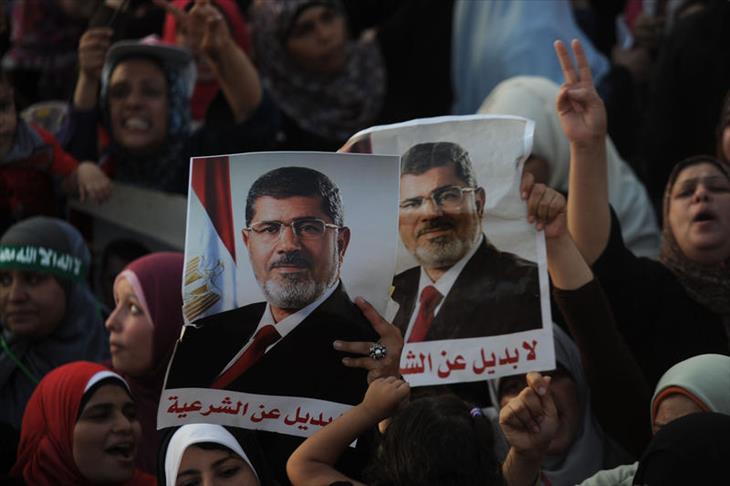
CAIRO
Egypt's new interim government, which is expected to be formed soon, would have to address a number of pressing issues in order to pacify a public dissatisfied with lack of security and a sluggish economy.
Analysts believe that basic daily needs drove thousands of disgruntled Egyptians to take to the streets on June 30 to vent their anger at then President Mohammad Morsi's "mismanagement", ultimately leading to his overthrow.
In the past months, the country has seen sever fuel and gas shortages, prolonged electricity cuts, security vacuum and sharp depreciation of the local currency which sent commodity prices sky high.
"Daily life issues would be the most pressing on the agenda of the new government," Mahmoud Abdel-Dhaher, a professor of political sciences in Helwan University, told the Anadolu Agency.
"Not paying enough attention to these issues was one of the main criticisms against Morsi, which ultimately led to his downfall.”
Atop of these issues are security and economy, Abdel-Dhaher explains.
He believes that restoring security, combating the state of lawlessness that has plagued Egyptians' lives for so long, revitalizing economy and attracting investment should the government's top priorities.
"Restoring national unity and integrating young Islamists in community activity" should also figure high on its agenda, he added.
Political analyst Tarek Fahmi agreed.
Security, economy, and national reconciliation without the exclusion of any political trend should be the priority of the new government, he said.
All revolutionary powers should be integrated and their potentials and ideas fully employed, Fahmi added.
Yet, Fahmi notes, the new government would face the challenge of working under an interim president with limited powers.
"The interim administration would be facing a series of challenges, but its success would depend on the tasks it is assigned with and the general policies of the new premier.
"That's why the government and its program should be put to discussion with all political powers so that all sides share responsibility," Fahmi said.
The opposition believes that in order to do the job, the new prime minister should meet specific requirements.
"The premier should be credible, loyal to the revolution and competent enough to assume this post," Abdel Ghaffar Shokr, a senior member of the opposition alliance National Salvation Front, told the AA.
"It should be a government of technocrats who address three main files; security, economy and social justice."
The front's spokesman Ahmed el-Borei, however, put social justice first.
"The most important challenge facing the interim president and his government is social justice, which includes an acceptable minimum wage and pension as well as improving health insurance services."
Governor of the Central Bank of Egypt (CBE), Hisham Ramez, is the most favorite candidate to become the new prime minister and NSF leader Mohammad ElBaradei is likely to be named vice president, high-level political sources had told the AA.
Ramez, a former deputy central bank governor, was appointed to his CBE post in January by now deposed President Mohammad Morsi.
He served as deputy central bank governor between 2008 and 2011 before serving as managing director of the Commercial International Bank (CIB).