Reporting by Recep Sakar, writing by Satuk Bugra Kutlugun
MELBOURNE, Australia
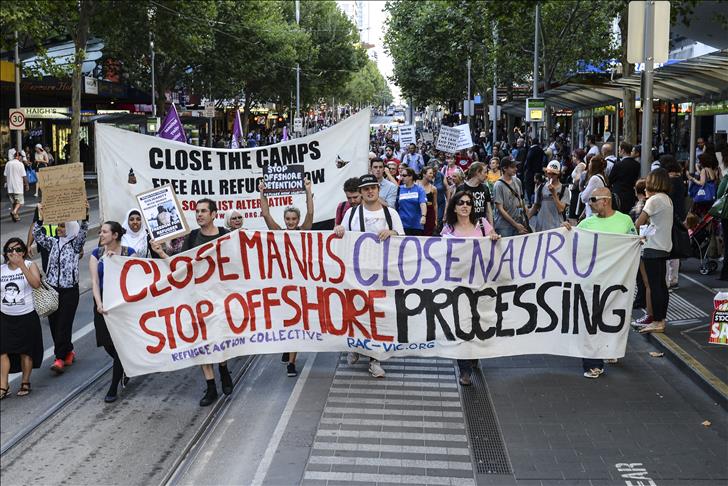
A leading human rights activist has told The Anadolu Agency that "history will judge Australia harshly" on its policy towards asylum seekers.
Daniel Webb, director of advocacy at the Human Rights Law Center in Melbourne, said conditions for refugees held in offshore detention centers on Nauru and Manus islands were "inherently harmful."
Following a recent visit to Manus, Webb said: "I have read every report ever written about what the conditions were like. But I can honestly say that I was still absolutely shocked and confronted by just how bad the conditions were."
He described a "shockingly overcrowded" environment in which "240 people were crammed so close together that you could not even walk between the beds."
The most recent figures from Australia’s immigration department show 1,746 people detained in camps on Nauru and Manus at the end of last month, including 126 women and 107 children.
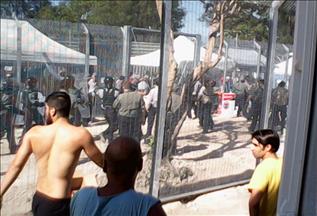
According to Webb, the presence of guards was "really overwhelming" and the threat of suicide ever-present.
"There were signs in the centers that all guards, at all times, must have their Hoffman knives with them," he told AA. "These knives, you use them to cut people down who are trying to kill themselves."
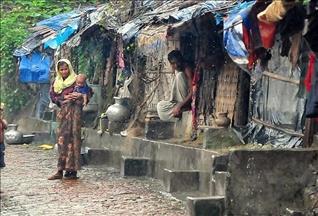
Authorities in Papua New Guinea, where Manus is located, and Nauru have blocked media access to the centers, making reports of insanitary conditions and abuse difficult to verify.
"I can understand why the government keeps them hidden from view because the conditions are absolutely appalling," Webb said.
"There is a combination of harsh, physical conditions inside the center, the very slow processing of the refugee claims and the uncertainty about resettlement arrangements.”
Referring to Reza Barati, a 23-year-old Iranian asylum seeker killed during violent protests at the Manus in February last year, Webb said conditions at the center remained "inhumane" more than a year later.
"The risk of violence is ever present," he said.
Earlier this week, the UN’s special rapporteur on torture, Juan Mendez, reported that Australia was in breach of the international convention on torture over its treatment of refugees, highlighting the detention of children, violence in immigration centers and recent amendments to Australia's maritime laws.
Webb said Australia is "clearly breaching" international law. "The UN High Commissioner of Human Rights said in his first-ever speech last year to the UN Human Rights Council that Australia's asylum seeker policies are producing a chain of human rights violations," he told AA.
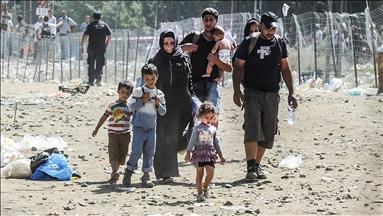
According to the advocate, 11 million refugees worldwide are seeking asylum but lack a way of reaching safety.
"People getting on boats and arriving Australia is a symptom of that underlined problem," Webb said. "All Australia's policies are to stop the boats. All we are trying to do is to shift the symptoms but not treat the problem. That causes immeasurable harm to thousands of people in the process."
He added: "An overwhelming majority of the world's refugees are in less developed countries. We shoulder a very small percentage of the global burden, we should be doing more."
Webb said successive Australian governments had continued to break international law and harm innocent asylum seekers in the process.
"History will judge Australia very harshly for that. This is absolutely inexcusable."
According to the UN’s refugee agency, 4,589 asylum applications were lodged with Australia in the first half of 2014, a 23 percent fall on the previous six months. Most asylum seekers continue to travel from Indonesia to Australia's Christmas Island by boat despite the government’s policy of turning back boats or detaining refugees offshore.
Mendez’s report, released Monday found Australia had violated the rights of asylum seekers through torture or cruel or degrading treatment in immigration detention centers.
The report led Prime Minister Tony Abbott to accuse the UN of lecturing Australia.