Ministers meet Gulf counterparts
By Zeynep Duyar, Enes Kanli and Selen Tonkus
ISTANBUL
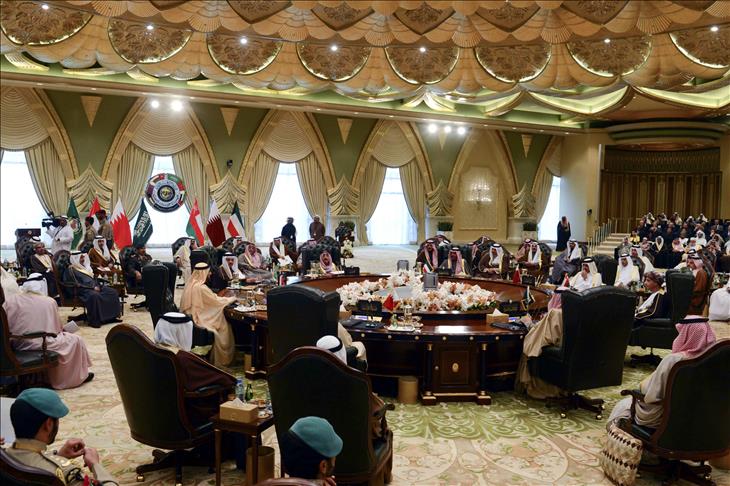
Fears that a diplomatic split between Qatar and its Gulf neighbors could lead to the collapse of the Gulf Cooperation Council, or GCC, -- a trade bloc of six Arab nations -- are unfounded, say analysts.
Three members of the council -- Saudi Arabia, Bahrain and the United Arab Emirates -- were angered by Doha's "interference in (their) internal affairs" last month, referring mainly to Qatar's support for the Muslim Brotherhood in Egypt.
The trio withdrew their ambassadors from Doha and have threatened to launch economic sanctions, sparking fears of gas and oil prices and supplies being affected.
However, along with Kuwait -- and despite their vast oil resources -- they are all dependent for their natural gas supplies on Qatar, the world's leading liquefied natural gas (LNG) exporter, which relies on its energy sector to support its economy.
The U.S. Energy Information Administration (EIA) estimates that Qatar earned US$55 billion from net oil exports in 2012, and the Qatar National Bank (QNB) estimates that the oil and natural gas sector accounted for 57.8 percent of the country's gross domestic product in 2012.
Desperate for gas
Analysts believe Qatar’s future growth may lie in the construction of sub-sea pipelines to its oil-rich neighbors, which are desperate for gas for their energy-intensive economies but are reluctant to pay market rates for it.
Bahrain and Qatar have for years been discussing the possibility of building a 40-km (25-mile) causeway between them.
And the UAE has already boosted imports from Qatar via the Dolphin Gas Project pipeline over the past several years.
The pipeline runs from Qatar to Oman via the UAE and is one of the principal points of entry for the UAE's natural gas imports.
Qatar currently exports about 2 billion cubic feet (57 million cubic meters) of natural gas per day to the UAE and Oman through the Dolphin line.
Mutual interdependence
Robin Mills, the head of Dubai based Manaar Energy Consulting and Project Management, pointed to the mutual interdependence between Qatar and its neighbors.
He told The Anadolu Agency that the diplomatic rift will not affect Qatar's natural gas exports, as Qatar needs the natural gas revenue while its neighbors -- especially the UAE -- needs Qatar's natural gas.
"If Saudi Arabia pushes the GCC [the Arab trade bloc] to impose sanctions, Japan, South Korea, China, India and Britain -- namely the gas customers of Qatar -- might pressurize Saudi Arabia," he added.
Cemil Ertem of the Istanbul-based Caspian Strategy Institute (HASEN) Energy and Economy Research Center compared Qatar's rising influence as an energy power to the relative decline of Saudi Arabia.
He said: "Saudi Arabia is losing the advantages it derives from its supply possibilities, as new actors like Iraq enter the market.
"On the contrary, Qatar is rising as an economic center of attraction, and it has alternative allies like Iran and Turkey," said Ertem, adding that it was rather Saudi Arabia, and not Qatar, who could get alienated in the region.
Ministers meet Gulf counterparts
NATO foreign ministers are meeting counterparts from Bahrain, Kuwait, Qatar and the United Arab Emirates to discuss how to continue their existing partnership in the framework of NATO's Istanbul Cooperation Initiative, which was launched 10 years ago.
The Istanbul Initiative aims to contribute to long-term global and regional security by offering countries of the broader Middle East region practical bilateral security cooperation with NATO.
Arab FMs to discuss Mideast peace next week
Arab foreign ministers will hold an emergency meeting at the Arab League's Cairo headquarters next Wednesday (April 9) to discuss the future of Palestinian-Israeli peace talks, Arab League Secretary-General Nabil al-Arabi said.
The meeting, to be held at the request of Palestinian Authority President Mahmoud Abbas, will discuss the latest developments of the ongoing peace talks in light of Israel's refusal to honor an earlier pledge to release a final batch of Palestinian prisoners, al-Arabi said at a Wednesday press conference.
On Tuesday, Abbas responded to the Israeli refusal by formally applying for Palestinian membership in U.N. organizations and treaties.
Under a U.S.-sponsored agreement, Israel had earlier promised to release 104 Palestinian prisoners detained since before the signing of the 1993 Oslo peace accords.
Israel has already freed 78 prisoners in three phases.
The fourth group of prisoners had been scheduled for release last Saturday before Israel reneged on its pledge.
englishnews@aa.com.tr