By Hader Glang
ZAMBOANGA CITY, Philippines
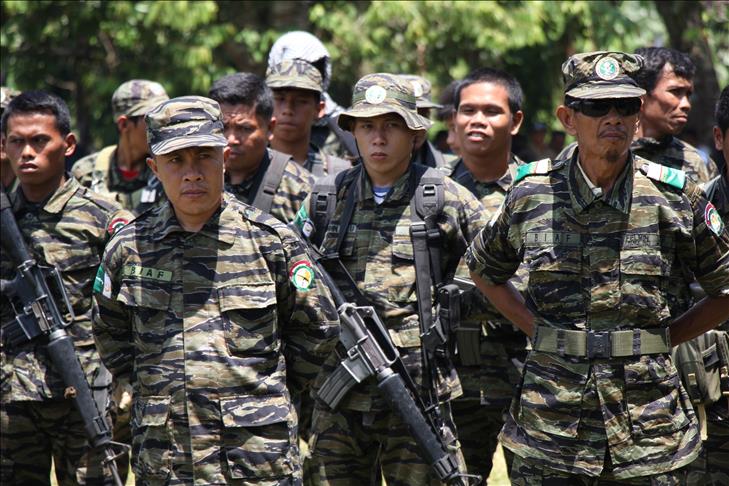
Muslim rebels who last year laid siege to a southern Philippines port city to try and derail peace talks between the government and another rebel group have said that as of yet that they have no plans for further attacks.
"Siege part two is not yet scheduled," Suhod Ebrahim, commander of the Moro National Liberation Front (MNLF)'s 6th Sudarah Brigade, based in Central Mindanao, told the Anadolu Agency this week.
"It depends upon our president," Ebrahim added, referring to MNLF founding chairman Nur Misuari, known by his followers as "President of the Bangsamoro Republic."
Philippines authorities have ordered the arrest of Misuari, who they accused of ordering the siege. He has been charged with rebellion and human rights violations.
Sources in Zamboanga have told AA that Misuari is hiding in Sulu, and his followers are awaiting his directive on any further siege. The sources did not wish to be named out of fears for their own personal security.
Sulu is a southern Philippines island province located in the Autonomous Region in Muslim Mindanao (ARMM), an entity created out of a 1996 peace agreement between the MNLF and the government.
In September last year, hundreds of MNLF fighters stormed Zamboanga, where they seized more than 100 local residents to try and derail talks between the government and rival Muslim group the Moro Islamic Liberation Front (MILF).
More than 100,000 people were forced to flee their homes in the ensuing three weeks of fierce fighting between the rebels
and government forces, with more than 200 people killed including soldiers, rebels and civilians.
Thousands were made homeless in the fighting. Even today, six months on, more than 20,000 people belonging to different ethnic groups still live in temporary shacks on the city's seafront and in a nearby sports stadium as they are yet to be allowed to return to their homes.
Meanwhile, the peace process continued unhindered, the government and the MILF signing a deal March 27. Under the deal named the Comprehensive Agreement on the Bangsamoro largely Muslim areas of the Mindanao have been granted greater political autonomy in exchange for an end to armed rebellion.
Lt. Gen. Rustico Guerrero, chief of the Armed Forces of the Philippines' Western Mindanao Command, has dismissed the threats from the MNLF-Misuari faction to disrupt the ongoing peace process.
"So far all the moderate MNLF Commanders are in contact with our ground commanders so I don't think they would want to create violent activities that have already led to peaceful coexistence," Guerrero told reporters.
The general, however, admitted that they are still looking out for the MNLF-Misuari faction but said threats in relation to the ongoing peace agreement have so far been "manageable." He expressed hope that the normalization process with the MILF in
relation to the agreement will continue smoothly and will be completed within the next two years.
Loyalists of the MNLF-Misuari faction, meanwhile, say that their only hope is the independence promised in a 1996 peace agreement, which Misuari has said the government went back on.
The MILF believe that the current peace deal will be more successful than the 1996 final agreement because they say it gives an autonomous entity with powers of far greater political and economic governance than the current ARMM area.
Misuari - who signed the agreement with former president Fidel V. Ramos in 1996 - has said that the government has not fully fulfilled some its obligations and that the 2014 deal is an abrogation of the 1996 agreement.
The government peace panel, however, has said the new agreement will benefit all constituents. Both the government and the MILF have reiterated that the agreement "builds on the gains" of the previous deal and includes the 1996 document.
Ebrahim, however, still has dreams of a Muslim republic.
"The red MNLF flags are symbols that our dream of the Bangsamoro Republic lives on," he told AA.
englishnews@aa.com.tr