BOGOTA, Colombia
The head of a Colombian delegation currently negotiating a peace deal in Havana defended his president’s decision to offer the leaders of two guerrilla groups safe passage from Colombia to Cuba for a meeting.
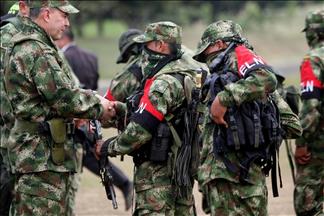
The meeting between the heads of the National Liberation Army, or ELN, and the Revolutionary Armed Forces of Colombia, or FARC, was held last month in Cuba.
Their transportation from Colombia was approved by President Juan Manuel Santos and facilitated by the guarantor nations of Norway and Chile.
“The meetings were held with the aim of reaching an end to the conflict in an integrated manner,” said Humberto de la Calle, head of the Colombian negotiation team in an interview from Cuba on Tuesday. “The head of state believes that incorporating the ELN into a process is in the best interest of Colombian society,” he continued.
The meeting between the two rebel leaders was also in an effort to show the ELN leader how far official talks had come and to try to convince his group to come to the negotiating table, according to De la Calle.
While Colombia’s FARC rebels have been involved in on-going peace dialogues with the government in Havana since November 2012, talks with the smaller ELN guerrillas have remained in the exploratory phase.
Santos is keen to commence a parallel set of peace talks with the ELN so as to bring Colombia’s long-running internal conflict to an end.
“In my position as the chief of state, I ensured, with the support of our guarantor countries, the conditions to permit this meeting to take place, with the one purpose of achieving more progress in the search for an end to the conflict,” Santos said during a televised address Monday night. He also defended his actions saying that they were “legal under Colombian law and within the framework of the country’s constitution.”
The peace dialogues were recently placed under significant strain after 11 soldiers were killed during a FARC attack, and public favor for the talks is wavering despite agreements being reached on agrarian reform, political participation and illicit drugs.
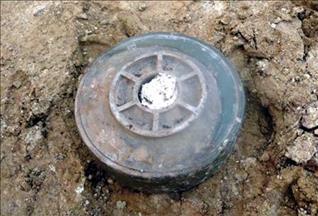
Most recently, both sides reached an agreement to remove landmines in various parts of the country and the Colombian government is strongly backing the end to the use of the glysophpate herbicide in the fumigation of coca crops.
Neither guerrilla leader was present at any official negotiation and the meeting was held “under a strictly limited time frame in special conditions,” said De la Calle.
While the FARC is the larger of the two guerrilla groups, with an estimated 8,000 combatants, the ELN has an estimated 2,500 members but is strategically located in border areas and continually conducts attacks on oil pipelines and other installations and infrastructure.
FARC has agreed to negotiate a five-point agenda but the ELN has a broad series of requests for its agenda and has so far resisted any attempts to limit it.