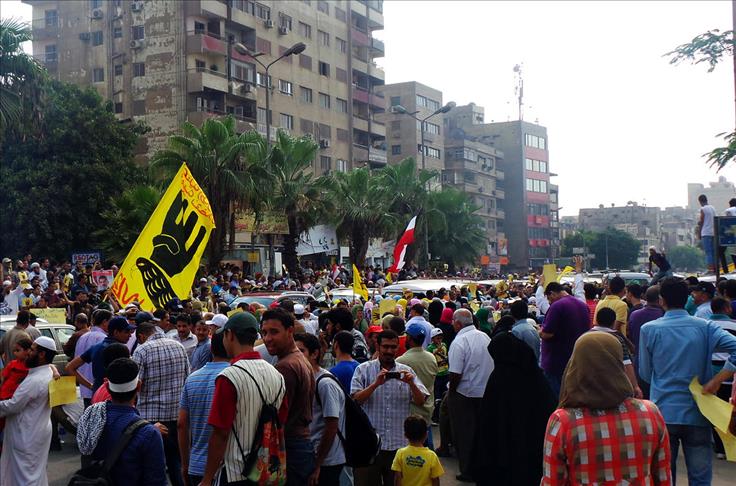
Calm returned to the streets of Cairo following a day of deadly violence that marred Friday protests staged by supporters of Egypt's ousted president Mohamed Morsi.
At least seven people were killed in Cairo during clashes between Morsi supporters and opponents, the Egyptian Health Ministry and medical sources said.
According to Ahmed al-Ansari, deputy head of Egypt's ambulance service, 40 people were hurt in clashes countrywide, most of them suffering birdshot injuries, cuts and bruises.
Earlier Friday, a medical source said two people had succumbed to injuries sustained during stone-throwing clashes in the vicinity of Defense Ministry headquarters in Cairo.
A medical source confirmed the four deaths, adding that three more people had died from shotgun injuries, bringing the total death toll to seven.
The violence came as Morsi backers staged fresh rallies following weekly Friday prayers to denounce what they describe as the July 3 "military coup" against Egypt's democratically elected leader.
Clashes erupted in eastern Cairo between Morsi backers and opponents when a pro-Morsi march approached the Defense Ministry.
Skirmishes spilled into adjacent streets, with a number of injuries reported and several local shops damaged.
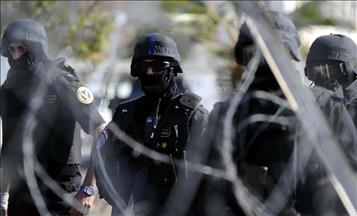
Army troops set up barbed wire and barricades around the ministry to preempt attempts by Morsi supporters to storm the building.
Elsewhere in Cairo, security forces used teargas to disperse pro-Morsi marches heading to Tahrir Square.
Pro-Morsi protesters attempted to march on the iconic square along the Nile Corniche following Friday prayers, but were stopped by security forces.
Several protesters suffered teargas inhalation as the march was dispersed.
Another march was intercepted at Abdel-Moneim Riyad Square, located only 500 meters away, by anti-Morsi elements. Clashes ensued before security forces dispersed crowds with teargas.
A second attempt to march on Tahrir was thwarted when soldiers fired shots into the air after a pro-Morsi march crossed Galaa Bridge before attempting to cross Qasr al-Nil Bridge into the square.
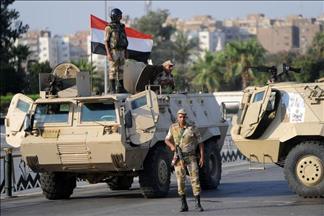
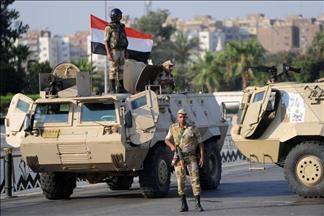
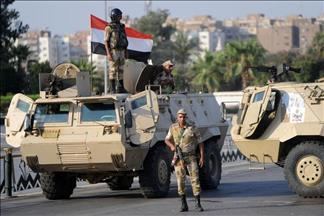
Tahrir Square remains closed to traffic, with army personnel and armored vehicles deployed at all entry points. Barbed wire was also set up to prevent protesters from entering the square, which is widely perceived as Cairo's premier protest venue.
On Tuesday, scores of Morsi backers staged their first protest in the square – the epicenter of Egypt's 2011 uprising – since Morsi's ouster three months ago. They were quickly dispersed by security forces.
The daring move promoted the Egyptian authorities to announce the closure of Cairo's Tahrir Square and the area around the Ittihadiya presidential palace until Monday.
State news agency MENA quoted an unnamed security source as attributing the decision to "the ceremonies scheduled to take place… on the occasion of the anniversary of the October 6 War" against Israel.
The report did not specify as to whether the closures would apply to vehicle traffic alone or to pedestrians as well.
Under the banner "Cairo: capital of the revolution," Friday's rallies were called by the National Alliance for the Defense of Legitimacy, a coalition of pro-Morsi Islamist groups, to denounce what it describes as the military coup against the Islamist president.
The alliance has also called on supporters to stage mass rallies in Cairo's Tahrir Square on Sunday to mark the anniversary of Egypt's 1973 military victory over Israel.
Pro-democracy demonstrators have been staging daily protests nationwide for the past 99 days against the July 3 ouster of Egypt's first democratically-elected president.
Morsi was deposed by Egypt's powerful military establishment three months ago following massive and well-coordinated protests against his presidency.
The unconstitutional change of government is described by the ousted president's backers as a military coup, while supporters of the move call it a military-backed "popular uprising."
englishnews@aa.com.tr